
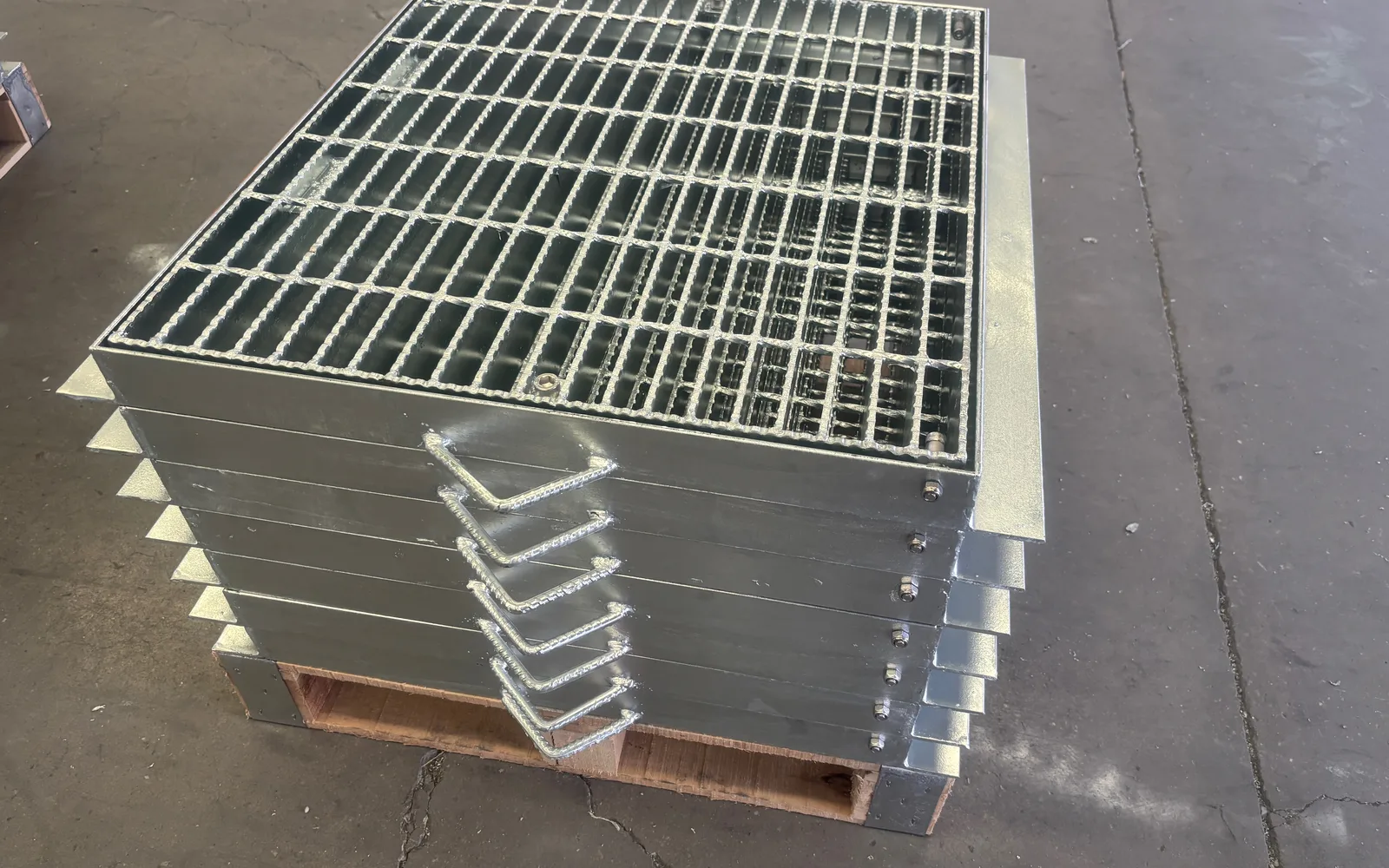
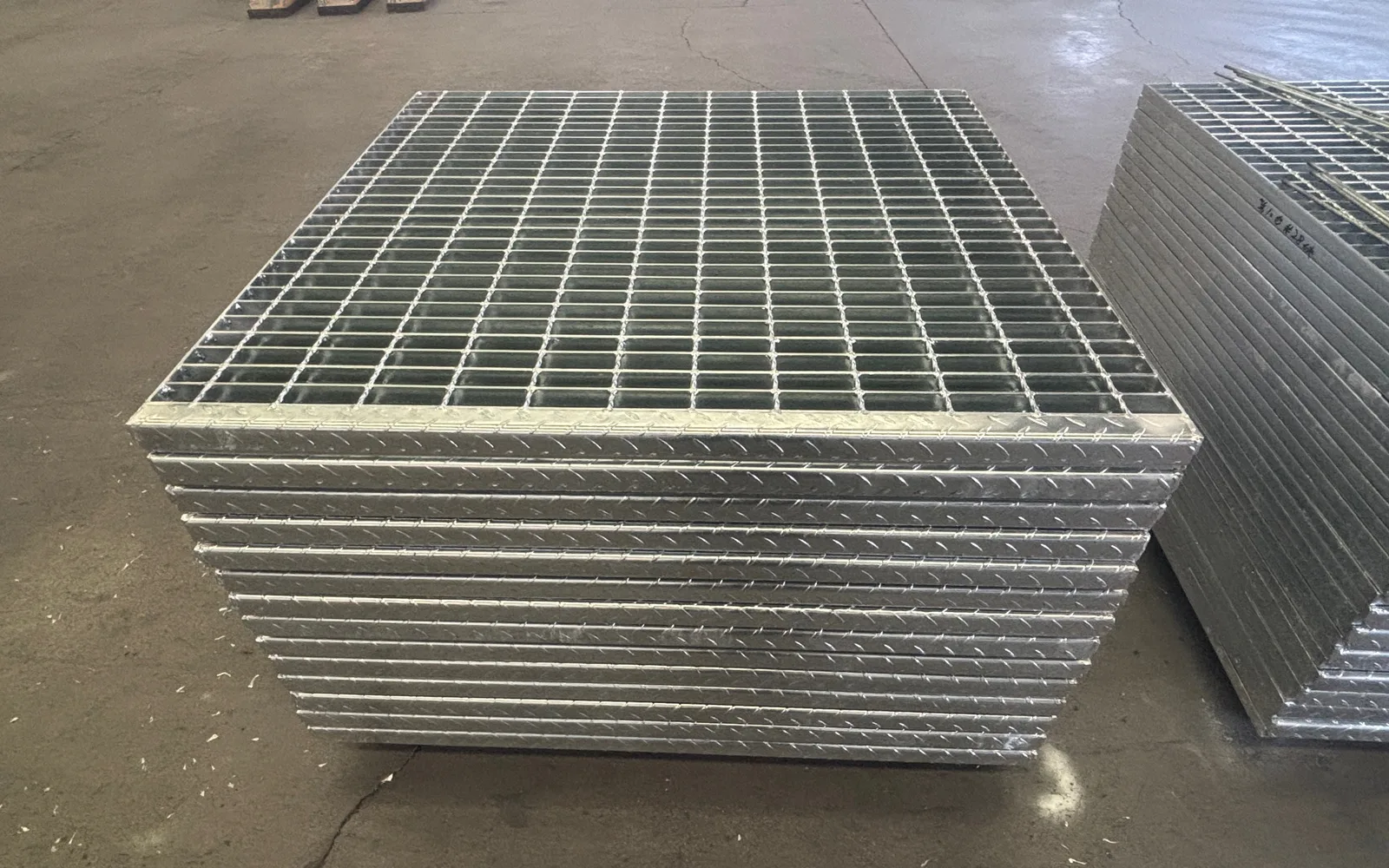
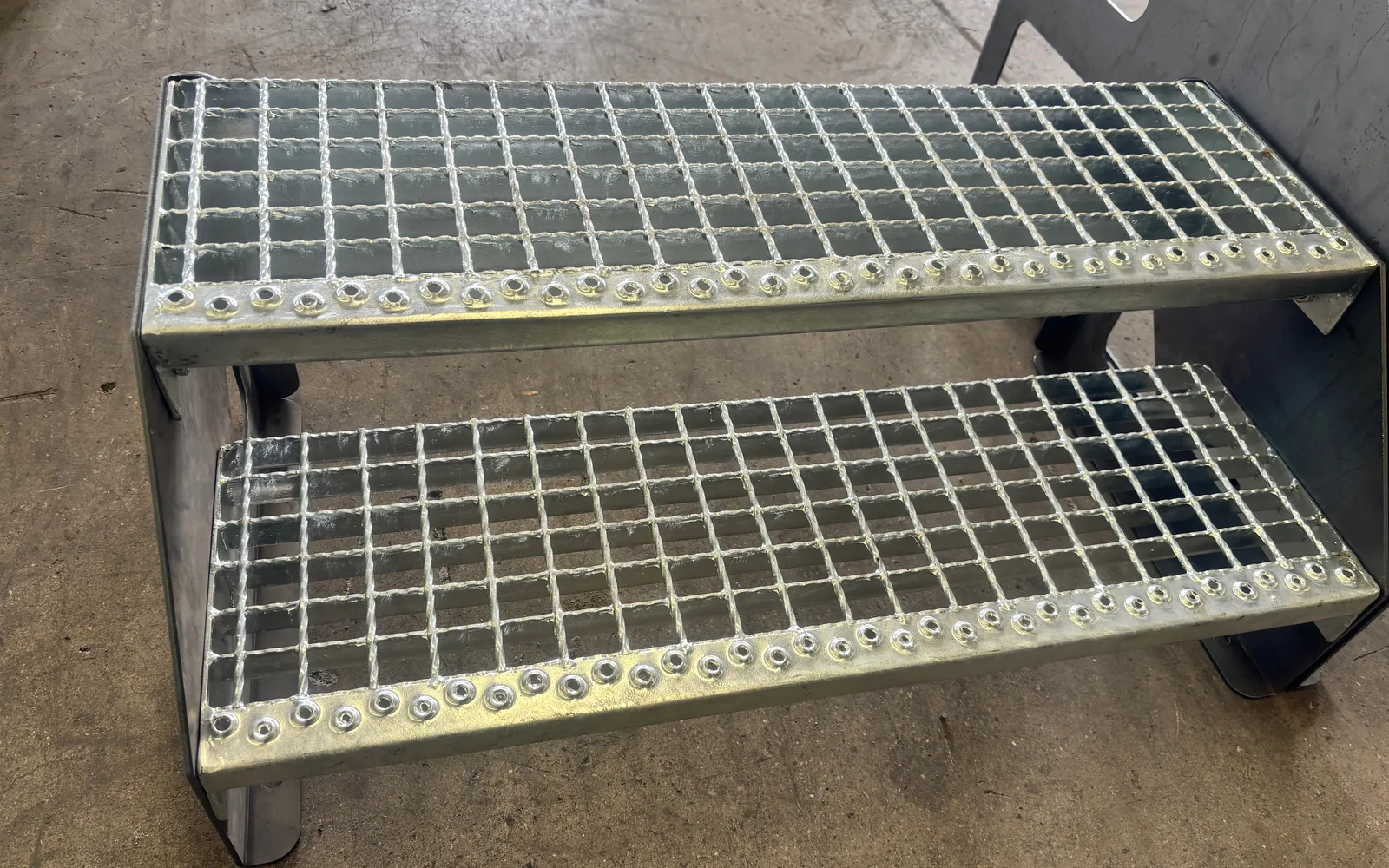
Many buyers focus only on price when purchasing steel grating, overlooking specification matching and corrosion protection, which leads to rework later. This article lists the conditions to confirm in the order of the two bowing indicators, basic concepts, and specification parameters, explaining trade-offs under common conditions. Content related to hot-dip galvanized steel grating can serve directly as technical disclosure reference.
The Two Bowing Indicators
Steel grating develops thermal deformation after welding; how to judge whether it is straight? Clauses 6.6 and 6.7 of YB/T 4001.1-2019 give quantitative criteria:
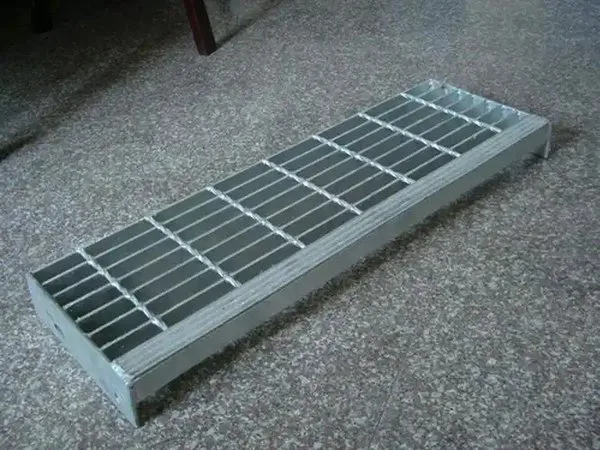
▲ Flatness inspection - checking steel grating bowing deviation with a straightedge
Longitudinal bowing: deflection not greater than 1/200 of the length. For example, a 1-meter-long steel grating panel must not bow more than 5mm longitudinally.
Transverse bowing: deflection less than 1/100 of the width. For example, a 1-meter-wide panel must not bow more than 10mm transversely. Note that the standard says "less than" rather than "not greater than" - a stricter requirement.
What if bowing exceeds the limit?
Welding deformation is normal. Reputable manufacturers level panels before shipment using a press. If delivered goods exceed the bowing limits, do not force them into place; contact the manufacturer for rework and leveling. Forcing them in means uneven seams, a bumpy walk, and worsening deformation over time.
There is another easily overlooked indicator - diagonal deviation. The standard requires the relative diagonal deviation of a single panel to be no more than ±2mm. If this is exceeded, the panel becomes a parallelogram: the four corners will not align, unsightly and unsafe.
Bring a straightedge and tape measure at acceptance; pull the diagonals and check with the straightedge - a few minutes is enough to judge whether the batch is acceptable.
-- Lao Liang @ Anping Steel Grating Factory, July 2026
In processing, the dimensional control of steel grating relies mainly on molds and tooling, so mass production is consistent, while special-shaped pieces need separate layout. When secondary on-site processing is needed, the anti-corrosion treatment of cut edges of hot-dip galvanized steel grating must not be skipped either.
Further Notes: How to Combine Hot-Dip Galvanized Steel Grating and Heavy-Duty Steel Grating
Hot-dip galvanized steel grating and heavy-duty steel grating are different specification forms within the same product system, selected by the same logic described here: first the usage, then specifications by span and load, finally surface treatment by environment. Their corrosion and anti-slip requirements may differ; note them separately before ordering rather than writing one blanket technical requirement.
- For all product specifications and theoretical weights by series, visit Steel Grating Product Center
- To estimate cost by size and quantity, use Instant Quote PageSubmit Requirements
- To see how similar projects were executed, refer to Project Cases field applications
If you already have drawings or site dimensions, submit them directly and we will help verify specifications and layout, avoiding on-site cutting and rework caused by mismatched models. Without drawings, site photos and approximate dimensions are enough for an estimate.