
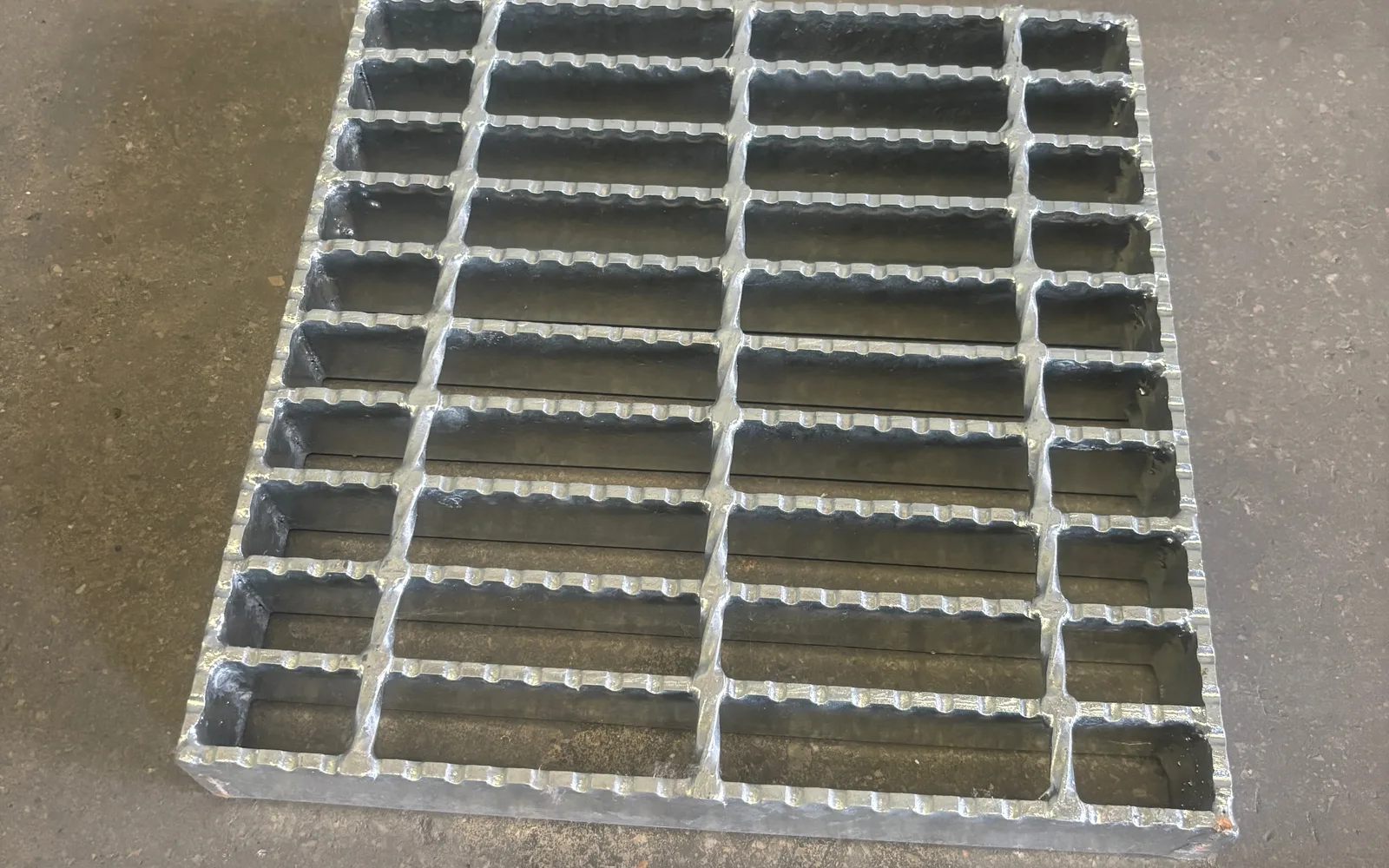
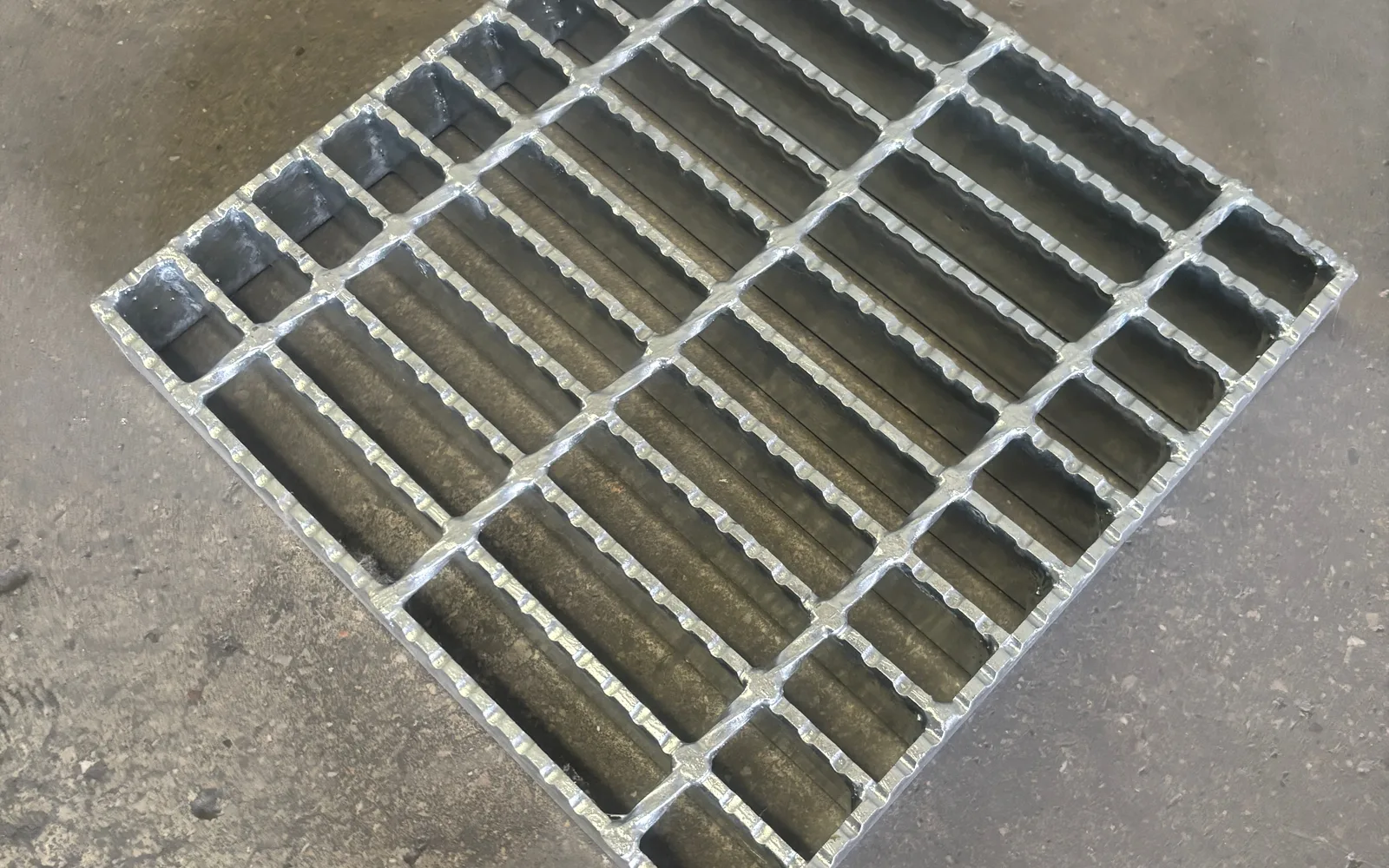
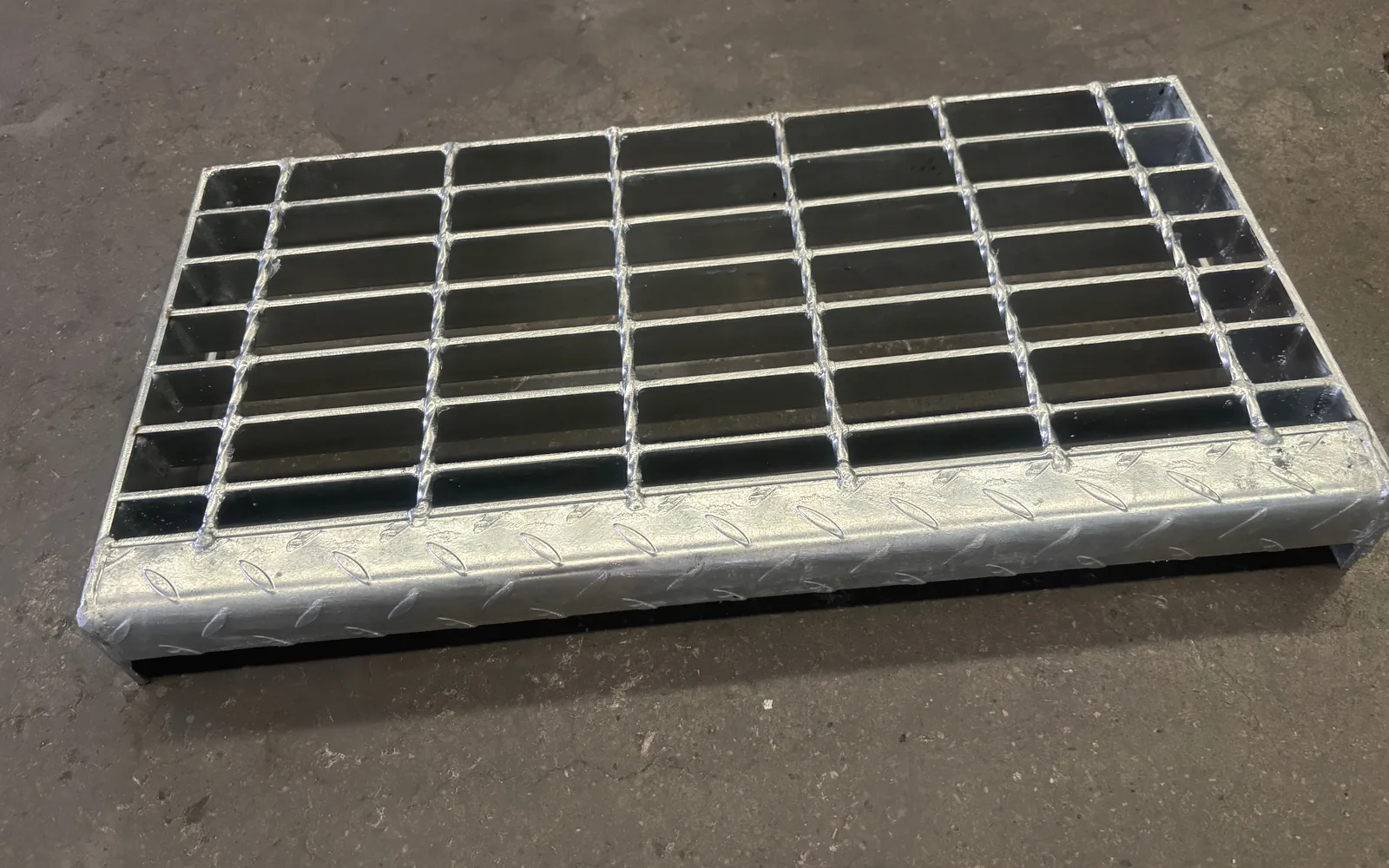




When in-stock trench covers are installed in outdoor public areas, drainage, anti-theft and later access for maintenance matter alongside load capacity. This page explains these together with model selection and lists panel types for different trench constructions, so you can match site conditions.
Items to confirm when selecting in-stock trench covers
This page does not list a fixed specification table, as such products are usually custom-fabricated to site conditions. We recommend confirming each item in the table above before inquiry: once mismatched with actual site conditions, refabrication is often required later.ProductsCommon specifications are organized by series for reference.
| Items to Confirm | What Needs to Be Clarified | Common Practices |
|---|---|---|
| Traffic Type | Pedestrians, light vehicles or heavy vehicles | Determine load class by vehicle types |
| Trench Width and Direction | Clear trench width; bearing bars vs. traffic direction | Side trench covers and cross trench covers must not be mixed |
| Fixing and Anti-Theft | Whether hinge or bolt fixing is needed | Anti-theft type recommended for public areas |
| Drainage Requirements | Whether drainage gaps need to be reserved | Determine by drainage volume and debris conditions |
| Dimensions and Quantity | Panel size and total quantity | Count after layout by trench length and width |
| Opening Method | Whether frequent opening for trench maintenance is needed | Handles or hinges recommended for frequent opening |
Specification parameters of in-stock trench covers
The specification parameters mainly consist of bearing bar specs, bearing bar pitch, cross bar pitch and overall panel dimensions. Confirm each item before ordering; common parameters are cross-referenced below:
Steel grating trench (manhole) covers are made of steel grating, available in multiple models to suit different spans, loads and requirements.
The above are common specifications; actual ordered dimensions and tolerance requirements shall be confirmed against the layout drawing.
Material and Anti-Corrosion Requirements
The material of in-stock trench covers directly determines load capacity and corrosion resistance, key to service life. Bearing bar and cross bar grades and surface treatments are generally selected as follows:
Materials of steel grating trench covers: 1. Bearing bars: Q235A or stainless steel, in flat, serrated anti-slip or I-section profiles.
Once material and surface treatment are decided, we recommend writing zinc coating thickness and appearance requirements into the technical agreement.
Common models and dimensions of in-stock trench covers
The specification parameters mainly consist of bearing bar specs, bearing bar pitch, cross bar pitch and overall panel dimensions. Confirm each item before ordering; common parameters are cross-referenced below:
2. Common specifications include 20*5, 25*5, 25*3, 32*5, 32*5, 40*5, 40*3, 50*5, 65*5, 75*6, 100*8, 100*10, etc.
The above are common specifications; actual ordered dimensions and tolerance requirements shall be confirmed against the layout drawing.
Basic concepts of in-stock trench covers
In-stock trench covers are common steel grating components in industrial plants and municipal engineering, with wide application and a complete specification system. This section clarifies the definition, structural forms and common names to avoid confusion caused by inconsistent terminology.
3. Cross bars: round bars, twisted square bars, square bars or hexagonal bars of Q235A or 304 stainless steel. Twisted square bars are drawn from wire rod through square dies and twisted; common specs include 5*5, 6*6, 8*8mm, etc.
Once you grasp these basic concepts, the specifications and sizing recommendations that follow will be much easier to understand.
Specification parameters of in-stock trench covers (continued)
Process of steel grating trench covers: for different sites, our factory provides trench (manhole) covers in various models, with surfaces hot-dip galvanized, cold galvanized (electro-galvanized) or untreated. Notes on trench cover dimension selection:
1. The bearing bar direction is the load-bearing (support) direction; set bar length L by trench (well) width with clearance;
Standards and Inspection
2. Lay out along trench (well) length using a standard panel width of 995mm per processing module, with 5mm gaps between panels;
For the remaining part of trench (well) length under 1 meter, size by module;
4. Select the steel grating model according to trench (well) width and load requirements.
5. Standard dimensions are recommended for design and construction; our factory can design and manufacture various sizes or other functions as required.
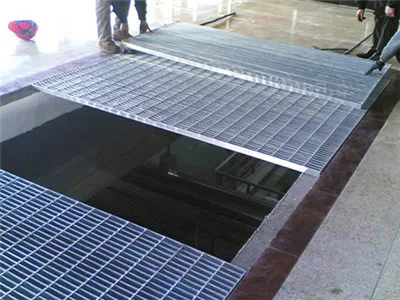
Steel grating trench covers are easy to install, light, high load capacity, impact resistant, bend rather than break, and offer high drainage; after hot-dip galvanizing they are attractive, durable and corrosion resistant, with advantages cast iron covers cannot match. Hinged or hook connections make opening easy and provide anti-theft function.
Applications: widely used in municipal roads, garden facilities, residential communities, schools, stadiums and other places.
Features of steel grating trench covers
| Item | Description |
|---|---|
| Attractive Appearance | Clean lines and a silvery look, in line with modern trends. |
| Excellent drainage | The drainage area reaches 83.3%, more than twice that of cast iron. |
| Hot-Dip Galvanizing | Strong rust resistance, maintenance-free and replacement-free. |
| Anti-Theft Design | The cover is hinged to the frame: anti-theft, safe and easy to open. |
| Cost Savings | For large spans and heavy loads, it costs less than cast iron and saves the cost of replacing stolen or crushed covers. |
| High Strength | Strength and toughness far exceed cast iron; suitable for docks, airports and other large-span, heavy-load environments. |
| Wide Range of Specifications | Meeting requirements for different environments, loads, spans, sizes and shapes. |
Key selection points for in-stock trench covers
Confirm each item in the order below during selection to avoid most later rework. Record the conclusion of each step and submit it with your inquiry:
- Step 1 · Confirm Trench Type and Edge Detail: Concrete trenches without flanges and trenches with support flanges correspond to different panel types; whether the flange needs angle steel protection must be clarified in advance.
- Step 2 · Confirm Vehicle Types: Whether it carries pedestrians, light vehicles or heavy vehicles directly determines the panel type and load class.
- Step 3 · Confirm Trench Width and Laying Direction: Side trench covers and cross trench covers have different bearing bar orientations, which must match the traffic direction to avoid reversed installation affecting load capacity.
- Step 4 · Confirm Anti-Theft and Fixing Requirements: For outdoor public areas, hinged or bolted fixing is recommended to reduce displacement and theft risk.
Once the above conditions are confirmed, proceed to Instant Quote PageEstimate quantities by dimensions, or send the condition list to customer service for model recommendations from our technicians.
In-stock trench cover working-condition comparison
The same specifications last very differently in different environments. The table below gives recommended practices by common service environment for your selection reference:
| Operating Environment | Recommended Practices | Note: |
|---|---|---|
| Chemical or Coastal Environments | Confirm material and anti-corrosion scheme per medium | Avoid galvanic corrosion from direct contact between different metals |
| Vehicle Traffic Areas | Check load class against vehicle types | Note that bearing bars must run parallel to traffic direction |
| Pedestrian and Maintenance Walkways | Choose standard series, balancing walking comfort | Focus on surface flatness and end banding |
| High-Temperature or Large Temperature-Difference Environments | Select material and connection method by temperature | Watch for loosening caused by thermal expansion and contraction |
| Clean Rooms and Food & Pharmaceutical | Prioritize surface treatment and cleaning convenience | Avoid dust-collecting structures and cleaning dead corners |
| Temporary or Short-Term Use | Can be configured with the light-duty series | For short schedules, prioritize easy disassembly and turnover |
Custom Fabrication & Quotation
For custom fabrication, we recommend stating tolerance ranges, zinc coating requirements and packaging in the contract or technical agreement for easy item-by-item acceptance. For batch projects, a sample can be made to confirm appearance and dimensions before mass production. For more specifications, visitProductsto view; for a quotation, go to Instant Quote Page for an estimate.
FAQ
What mistakes are easy to make during installation?
Three main points: first, bearing bars installed in the wrong direction so loads are carried by cross bars; second, insufficient or missing fixing points; third, welding slag not removed and zinc-rich paint not reapplied after welding. These three cause the most on-site problems.
Can it be custom-made to site dimensions?
Yes. Bearing bar specs, pitch, panel dimensions and banding forms can all be custom-made to drawings; cutouts, corner notches and shaped cutting are also supported. For bulk orders, a layout drawing can be confirmed before production.
Which surface treatment should I choose?
Hot-dip galvanizing is recommended for outdoor or humid environments; for dry indoor environments, untreated or painted is fine; coastal, chemical and other strongly corrosive environments need thicker zinc coatings or stainless steel, depending on the expected service life.
The above are the main specifications and selection points for in-stock trench covers. To determine a specific model by site span and load, you canInstant Quote PageQuick estimation, or contact customer service directly for sizing advice and layout drawings.