







The application of galvanized steel grating in actual projects is not complicated; the difficulty lies in matching specifications, materials, and service environment. This article explains them in turn under what is galvanized steel grating, application scope and engineering fields, and installation and construction key points of galvanized steel grating, so that readers can form a complete judgment framework for galvanized gratings.
What Is Galvanized Steel Grating
Below we first briefly explain the relevant concepts and basic construction to make the following parameters and sizing content easier to understand.
Sewers are urban public facilities, pipelines for buildings to discharge sewage and rainwater. Steel grating trench covers have been widely used in urban drainage projects due to high load capacity, large drainage volume, and long service life from hot-dip galvanized surfaces. However, in actual use, when the steel grating is connected to the sewer manhole opening, there are still many gaps between the steel grating and the manhole opening, resulting in poor fixing of existing steel grating trench covers, low safety of existing devices, and an increased probability of the device falling into the sewer manhole.
Once you grasp these basic concepts, the specifications and sizing recommendations that follow will be much easier to understand.
Bigger specifications are not always better. The selection of galvanized steel gratings should be as economical as possible while meeting load requirements; excessive thickening increases weight and cost and causes inconvenience in installation. The product page provides more complete comparison notes on galvanized gratings for reference before making a decision.
Scope of Application & Engineering Fields
Main applications are as follows:
When existing steel grating trench covers are in use, operators need to move or cover the steel grating trench cover from the sewer manhole opening multiple times for dredging or maintenance. Since the steel grating trench covers are heavy and large, operators have a heavy workload, increasing the maintenance and use costs of the steel grating trench covers and reducing the practicality of the device.
If your working conditions fall outside the above range, you can provide site photos and dimensions, and our technicians will help assess them.
The application scope of galvanized steel grating is actually wider than many people think, from industrial platforms to municipal gardens. The difference is: industrial scenarios focus more on load capacity and corrosion protection, while municipal scenarios also consider appearance, anti-theft, and pedestrian safety. Common practices of galvanized gratings in these scenarios can be seen on the case page.
Galvanized Steel Grating Installation and Construction Key Points
On-site construction generally follows the steps and technical requirements below; complete the technical disclosure before starting work:
Here we introduce a flexibly designed sewer steel grating. By installing a rubber plate, the steel grating fits tightly with the sewer manhole opening, increasing the fixing of the steel grating trench cover, making the steel grating and the manhole opening very stable and reducing the possibility of the steel grating falling off. By installing hinges, the steel grating is movably installed with the sewer manhole opening; when operators repair or replace internal parts of the sewer, or need to dredge the sewer, they only need to rotate the steel grating from the manhole opening to the left side of the opening, greatly increasing the practicality of the device and reducing the operators' workload.
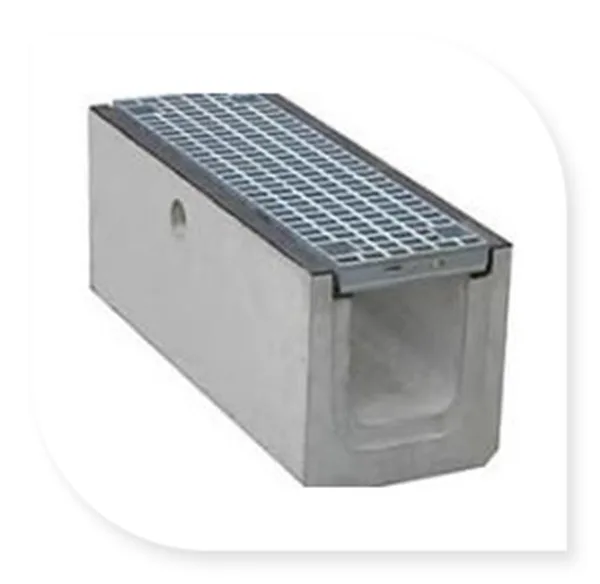
The steel grating trench cover for sewers includes the cover body; a first fixing plate is fixedly installed on the top surface of the body, and a first fixing hole is opened on the surface of the first fixing plate; a second fixing plate is fixedly installed at the bottom end of the body, and a second fixing hole is opened on the surface of the second fixing plate; a hinge is movably installed on the left side of the body, and a fixing frame is fixedly installed on the right side of the hinge; a filter screen is welded on the surface of the fixing frame; a slot is opened at the top of the device body, and a rubber plate is bonded to the surface of the fixing frame. The filter screen separates larger fixed impurities and garbage outside the manhole opening, preventing impurities from accumulating inside the opening, avoiding blockage inside the sewer, greatly increasing the practicality of the device, improving its working efficiency, and enhancing its social benefit.
By installing a rubber plate, the steel grating fits tightly with the sewer manhole opening, increasing the fixing of the device, making the steel grating and the manhole opening very stable, reducing the possibility of the steel grating falling off, increasing the safety of the device, and greatly enhancing its social benefit.
By installing hinges, the steel grating is movably installed with the sewer manhole opening; when operators repair or replace internal parts of the sewer, or need to dredge the sewer, they only need to rotate the steel grating from the manhole opening to the left side of the opening, greatly increasing the practicality of the device, reducing the operators' workload, increasing their work efficiency, and improving the economic benefits of the device.
After installation, check each panel's fixing points and flatness; put into use only after confirming no warping or looseness.
Choosing a surface treatment is essentially balancing initial investment against later maintenance. Requirements for galvanized steel grating can be appropriately relaxed in dry indoor environments, and raised accordingly outdoors or in humid environments. The selection of galvanized grating can follow the same logic.
Further notes: How to combine galvanized grating and hot-dip galvanized steel grating in use
If a project uses both galvanized grating and hot-dip galvanized steel grating, we recommend planning them on the same layout drawing. This way edge closing, fixing and cutouts at junctions can be handled uniformly, avoiding dimension conflicts during installation and making later maintenance easier.
- For all product specifications and theoretical weights by series, visit Steel Grating Product Center
- To estimate cost by size and quantity, use Instant Quote PageSubmit Requirements
- To see how similar projects were executed, refer to Project Cases field applications
FAQ
Can the values in the article be applied directly?
Values in this article come from relevant standard clauses or common industry practice. For actual selection, recalculate based on site span, load class and service environment; direct copying is not recommended.
How to choose between hot-dip galvanizing and cold galvanizing?
The two anti-corrosion mechanisms differ: hot-dip galvanizing immerses steel in molten zinc to form a metallurgically bonded coating, thick and long-lasting, suitable for outdoor and humid environments; cold galvanizing is electrochemical deposition with a thinner, more uniform appearance, suitable for dry indoor environments or applications requiring high dimensional precision.
What maintenance is required during daily use?
Maintenance mainly involves periodically checking whether fasteners are loose, whether touch-up paint has peeled off, and whether the panel surface shows obvious deformation or rust. Issues found should be dealt with promptly; overall maintenance is minimal.
The above is for sizing and construction reference. To verify specific parameters or request a quotation, please visitInstant Quote Page, or contact our technical staff.
If you already have drawings or site dimensions, submit them directly and we will help verify specifications and layout, avoiding on-site cutting and rework caused by mismatched models. Without drawings, site photos and approximate dimensions are enough for an estimate.