







This article explains hot-dip galvanized steel grating step by step, in the order of material and surface treatment, material and anti-corrosion requirements, and basic concepts, offering practical decision rules rather than theory alone. If you have drawings or on-site dimensions at hand, check them against the points listed here; galvanized steel grating can follow the same order of judgement.
Material and Surface Treatment of Hot-Dip Galvanized Steel Grating
Common materials and surface treatments are as follows:
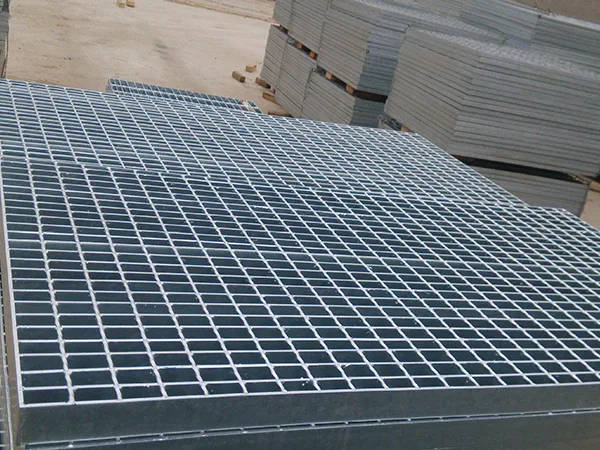
What causes the zinc coating to peel off steel grating panels? Improper galvanizing of the steel grating will cause the coating to peel.
The causes of zinc coating peeling on steel grating panels can be considered from three aspects: improving the surface cleanliness of the base metal, ensuring atmosphere control in the furnace, and ensuring the grating base material is fully reduced, thereby improving galvanizing quality and the service performance of the grating.
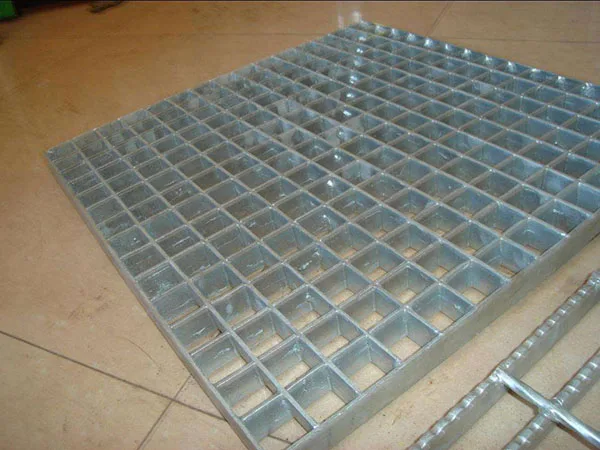
Hot-dip galvanizing: the principle is to immerse steel parts in molten zinc to obtain a metallic coating.
Hot-dip galvanizing: pickling equipment, bottom-draw annealing furnace or bell-type annealing furnace.
Once material and surface treatment are decided, we recommend writing zinc coating thickness and appearance requirements into the technical agreement.
Regarding corrosion protection, one thing is easily overlooked: on-site cutting and welding damage the original coating, and these areas need zinc touch-up after construction, otherwise rust often starts from the cut edges. Galvanized grating has the same issue; it is best to include this in the technical requirements at the construction disclosure.
Material and Anti-Corrosion Requirements
Common materials and surface treatments are as follows:
Hot-dip galvanizing: durable, long-lasting corrosion protection. A standard-quality hot-dip galvanized anti-rust coating thickness gives excellent durability; the coating is tough, and the zinc layer forms a unique metallurgical structure that can withstand mechanical damage during transport and use.
Once material and surface treatment are decided, we recommend writing zinc coating thickness and appearance requirements into the technical agreement.
Material and surface treatment determine how hot-dip galvanized steel grating performs on site. For the same steel grating, the treatment used in a dry interior differs greatly from that in coastal or chemical environments, so the service environment should be raised as the first condition during selection. This judgement also holds for hot-dip galvanized steel grating.
Further reading: Sizing reference for galvanized grating and hot-dip galvanized steel grating
In engineering, hot-dip galvanized steel grating is often used together with the components mentioned in this article. The two differ in load carrying and installation practices; when combining them, pay special attention to the connection of support conditions and fixing methods, as junction treatment is often where problems arise. For unified drawings, submit dimensions of both types and our technicians will process them under the same layout logic.
- For all product specifications and theoretical weights by series, visit Steel Grating Product Center
- To estimate cost by size and quantity, use Instant Quote PageSubmit Requirements
- To see how similar projects were executed, refer to Project Cases field applications
FAQ
What is most often overlooked during installation and acceptance?
First, bearing bars installed in the wrong direction reduce load capacity; second, insufficient fixing points or missing zinc touch-up paint; third, support beam spacing inconsistent with the layout drawing. These three items are most often overlooked on site.
What maintenance is required during daily use?
Maintenance mainly involves periodically checking whether fasteners are loose, whether touch-up paint has peeled off, and whether the panel surface shows obvious deformation or rust. Issues found should be dealt with promptly; overall maintenance is minimal.
Where can I find specific specifications?
our websiteProductsCommon specifications and theoretical weights are organized by series, also available in Instant Quote PageEstimate by size, or contact us directly for sizing advice.
The above is for sizing and construction reference. To verify specific parameters or request a quotation, please visitInstant Quote Page, or contact our technical staff.
The above is general guidance. For a specific project, we still recommend submitting span, load class and service environment to our technicians for review. Steel grating is a load-bearing component; rework caused by wrong specification choices costs far more than the time spent on upfront calculation.