







When purchasing steel gratings, many projects focus only on price while neglecting specification matching and anti-corrosion requirements, which easily leads to rework later. This article lists the conditions to be confirmed one by one, in the order of capacity calculation of galvanized grating rainwater gratings, maintenance of galvanized grating rainwater gratings, and basic concepts, and explains how to make trade-offs based on common working conditions. The content related to hot-dip galvanized steel gratings can be directly used as a reference for technical disclosure.
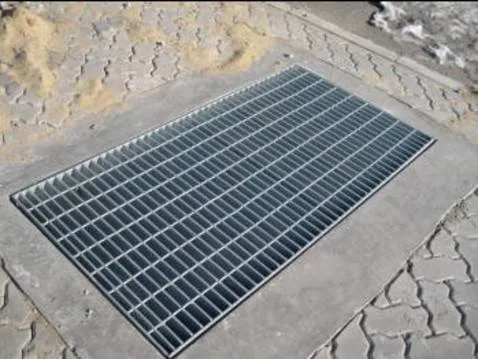
Galvanized gratings are a material for rainwater inlet gratings gradually being popularized in road facilities. Due to the high strength and easy processing of steel, products of corresponding load ratings can be manufactured according to different road requirements; meanwhile, the open water cross-section can be maximized, and hot-dip galvanizing ensures the appearance and long-term use. Galvanized grating rainwater inlet gratings have been used for up to twenty years with basically no damage requiring replacement.
Capacity calculation of galvanized grating rainwater gratings
Common materials and surface treatments are as follows:
This article takes the hydraulic test discharge of 20L/s of ductile iron rainwater inlet gratings in the "Water Supply and Drainage Design Manual" and "Municipal Drainage Pipeline Engineering and Auxiliary Facilities" as the standard, and performs hydraulic calculations according to the current "Code for Design of Outdoor Drainage" (GB50014-2006, 2011 edition), which stipulates that "the recurrence interval should be 1 to 3 years; for key arterial roads, key areas, or areas where short-term waterlogging can cause serious harm, 3 to 5 years should be selected".
In urban road design, rainwater inlet gratings with large flow capacity should be selected as much as possible, and galvanized grating rainwater inlet gratings can be given priority. For arterial roads and key highways, special attention should be paid in design to verifying whether the open water cross-section of the selected rainwater inlet gratings meets the discharge requirements.
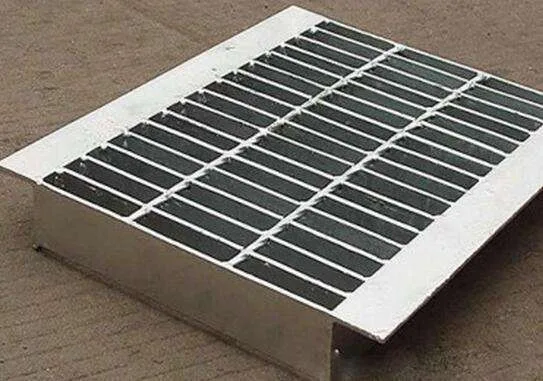
Once material and surface treatment are decided, we recommend writing zinc coating thickness and appearance requirements into the technical agreement.
For material selection, it is not advisable to simply pursue high grades. The materials of steel gratings should match the load requirements and service environment; over-specifying materials causes unnecessary cost increases. For the corresponding treatment of hot-dip galvanized steel gratings, refer to the product page instructions and choose according to actual working conditions.
Maintenance of galvanized grating rainwater gratings
Common materials and surface treatments are as follows:
Galvanized grating rainwater gratings are often blocked by fallen leaves and debris, affecting discharge on rainy days. When rainstorms come, besides rainwater, leaves, paper scraps, plastic bags, and other debris usually pass through the rainwater inlet gratings; once debris blocks part of the inlets, the open water cross-section may be reduced and the inlet connecting pipes can easily be blocked. Measures to ensure smooth drainage of rainwater inlet gratings: besides enhancing routine cleaning and maintenance, engineering and maintenance technical measures can also be adopted to reduce the impact of debris on rainwater inlets.
Current rainwater inlets are generally brick-built, and most rainwater inlet gratings have no locking devices. Due to limited management under current conditions, some street-facing residents and merchants privately remove the shafts of rainwater inlet inspection wells and connect drainage pipes directly to the rainwater inlets, which is especially common along roads with prosperous catering businesses. This actually causes oil and sewage to enter stormwater pipes, and this wastewater is then discharged into rivers through the stormwater pipes, causing enormous pollution to the river channels.
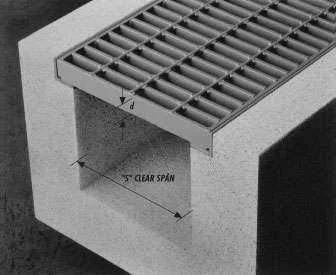
Design measures to prevent unauthorized connections: to reduce such occurrences, besides increasing the inspection efforts of environmental protection departments, brick-built rainwater inlets can be changed to precast reinforced concrete rainwater inlets in design, which can greatly reduce unauthorized connections and also has the following benefits: saving resources and land, further protecting and improving the environment, and responding to the Ministry of Housing and Urban-Rural Development's regulations prohibiting and restricting the use of brick-built inspection wells; precast concrete rainwater inlets can effectively improve the efficiency of urban road construction; precast inspection wells improve construction quality and effectively prevent partial settlement of the ground around rainwater inlets.
The Ministry of Housing and Urban-Rural Development has compiled the "Outline for Compiling Comprehensive Planning of Urban Drainage (Rainwater) Waterlogging Prevention" to guide localities in compiling comprehensive plans suited to local conditions and building a relatively complete urban drainage and waterlogging prevention project system.
Once material and surface treatment are decided, we recommend writing zinc coating thickness and appearance requirements into the technical agreement.
Regarding corrosion protection, one thing is easily overlooked: on-site cutting and welding damage the original coating, and these areas need zinc touch-up after construction, otherwise rust often starts from the cut edges. Hot-dip galvanized steel grating has the same issue; it is best to include this in the technical requirements at the construction disclosure.
Further reading: Selection points for hot-dip galvanized steel grating and galvanized grating
Hot-dip galvanized steel grating and galvanized grating are different specification forms within the same product system. The selection logic is the same as described in this article: first the usage type, then span and load to determine specifications, and finally the environment to determine surface treatment. Their corrosion protection and anti-slip requirements may differ; state them separately when ordering rather than writing one general technical requirement.
- For all product specifications and theoretical weights by series, visit Steel Grating Product Center
- To estimate cost by size and quantity, use Instant Quote PageSubmit Requirements
- To see how similar projects were executed, refer to Project Cases field applications
FAQ
Why do different manufacturers quote different weights for the same specifications?
The main difference lies in the actual measured thickness and tolerance control of the bearing bars. When bars are supplied at the lower tolerance limit, weight per unit area falls below the theoretical value, and load capacity drops accordingly. We recommend specifying thickness tolerance clearly when purchasing.
What information is needed for custom sizes?
Usually you need to provide the panel dimensions (length x width), bearing bar specs and direction, center-to-center pitch of bearing bars and cross bars, surface treatment, and special requirements such as cutouts, corner notches and banding. Site photos or sketches are even better.
Where can I find specific specifications?
our websiteProductsCommon specifications and theoretical weights are organized by series, also available in Instant Quote PageEstimate by size, or contact us directly for sizing advice.
The above is for sizing and construction reference. To verify specific parameters or request a quotation, please visitInstant Quote Page, or contact our technical staff.
Note that this article presents sizing approaches and general practice, and does not constitute a strength commitment for any specific project. For load-bearing safety-critical areas, the design drawings and on-site calculations shall prevail; contact our technical staff if in doubt.