







Many projects focus only on price when purchasing steel grating, overlooking specification matching and anti-corrosion requirements, which often leads to rework later. This article lists the conditions to confirm in the order of types of surface treatment, usage and maintenance points, and basic concepts, and explains how to make trade-offs under common service conditions; the sections related to galvanized grating can be used directly as a reference for technical disclosure.
Materials and Surface Treatment of Steel Grating
Common materials and surface treatments are as follows:
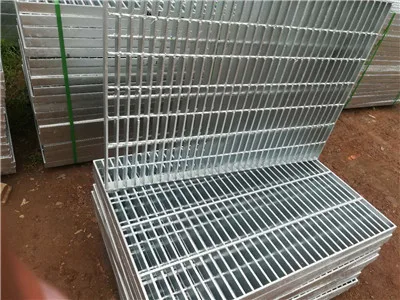
Steel grating surfaces can generally be finished in three ways: hot-dip galvanizing, cold galvanizing and spray painting.
Once material and surface treatment are decided, we recommend writing zinc coating thickness and appearance requirements into the technical agreement.
For material selection, pursuing high grades alone is not recommended. The material of steel grating should match the load requirements and service environment; over-specifying materials causes unnecessary cost increases. For the corresponding treatment of galvanized grating, refer to the product page and choose according to actual service conditions.
Use and Maintenance Key Points
Pay attention to the following in daily maintenance:
When choosing steel grating, customers usually specify a surface treatment process to improve corrosion resistance and extend service life; most steel grating is hot-dip galvanized.
Regular inspection and maintenance as required effectively extends service life and reduces replacement costs.
Materials and surface treatment determine the field durability of steel grating. The same steel grating requires very different treatments in dry indoor conditions versus coastal or chemical environments, so the service environment should be raised as the primary condition during selection. The same applies to galvanized grating.
What Is Steel Grating Surface Treatment
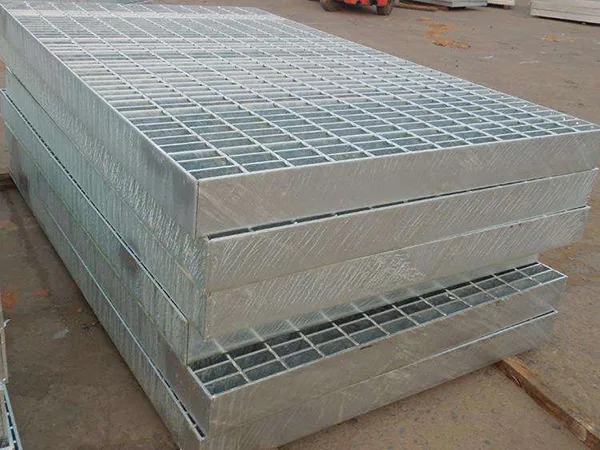
Hot-dip galvanizing means melting zinc ingots at high temperature, adding auxiliary materials, and immersing metal structural parts in a galvanizing bath so that a zinc layer adheres to the metal surface - an electrochemical reaction. Its adhesion is very strong and does not peel off easily. Service life is long; hot-dip galvanized steel grating generally lasts 50-60 years. This greatly extends the service life, reduces replacements, and invisibly lowers the customer's repurchase costs.
"Cold galvanizing" is also known as" electroplating", i.e., electrolyzing a zinc salt solution so that iron ions and zinc ions exchange places. It generally requires no heating, deposits very little zinc, and rusts easily in humid environments, but it is cheaper than hot-dip galvanizing. Cold galvanized steel grating used outdoors will rust once exposed to rain; in humid conditions it usually rusts within 2 to 3 months, and its rust resistance is poor.
Regarding corrosion protection, one thing is easily overlooked: on-site cutting and welding damage the original coating, and these areas need zinc touch-up after construction, otherwise rust often starts from the cut edges. Hot-dip galvanized steel grating has the same issue; it is best to include this in the technical requirements at the construction disclosure.
Material and Anti-Corrosion Requirements
Spray-painted steel grating refers mainly to the surface treatment of steel grating. Its processing cost is lower than hot-dip galvanizing and its rust resistance is moderate, but it is prone to wear. Spray painting, however, allows a variety of colors; especially when steel grating is used on machinery, the grating color must match the equipment color, in which case spray painting is chosen as the surface treatment.
Choosing a surface treatment is essentially a trade-off between initial investment and later maintenance. Requirements can be relaxed for steel grating in dry indoor environments and should be raised for outdoor or humid environments. Hot-dip galvanized steel grating can be selected following the same logic.
Further reading: Selection points for galvanized grating and hot-dip galvanized steel grating
In engineering, hot-dip galvanized steel grating is often used together with the components mentioned in this article. The two differ in load carrying and installation practices; when combining them, pay special attention to the connection of support conditions and fixing methods, as junction treatment is often where problems arise. For unified drawings, submit dimensions of both types and our technicians will process them under the same layout logic.
- For all product specifications and theoretical weights by series, visit Steel Grating Product Center
- To estimate cost by size and quantity, use Instant Quote PageSubmit Requirements
- To see how similar projects were executed, refer to Project Cases field applications
FAQ
What information is needed for custom sizes?
Usually you need to provide the panel dimensions (length x width), bearing bar specs and direction, center-to-center pitch of bearing bars and cross bars, surface treatment, and special requirements such as cutouts, corner notches and banding. Site photos or sketches are even better.
Can the values in the article be applied directly?
Values in this article come from relevant standard clauses or common industry practice. For actual selection, recalculate based on site span, load class and service environment; direct copying is not recommended.
Where can I find specific specifications?
our websiteProductsCommon specifications and theoretical weights are organized by series, also available in Instant Quote PageEstimate by size, or contact us directly for sizing advice.
The above is for sizing and construction reference. To verify specific parameters or request a quotation, please visitInstant Quote Page, or contact our technical staff.
If you already have drawings or site dimensions, submit them directly and we will help verify specifications and layout, avoiding on-site cutting and rework caused by mismatched models. Without drawings, site photos and approximate dimensions are enough for an estimate.