







This article introduces hot-dip galvanized steel grating in sequence: its performance advantages, basic concepts, and specifications. Each section provides actionable selection criteria; if you only need a quick conclusion, start with the key points at the beginning of each section. The same approach applies to hot-dip galvanized steel grating.
Specifications and parameters related to the performance advantages of hot-dip galvanized steel grating
Main specification comparison is as follows:
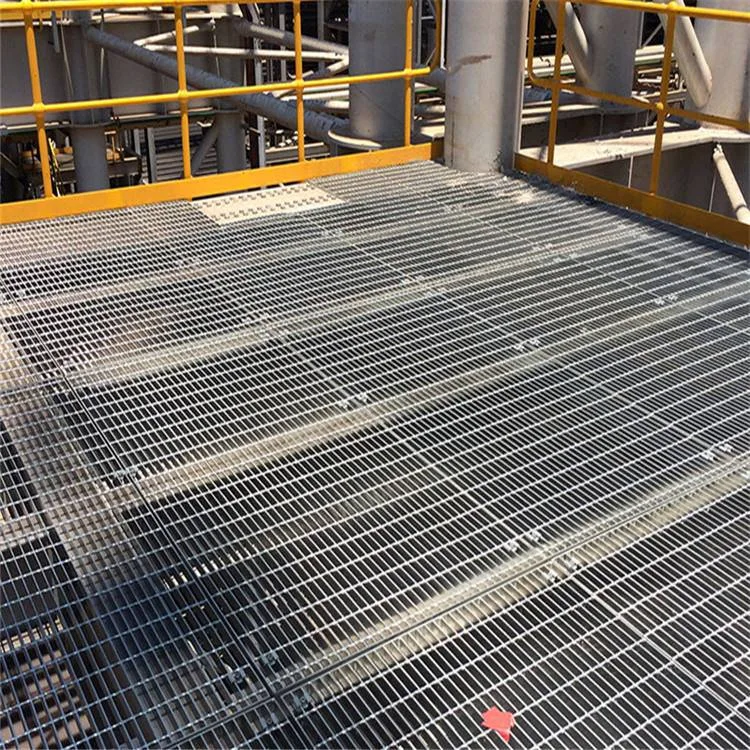
The pitch of bearing bars and cross bars can be determined by the supplier and purchaser according to design requirements. For industrial platforms, it is recommended that the bearing bar pitch not exceed 40mm and the cross bar pitch not exceed 165mm.
At each intersection of bearing bar and cross bar, the bars should be fixed by welding, riveting, or press-locking. Pressure resistance welding is preferred for welding steel grating, though arc welding can also be used. For press-locking, a press machine presses the cross bar into the bearing bars to fix them.
The above are common specifications; actual ordered dimensions and tolerance requirements shall be confirmed against the layout drawing.
Bigger is not always better. The selection of hot-dip galvanized steel grating should be as economical as possible while meeting load requirements; over-thickening increases self-weight and cost and complicates installation. The products page offers a more complete comparison of hot-dip galvanized steel grating; refer to it before deciding.
Supplementary notes on the performance advantages of hot-dip galvanized steel grating
The following aspects most need to be confirmed in advance in actual procurement and use:
Material savings: under the same load conditions it uses less material, and in turn reduces the material required for supporting structures.
The above points can serve as a pre-purchase checklist; confirm each item before moving to the quotation stage.
Choosing a surface treatment is essentially a trade-off between initial investment and later maintenance. Requirements can be moderately relaxed for hot-dip galvanized steel grating in dry indoor environments, and should be raised for outdoor or humid environments. The same logic applies to selecting hot-dip galvanized steel grating.
Maintenance and care related to the performance advantages of hot-dip galvanized steel grating
Reduced investment: saves materials, labor and construction time, and is cleaning- and maintenance-free.
Material and surface treatment determine the durability of hot-dip galvanized steel grating on site. For the same steel grating, the treatment differs greatly between dry indoor use and coastal or chemical environments, so the service environment should be stated as the primary condition when making a selection. The same judgment applies to hot-dip galvanized grating.
Installation and Fixing Method
Easy installation: it can be fixed to pre-installed supports with bolt clips or welding, completed by one person.
Saves construction time: no on-site reprocessing needed; installation is very fast.
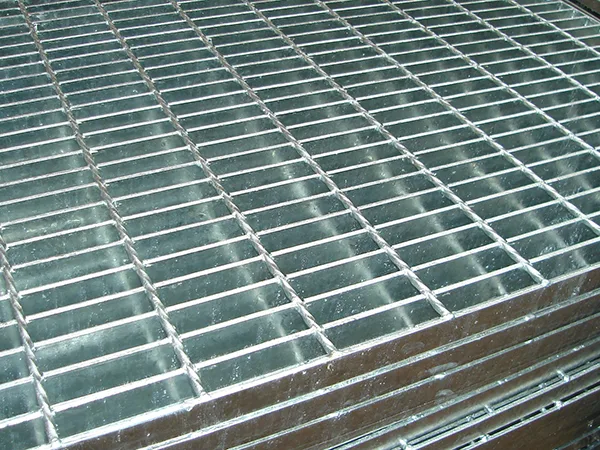
The installation quality of hot-dip galvanized steel grating largely depends on preparation: whether the bearing surface is flat, whether beam spacing matches the layout, and whether fasteners are prepared in advance. Once these are in place, installation itself is not complicated. If cutting is required on site, the cut-edge treatment requirements for hot-dip galvanized grating should also be clarified.
Material and surface treatment related to the performance advantages of hot-dip galvanized steel grating
Long-lasting durability: hot-dip galvanized for corrosion protection before leaving the factory, with strong resistance to impact and heavy pressure.
Regarding corrosion protection, one thing is easily overlooked: on-site cutting and welding damage the original coating, and these areas need zinc touch-up after construction, otherwise rust often starts from the cut edges. Hot-dip galvanized steel grating has the same issue; it is best to include this in the technical requirements at the construction disclosure.
Key Advantages
Modern style: attractive appearance, standardized design, ventilated and light-transmitting, giving a smooth, modern overall impression.
Once you understand the structure of hot-dip galvanized steel grating, reading spec sheets and quotations becomes much easier. Remember it as three parts: bearing bars + cross bars + surface treatment; a change in any one affects product performance. The same breakdown applies when selecting hot-dip galvanized steel grating.
Common models and sizes related to hot-dip galvanized steel grating
Steel grating can be fabricated into various sizes and shapes according to user requirements.
A practical tip for confirming specifications: write the bar size, bearing bar pitch, cross bar pitch, and overall dimensions into the purchase list together; specifying only one or two items often leads to mismatched deliveries. The full specification notation for hot-dip galvanized steel grating is compared on the products page; number and check each piece against the layout drawing before ordering, and the same applies to hot-dip galvanized steel grating.
Further reading: Selection points for hot-dip galvanized steel grating and hot-dip galvanized steel grating
Hot-dip galvanized steel grating and hot-dip galvanized steel grating are different specification forms within the same product system. The selection logic is the same as described in this article: first the usage type, then span and load to determine specifications, and finally the environment to determine surface treatment. Their corrosion protection and anti-slip requirements may differ; state them separately when ordering rather than writing one general technical requirement.
- For all product specifications and theoretical weights by series, visit Steel Grating Product Center
- To estimate cost by size and quantity, use Instant Quote PageSubmit Requirements
- To see how similar projects were executed, refer to Project Cases field applications
FAQ
Where can I find specific specifications?
our websiteProductsCommon specifications and theoretical weights are organized by series, also available in Instant Quote PageEstimate by size, or contact us directly for sizing advice.
What information is needed for custom sizes?
Usually you need to provide the panel dimensions (length x width), bearing bar specs and direction, center-to-center pitch of bearing bars and cross bars, surface treatment, and special requirements such as cutouts, corner notches and banding. Site photos or sketches are even better.
What is most often overlooked during installation and acceptance?
First, bearing bars installed in the wrong direction reduce load capacity; second, insufficient fixing points or missing zinc touch-up paint; third, support beam spacing inconsistent with the layout drawing. These three items are most often overlooked on site.
The above is for sizing and construction reference. To verify specific parameters or request a quotation, please visitInstant Quote Page, or contact our technical staff.
If you already have drawings or site dimensions, submit them directly and we will help verify specifications and layout, avoiding on-site cutting and rework caused by mismatched models. Without drawings, site photos and approximate dimensions are enough for an estimate.