







Many buyers focus only on price when purchasing steel grating, overlooking specification matching and anti-corrosion requirements, which often leads to rework. Following the order of compliance requirements, steel grating features and basic concepts, this article lists the conditions to confirm one by one and explains trade-offs under common working conditions; the sections related to galvanized grating can serve directly as technical disclosure reference.
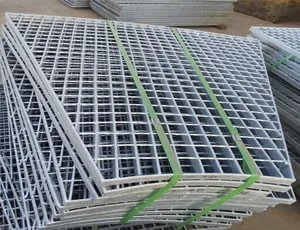
Steel Grating Meets the Requirements of Market Development
The standards and inspection items to check are as follows:
Steel grating is widely used as maintenance platforms. It is attractive, easy to install and durable, and toe plates (edge boards), checkered plate guards, connectors and other accessories can be welded around the perimeter. Edging can use flat bars of different specifications from the bearing bars, or angle steel, channel steel or square tubes; handles and hinges can be installed on panels that are frequently moved or opened.
1. Steel stair treads: stairs made of steel grating for platforms. By fixing method there are two main types: welded and bolted. Welded treads fixed directly to the joists need no side plates, which is economical and durable but hard to disassemble; bolted treads need thickened side plates on both sides, drilled for bolts.
2. Platform steel grating: a widely used product, as on industrial maintenance platforms and catwalks. It is applied extensively in industry, municipal works, power and coal mining, offering the strongest resistance to surface impact; grating with 50mm cross bar pitch has strong resistance to lateral impact.
3. Trench covers are widely used in municipal roads, garden facilities, residential communities, schools, stadiums and other places.
4. Ceiling steel grating is a building material product that uses steel grating for indoor suspended ceilings. It features light structure, attractive appearance, high strength and walkability, and is easy to install. With hot-dip galvanized surfaces, it offers 30 years of corrosion protection and is paint-free and maintenance-free.
5. Steel grating railings (steel grating fences) are railings made of steel grating. They are sturdier and more durable than those made of welded wire mesh, steel plate mesh or chain link, but also much more costly, so they are rarely used.
Steel grating is a new type of energy-saving, environmentally friendly steel structure. It is recyclable, meets the requirements of energy-efficient and sustainable development, and shows its advantages in high-rise buildings, large factories, long-span structures, transportation and energy projects, and elevated work platforms.
We recommend checking each clause above during acceptance and keeping the factory inspection records.
A practical tip for specification confirmation: write all four items - bearing bar specs, bearing bar pitch, cross bar pitch and overall dimensions - into the purchase list. Writing only one or two easily leads to mismatched deliveries. The specification notation of steel grating is fully cross-referenced on the product page; before ordering, check each panel against the layout drawing. The same applies to hot-dip galvanized steel grating.
Features of steel grating
Main features can be summarized as follows:
- Steel grating with a 30mm bearing bar pitch is the most widely used type in industry; among common steel grating series it offers the strongest resistance to surface impact.
- Steel grating with a 40mm bearing bar pitch is the most economical and lightweight type, and the ideal choice where spans are smallest.
- Steel grating with a 60mm bearing bar pitch and 50mm cross bar pitch was developed specifically for mining applications. It solves the problem of minerals splashing onto the panel surface, and is often specified for processing plants, transfer stations and crushing systems in the mining industry.
Overall, selection should weigh span, load and service environment together.
Bigger is not always better. Steel grating selection should be as economical as possible while meeting load requirements; excessive thickness increases weight and cost and complicates installation. The product page provides fuller cross-references for galvanized grating - review them together before deciding.
Further reading: Selection points for galvanized grating and hot-dip galvanized steel grating
Galvanized grating and hot-dip galvanized steel grating are different specification forms within the same product system. The selection logic is the same as described in this article: first the usage type, then span and load to determine specifications, and finally the environment to determine surface treatment. Their corrosion protection and anti-slip requirements may differ; state them separately when ordering rather than writing one general technical requirement.
- For all product specifications and theoretical weights by series, visit Steel Grating Product Center
- To estimate cost by size and quantity, use Instant Quote PageSubmit Requirements
- To see how similar projects were executed, refer to Project Cases field applications
FAQ
What maintenance is required during daily use?
Maintenance mainly involves periodically checking whether fasteners are loose, whether touch-up paint has peeled off, and whether the panel surface shows obvious deformation or rust. Issues found should be dealt with promptly; overall maintenance is minimal.
What information is needed for custom sizes?
Usually you need to provide the panel dimensions (length x width), bearing bar specs and direction, center-to-center pitch of bearing bars and cross bars, surface treatment, and special requirements such as cutouts, corner notches and banding. Site photos or sketches are even better.
Why do different manufacturers quote different weights for the same specifications?
The main difference lies in the actual measured thickness and tolerance control of the bearing bars. When bars are supplied at the lower tolerance limit, weight per unit area falls below the theoretical value, and load capacity drops accordingly. We recommend specifying thickness tolerance clearly when purchasing.
The above is for sizing and construction reference. To verify specific parameters or request a quotation, please visitInstant Quote Page, or contact our technical staff.
If you already have drawings or site dimensions, submit them directly and we will help verify specifications and layout, avoiding on-site cutting and rework caused by mismatched models. Without drawings, site photos and approximate dimensions are enough for an estimate.