







Many projects focus only on price when purchasing special-shaped steel grating, overlooking specification matching and anti-corrosion requirements, which often leads to rework. This article lists the conditions to confirm in the order of sector area calculation, arc length formula and basic concepts, and explains trade-offs under common conditions; the sections on platform steel grating can be used as a reference for technical disclosure.
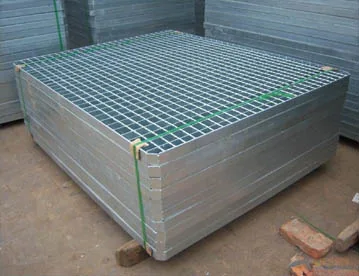
1. Fan-shaped steel grating calculation: fan-shaped steel grating is made the same way as ordinary platform steel grating, with an added process of cutting and edge trimming to the shape. Its price is slightly higher than ordinary steel grating, because the manufacturer includes the cut-off material in the cost. Without precise drawings, fabrication follows the customer's specified dimensions, with the area counted as the sum of length × width. Arc length and area of fan-shaped steel grating are calculated as follows:
Area Calculation of a Sector
Additional key points are as follows:
A sector is a shape related to the circle; its area depends on the central angle and the radius. For a sector with central angle n° and radius r, the area is n/360 × πr^2. If its vertex angle is expressed in radians, it simplifies to 1/2 × radian × radius squared.
A sector also resembles a triangle: the simplified area formula above can be read as 1/2 × arc length × radius, similar to the triangle area formula 1/2 × base × height.
Formula in this section: S sector = (I × R)/2 (I is the arc length of the sector)
S sector = (n/360)πR^2 (n is the central angle in degrees, R is the radius of the base circle) S sector = (aR^2)/2 (a is the central angle in radians)
The above points can serve as a pre-purchase checklist; confirm each item before moving to the quotation stage.
Note that the specific practices of special-shaped steel grating vary with project conditions; this article gives general guidance rather than fixed answers. In practice, confirm the site span, support conditions and traffic requirements first, then implement item by item; for hot-dip galvanized steel grating the same logic applies, and a final review before ordering is still recommended.
Arc Length Calculation Formula
The following aspects most need to be confirmed in advance in actual procurement and use:
Arc length formula: I = n (central angle) × π (pi) × r (radius)/180
Note: n is the central angle in degrees, r is the radius, I is the arc length. In a circle of radius R, since the arc subtended by a 360° central angle equals the circumference C = 2πR, the arc length subtended by an n° central angle is I = n°πR ÷ 180°
2. Area calculation of special-shaped steel grating: for special-shaped grating, the area is width (W) × length (L), without deducting the cut-off parts.
3.Where fabrication follows the customer's specified dimensions without drawings, the area is the quantity of grating actually delivered multiplied by the sum of width and length, including openings and cut-out parts.
4 Where drawings designed for the customer are provided, the area is calculated from the total outer dimensions on the drawings, including openings and cut-out parts.
The above points can serve as a pre-purchase checklist; confirm each item before moving to the quotation stage.
The selection of special-shaped steel grating ultimately comes down to the drawings. Mark the layout direction, fixing method and end treatment together to avoid improvising on site. If design conditions are missing, submit site dimensions and photos; hot-dip galvanized steel grating can also be laid out on the same basis.
Further notes: How to combine platform steel grating and hot-dip galvanized steel grating in use
If a project uses both platform steel grating and hot-dip galvanized steel grating, we recommend planning them on the same layout drawing. This way edge closing, fixing and cutouts at junctions can be handled uniformly, avoiding dimension conflicts during installation and making later maintenance easier.
- For all product specifications and theoretical weights by series, visit Steel Grating Product Center
- To estimate cost by size and quantity, use Instant Quote PageSubmit Requirements
- To see how similar projects were executed, refer to Project Cases field applications
FAQ
Can the values in the article be applied directly?
Values in this article come from relevant standard clauses or common industry practice. For actual selection, recalculate based on site span, load class and service environment; direct copying is not recommended.
Why do different manufacturers quote different weights for the same specifications?
The main difference lies in the actual measured thickness and tolerance control of the bearing bars. When bars are supplied at the lower tolerance limit, weight per unit area falls below the theoretical value, and load capacity drops accordingly. We recommend specifying thickness tolerance clearly when purchasing.
What is most often overlooked during installation and acceptance?
First, bearing bars installed in the wrong direction reduce load capacity; second, insufficient fixing points or missing zinc touch-up paint; third, support beam spacing inconsistent with the layout drawing. These three items are most often overlooked on site.
The above is for sizing and construction reference. To verify specific parameters or request a quotation, please visitInstant Quote Page, or contact our technical staff.
The above is general guidance. For a specific project, we still recommend submitting span, load class and service environment to our technicians for review. Steel grating is a load-bearing component; rework caused by wrong specification choices costs far more than the time spent on upfront calculation.