







On hot-dip galvanized trench covers, this article explains item by item, in order: application scenarios, material and anti-corrosion requirements, and basic concepts, aiming to give directly applicable judgment methods rather than merely theory. If you have drawings or site dimensions, check them point by point against the notes here; galvanized grating can follow the same sequence.
Applications of Steel Grating
Typical applications mainly include the following categories, which can help you judge suitability for your project:
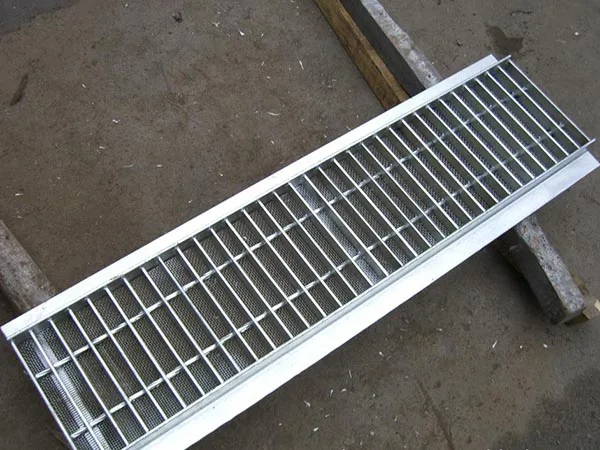
Many people know little about grating trench covers, and few realize that hot-dip galvanized steel grating plays a non-negligible role in urban drainage. But there are many types of steel grating, and different types suit different environments or sites; if you are buying grating specifically for urban drainage, there are many points to watch.
If your working conditions fall outside the above range, you can provide site photos and dimensions, and our technicians will help assess them.
Regarding corrosion protection, one thing is easily overlooked: on-site cutting and welding damage the original coating, and these areas need zinc touch-up after construction, otherwise rust often starts from the cut edges. Hot-dip galvanized steel grating has the same issue; it is best to include this in the technical requirements at the construction disclosure.
Material and Anti-Corrosion Requirements
Material and surface treatment are key to service life. Common practices and suitable environments are as follows:
Hot-dip galvanized trench covers are closely tied to a city's drainage system and its construction; they reflect the level of urban planning, yet they are often overlooked, buried along both sides of roads and never noticed.
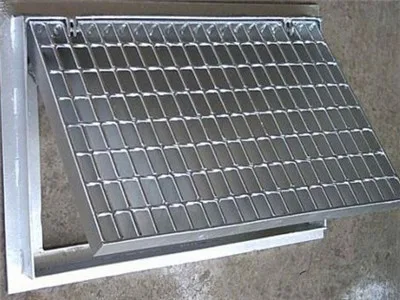
Once material and surface treatment are decided, we recommend writing zinc coating thickness and appearance requirements into the technical agreement.
For material selection, do not simply chase high grades. The material of hot-dip galvanized trench covers should match the load requirements and service environment; over-specifying causes unnecessary cost increases. The corresponding treatment for galvanized grating can be found on the product page, chosen against actual conditions.
Scope of Application & Engineering Fields
Though unnoticed, hot-dip galvanized trench covers are inseparable from daily life. Without a drainage system in the city, sewage would flow everywhere, which would make people miserable and seriously affect their lives. Drainage trenches with these covers give us clean roads, yet they also affect traffic.
Urban areas have high pedestrian density, for example drainage trenches at airports, stations, shopping malls, parks and sidewalks. Their key feature is a narrow gap, so bicycle, shopping cart and wheelchair tires do not get caught in the cover slots, roller skates pass smoothly, and women's high heels do not get stuck. By structure, steel grating can be pressure-welded, press-locked, semi-clamped, perforated or riveted. Cities generally use hot-dip galvanized trench covers, which have very good corrosion resistance and suit outdoor use well.
Materials and surface treatment determine the field durability of hot-dip galvanized trench covers. The same steel grating requires very different treatments in dry indoor conditions versus coastal or chemical environments, so the service environment should be raised as the primary condition during selection. The same applies to galvanized grating.
Further notes: Common combinations of galvanized grating and hot-dip galvanized steel grating
Galvanized grating and hot-dip galvanized steel grating are different specification forms within the same product system. The selection logic is the same as described in this article: first the usage type, then span and load to determine specifications, and finally the environment to determine surface treatment. Their corrosion protection and anti-slip requirements may differ; state them separately when ordering rather than writing one general technical requirement.
- For all product specifications and theoretical weights by series, visit Steel Grating Product Center
- To estimate cost by size and quantity, use Instant Quote PageSubmit Requirements
- To see how similar projects were executed, refer to Project Cases field applications
FAQ
What is most often overlooked during installation and acceptance?
First, bearing bars installed in the wrong direction reduce load capacity; second, insufficient fixing points or missing zinc touch-up paint; third, support beam spacing inconsistent with the layout drawing. These three items are most often overlooked on site.
Where can I find specific specifications?
our websiteProductsCommon specifications and theoretical weights are organized by series, also available in Instant Quote PageEstimate by size, or contact us directly for sizing advice.
What maintenance is required during daily use?
Maintenance mainly involves periodically checking whether fasteners are loose, whether touch-up paint has peeled off, and whether the panel surface shows obvious deformation or rust. Issues found should be dealt with promptly; overall maintenance is minimal.
The above is for sizing and construction reference. To verify specific parameters or request a quotation, please visitInstant Quote Page, or contact our technical staff.
If you already have drawings or site dimensions, submit them directly and we will help verify specifications and layout, avoiding on-site cutting and rework caused by mismatched models. Without drawings, site photos and approximate dimensions are enough for an estimate.