
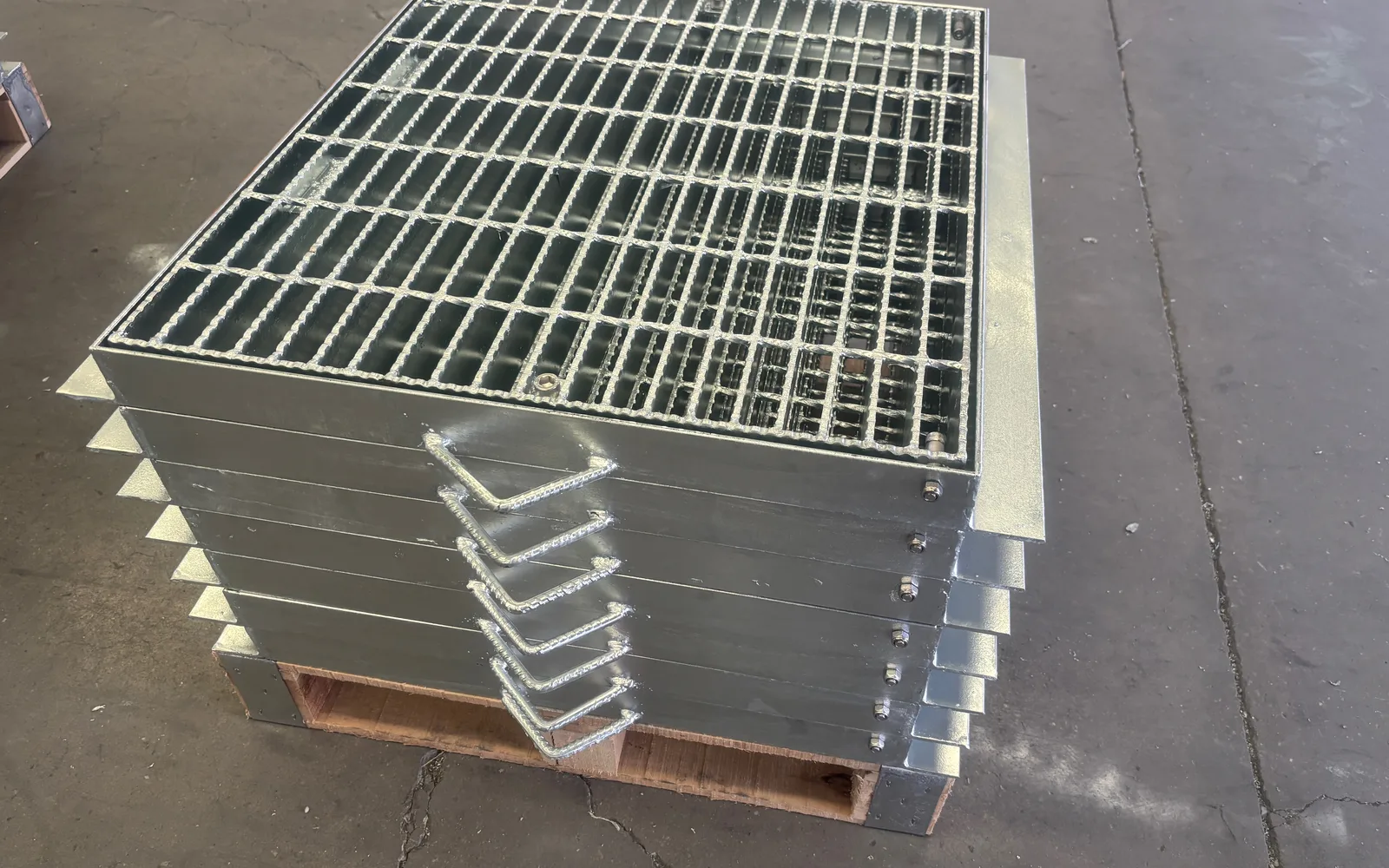
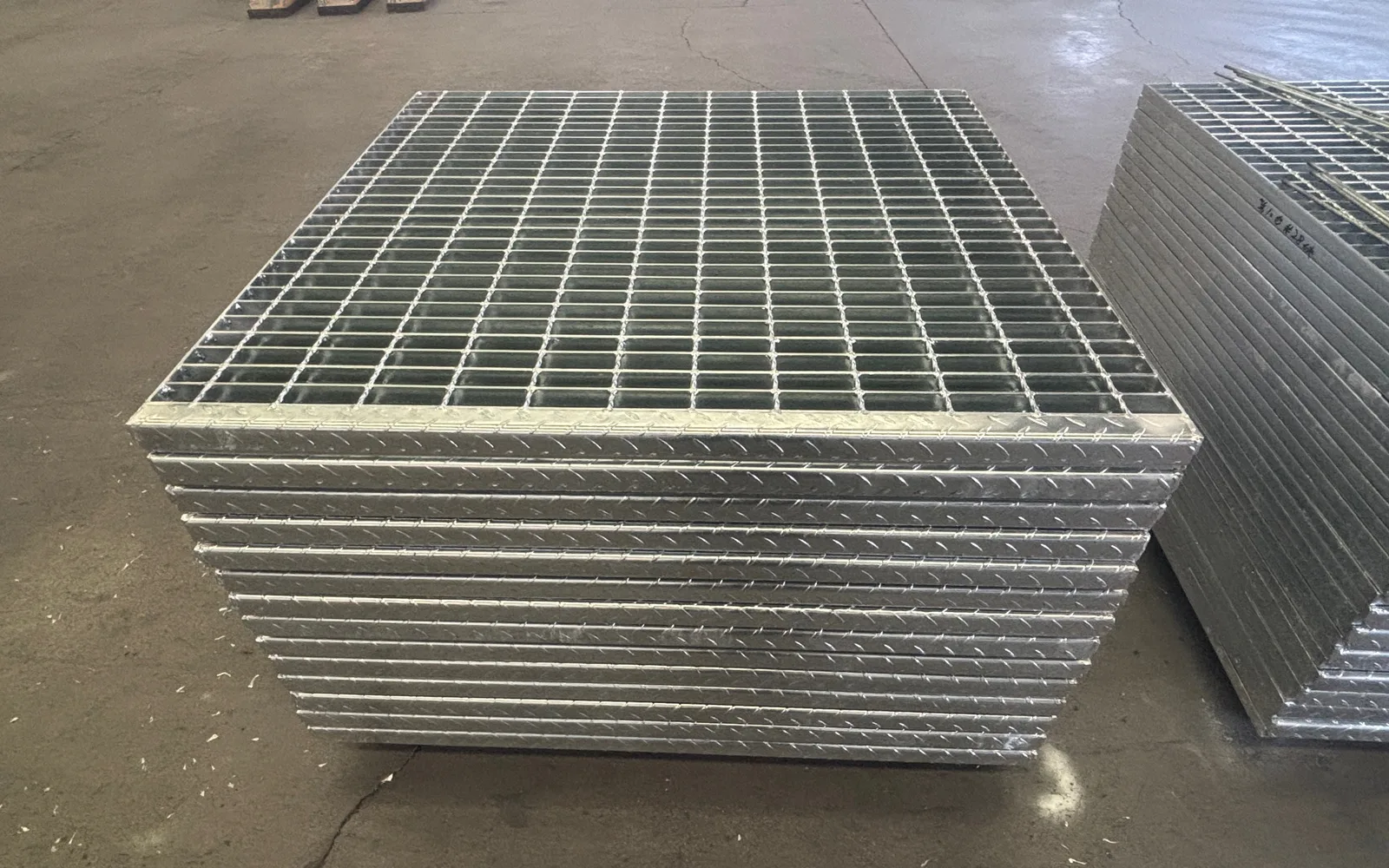
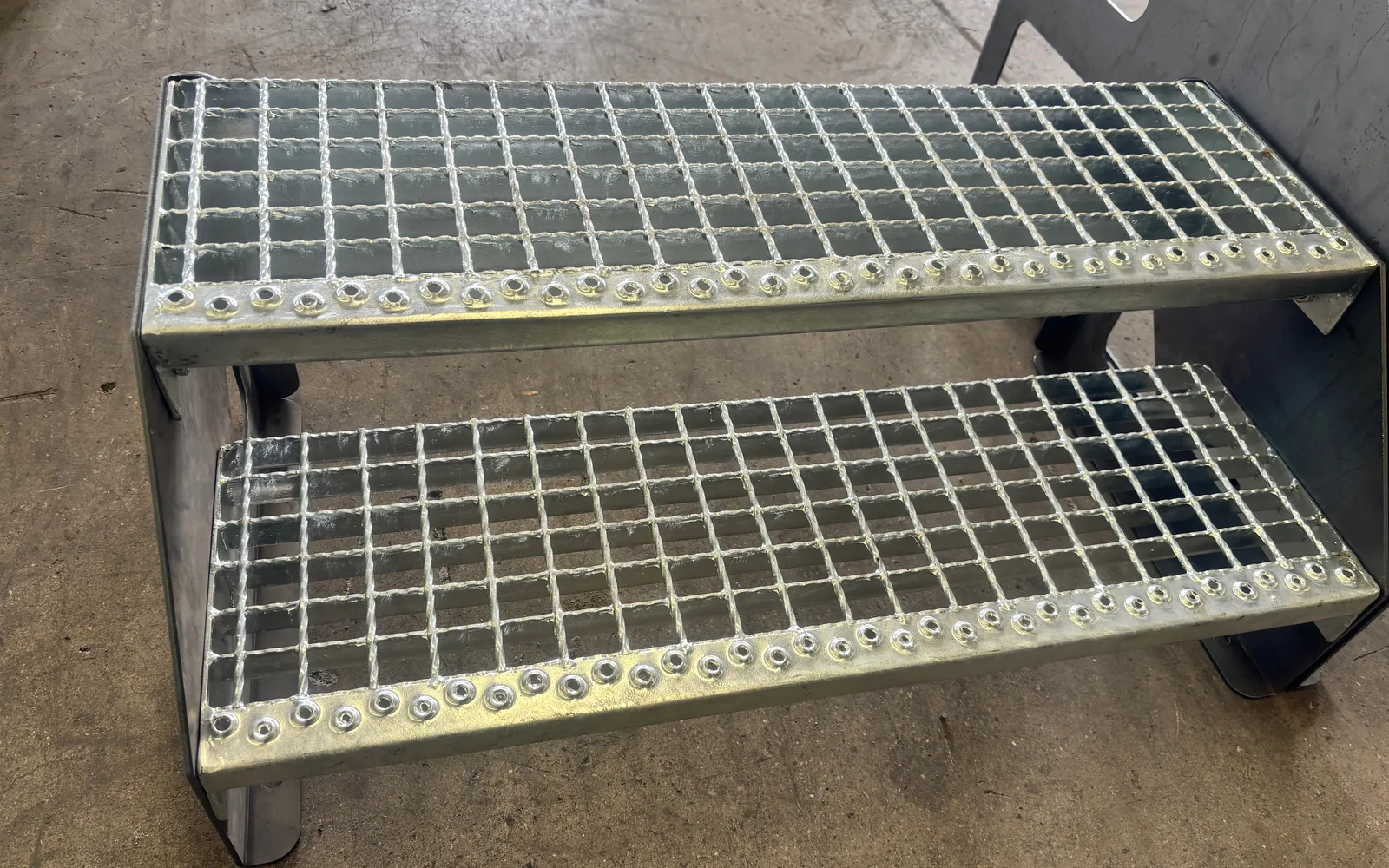
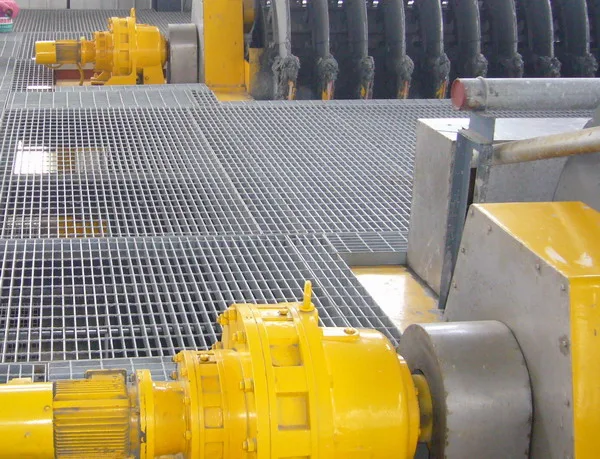
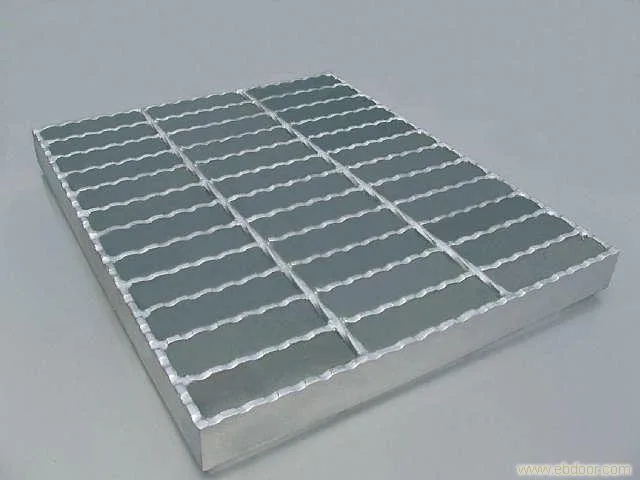
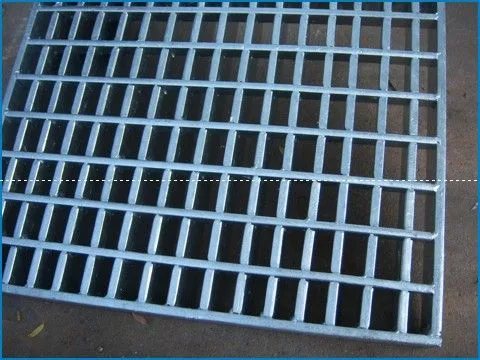
When purchasing steel gratings for the petrochemical industry, many projects focus only on price while neglecting specification matching and anti-corrosion requirements, which easily leads to rework later. This article lists the conditions to be confirmed one by one, in the order of requirements of the petrochemical industry for steel gratings, grating selection in the petrochemical industry, and basic concepts, and explains how to make trade-offs based on common working conditions. The content related to hot-dip galvanized steel gratings can be directly used as a reference for technical disclosure.
Materials and surface treatment under the requirements of the petrochemical industry for steel gratings
Common materials and surface treatments are as follows:
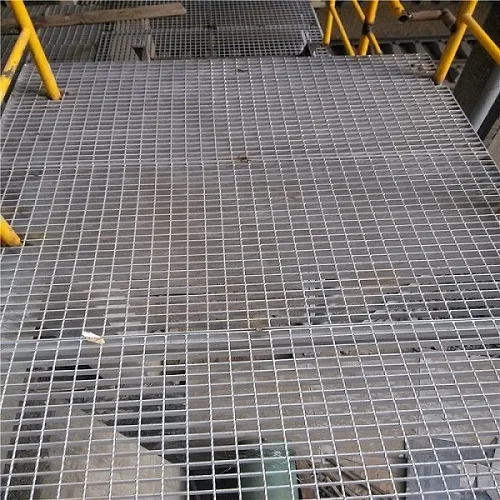
Raw materials such as load-bearing flat bars, cross bars, and edge banding bars generally use carbon structural steel or stainless steel. The mechanical properties and chemical composition of carbon structural steel shall comply with the relevant provisions and requirements for Q235-A in GB/T700-1988; the mechanical properties and chemical composition of stainless steel shall meet the specified materials in GB1220-1992.
Once material and surface treatment are decided, we recommend writing zinc coating thickness and appearance requirements into the technical agreement.
Choosing a surface treatment is essentially a trade-off between initial investment and later maintenance. Requirements for steel gratings in the petrochemical industry can be appropriately relaxed in dry indoor environments and should be raised accordingly outdoors or in humid environments. The selection of hot-dip galvanized steel gratings can also be judged along the same lines.
Supplementary notes on the requirements of the petrochemical industry for steel gratings
The following aspects most need to be confirmed in advance in actual procurement and use:
With the development of China's petrochemical energy industry, the demand for steel gratings has increased accordingly. Industries are closely linked and require closer cooperation, such as structural adjustment, increased spans, deteriorating raw materials, product quality upgrades, and technical requirements.
The above points can serve as a pre-purchase checklist; confirm each item before moving to the quotation stage.
When making selection judgments, the most important thing to avoid for steel gratings in the petrochemical industry is "picking a model by experience alone". If any of the three items, span, load, or service environment, changes, the conclusion may differ. Listing the conditions clearly first and then comparing with the common practices of hot-dip galvanized steel gratings is far more efficient.
Selection of steel gratings in the petrochemical industry
Items to confirm before procurement are as follows:
- Compound steel gratings uniformly use 3mm checkered plate combined with steel gratings having a 40mm load-bearing flat bar center pitch.
- Load-bearing flat bar center pitch: 40mm for compound steel gratings and 30mm for all others. Cross bar center pitch: 100mm.
- Hot-dip galvanized carbon structural steel gratings are preferred; hot-dip galvanized steel gratings are cheaper than stainless steel ones. In special cases, steel gratings of stainless steel or other materials may also be used.
- When the platform has high anti-slip requirements, serrated steel gratings may be selected.
- The section modulus of steel gratings is calculated from the load-bearing flat bars. For compound steel gratings, based on the deformation compatibility between the checkered plate and the steel grating, the load capacities are calculated separately from the section modulus of the load-bearing flat bars and that of the covering checkered plate, then superimposed.
- The steel grating models selected within the same project should be as unified as possible, preferably one type and no more than two types. When two steel gratings of different heights are used, structural measures should be taken to ensure that their top surfaces are at the same elevation.
Span and load capacity of steel gratings
- For areas with surface loads greater than 4kN/m or with special requirements, other steel grating models need to be selected; the grating model can be selected and the maximum spacing of supporting beams determined according to Appendix A.
- When the surface load is less than or equal to 4kN/m, G253/30/100FG should be preferred. The spacing of supporting beams should be controlled within 1300mm.
- Under load, the deflection of platform walkway steel gratings must not exceed 1/200 of the span and must not exceed 10mm; under 1.5 times the load, the steel gratings must not produce permanent deformation.
- When the opening width on platforms is 400mm or more, structural secondary beams should be added at the opening edges to ensure the overall strength of the steel gratings.
- When both sides of a supporting beam carry steel gratings, the top width of the beam must not be less than 60mm.
Layout principles: the layout of steel gratings should ensure that the load-bearing flat bars are the load-bearing members and the direction must not be reversed; when the layout encounters equipment (or pipe) openings with openings of 180mm or more, a 20mm gap should be left between the opening and the outer edge of the equipment (or pipe) insulation, and the edge banding bar on the side near the equipment (or pipe) should use 100x4 flat bar as a closure plate; the supporting length of both ends of the load-bearing flat bars on the beams should be no less than 25mm per end; the installation gap between two panels is 10mm, and the bottoms of both panels must have reliable support without any suspended conditions; at equipment supports and columns, the steel gratings should be cut, with edge banding bars at the cuts, using flat bars or sections of the same specification as the load-bearing flat bars for banding. Gap between the banding bar and the supports and columns.
Placing the order after confirming these items effectively avoids specification mismatch and on-site rework.
Bigger specifications are not always better. The selection of steel gratings for the petrochemical industry should be as economical as possible while meeting load requirements; excessive thickening increases weight and cost and causes inconvenience in installation. The product page provides more complete comparison notes on hot-dip galvanized steel gratings for reference before making a decision.
Further reading: Sizing reference for hot-dip galvanized steel grating and hot-dip galvanized steel grating
If a project uses both hot-dip galvanized steel grating and hot-dip galvanized steel grating, we recommend planning them on the same layout drawing. This way edge closing, fixing and cutouts at junctions can be handled uniformly, avoiding dimension conflicts during installation and making later maintenance easier.
- For all product specifications and theoretical weights by series, visit Steel Grating Product Center
- To estimate cost by size and quantity, use Instant Quote PageSubmit Requirements
- To see how similar projects were executed, refer to Project Cases field applications
FAQ
What is most often overlooked during installation and acceptance?
First, bearing bars installed in the wrong direction reduce load capacity; second, insufficient fixing points or missing zinc touch-up paint; third, support beam spacing inconsistent with the layout drawing. These three items are most often overlooked on site.
How to choose between hot-dip galvanizing and cold galvanizing?
The two anti-corrosion mechanisms differ: hot-dip galvanizing immerses steel in molten zinc to form a metallurgically bonded coating, thick and long-lasting, suitable for outdoor and humid environments; cold galvanizing is electrochemical deposition with a thinner, more uniform appearance, suitable for dry indoor environments or applications requiring high dimensional precision.
Can the values in the article be applied directly?
Values in this article come from relevant standard clauses or common industry practice. For actual selection, recalculate based on site span, load class and service environment; direct copying is not recommended.
The above is for sizing and construction reference. To verify specific parameters or request a quotation, please visitInstant Quote Page, or contact our technical staff.
If you already have drawings or site dimensions, submit them directly and we will help verify specifications and layout, avoiding on-site cutting and rework caused by mismatched models. Without drawings, site photos and approximate dimensions are enough for an estimate.