







This article introduces pigeon cage steel grating in the order of key points, main advantages and basic concepts. Each section gives actionable criteria where possible; if you only need a quick conclusion, start with the opening points of each section. The same approach applies to galvanized steel grating.
Key Points on Pigeon Cage Steel Grating
Additional key points are as follows:
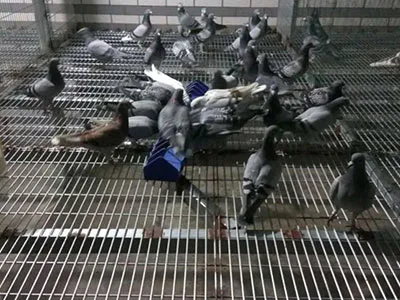
In pigeon loft steel grating construction and use, the following points should be kept in mind:
1. First, the size should be reasonable. If the pigeon owner has a clear plan, one well-proportioned loft is enough; bigger is not necessarily better. In pigeon breeding, the top priority is keeping the birds healthy: too large a loft leaves them feeling insecure, while too small a loft harms their health.
2. Brightness should be appropriate - neither too bright nor too dark. There is a great deal of light pollution today, and a poorly oriented loft, such as one facing streetlights at night or a noisy direction, is bad for the birds' rest. If the orientation cannot be changed, use suitable shading in front of the loft.
3. Nest boxes must have depth. A nest box with proper depth gives pigeons a better sense of security.
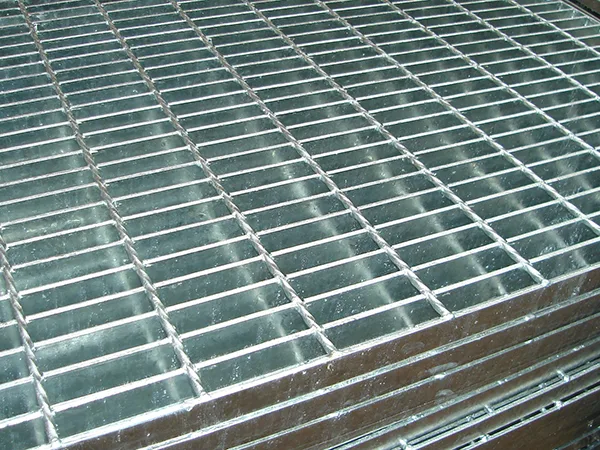
4. Most importantly, look at the pigeons from the perspective of their individual temperaments: different birds prefer different nest boxes and positions, so a true expert gives each key bird the spot it likes best.
The above points can serve as a pre-purchase checklist; confirm each item before moving to the quotation stage.
It should be noted that the specific design of pigeon cage steel grating varies with project conditions; what is given here is a general approach rather than a fixed answer. In practice, confirm the site span, support conditions and access requirements first, then work through the points in this section. The same logic applies to hot-dip galvanized steel grating, and a re-check before ordering is still recommended.
Key Advantages
Its overall performance focuses on the following aspects; we suggest comparing item by item in actual selection:
5. Design should be sensible. In northern regions, insulation matters because of the climate; pigeon fanciers south of the Yangtze should watch water and moisture protection; in the south, lofts need ventilation. A pigeon loft using steel grating as its floor has all these advantages.
Overall, selection should weigh span, load and service environment together.
When making a selection, the thing to avoid most with pigeon cage steel grating is picking a model by rule of thumb. A change in any of the three conditions - span, load and service environment - can change the conclusion. Listing the conditions clearly first and then comparing them with standard galvanized steel grating practice is much more efficient.
Further notes: How to combine galvanized grating and hot-dip galvanized steel grating in use
In engineering, hot-dip galvanized steel grating is often used together with the components mentioned in this article. The two differ in load carrying and installation practices; when combining them, pay special attention to the connection of support conditions and fixing methods, as junction treatment is often where problems arise. For unified drawings, submit dimensions of both types and our technicians will process them under the same layout logic.
- For all product specifications and theoretical weights by series, visit Steel Grating Product Center
- To estimate cost by size and quantity, use Instant Quote PageSubmit Requirements
- To see how similar projects were executed, refer to Project Cases field applications
FAQ
How to choose between hot-dip galvanizing and cold galvanizing?
The two anti-corrosion mechanisms differ: hot-dip galvanizing immerses steel in molten zinc to form a metallurgically bonded coating, thick and long-lasting, suitable for outdoor and humid environments; cold galvanizing is electrochemical deposition with a thinner, more uniform appearance, suitable for dry indoor environments or applications requiring high dimensional precision.
What is most often overlooked during installation and acceptance?
First, bearing bars installed in the wrong direction reduce load capacity; second, insufficient fixing points or missing zinc touch-up paint; third, support beam spacing inconsistent with the layout drawing. These three items are most often overlooked on site.
What information is needed for custom sizes?
Usually you need to provide the panel dimensions (length x width), bearing bar specs and direction, center-to-center pitch of bearing bars and cross bars, surface treatment, and special requirements such as cutouts, corner notches and banding. Site photos or sketches are even better.
The above is for sizing and construction reference. To verify specific parameters or request a quotation, please visitInstant Quote Page, or contact our technical staff.
Note that this article presents sizing approaches and general practice, and does not constitute a strength commitment for any specific project. For load-bearing safety-critical areas, the design drawings and on-site calculations shall prevail; contact our technical staff if in doubt.