







Many projects purchase machine-made and hand-made steel grating based on price alone, overlooking specification matching and corrosion protection requirements, which often leads to rework later. This article lists, in order, what machine-made and hand-made steel grating are, their basic concepts, and the conditions to confirm one by one, explaining how to choose for common working conditions. Content related to steel grating can be used directly as a reference for technical disclosure.
What Is the Difference Between Machine-Made and Hand-Made Steel Grating
Below we first briefly explain the relevant concepts and basic construction to make the following parameters and sizing content easier to understand.
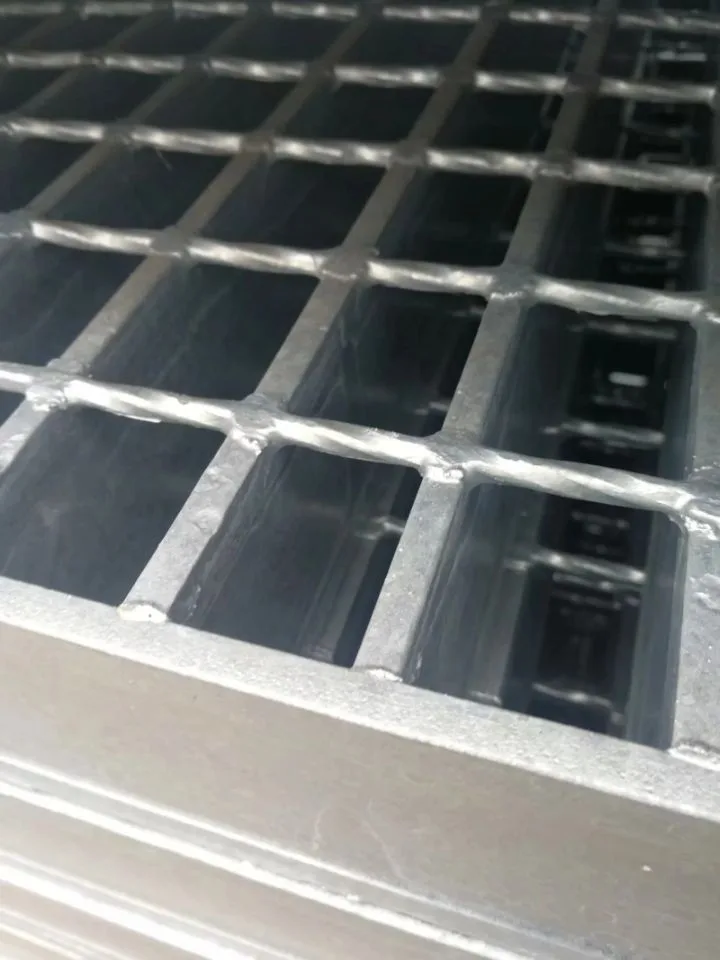
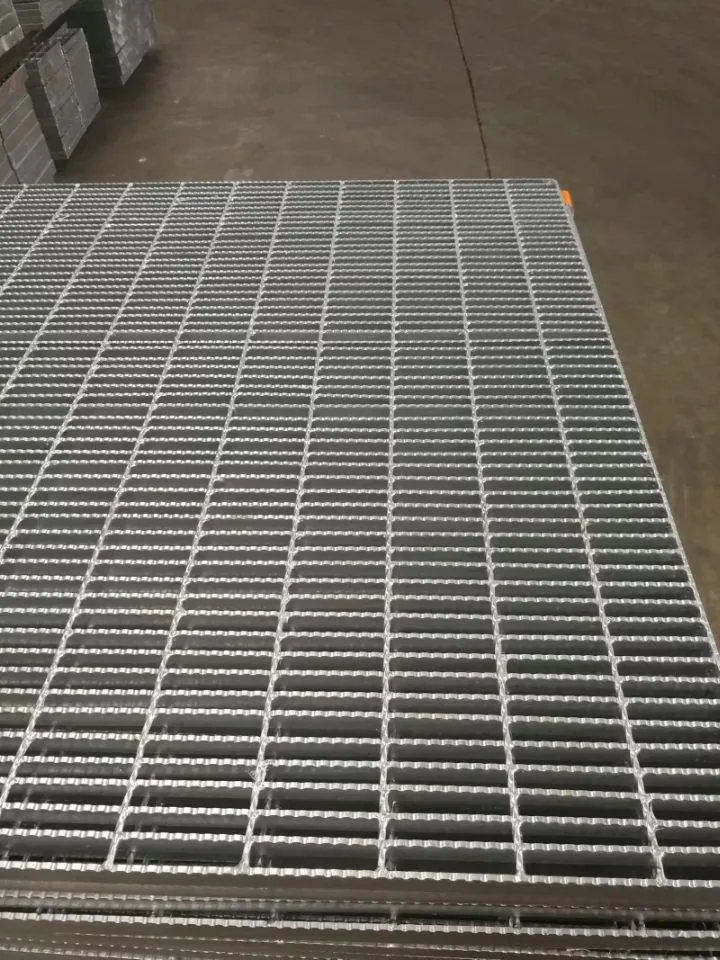
Machine-welded steel grating is produced with high-pressure resistance welding machines. First, the bearing flat bars are placed in a specific die, and the cross bars are laid by hand across the evenly spaced flat bars. Powerful welding current and hydraulic pressure then press the cross bars into the flat bars, yielding high-quality steel grating with firm weld points and extremely high stability and strength.
Once you grasp these basic concepts, the specifications and sizing recommendations that follow will be much easier to understand.
A practical tip for confirming specifications: write all four items - flat bar size, bearing bar pitch, cross bar pitch, and overall dimensions - into the purchase list together. Stating only one or two of them easily leads to goods that do not match. The specification notation of machine-made and hand-made steel grating is fully compared on the product page; before ordering, check each panel one by one against the layout drawing, and the same applies to steel grating.
Common Models and Sizes of Machine-Made and Hand-Made Steel Grating
Common specifications and corresponding parameters are summarized below; confirm each item before ordering:
Machine pressure welding is relatively efficient, and the width of panels produced does not exceed 1.2 m. Because machine welding has fixed dimensions, some special-shaped steel grating cannot be produced by machine and can only be welded manually. This welding process is affected by the equipment and the current and voltage; it also depends on the quality of the raw flat bars, and large width errors in the flat bars may affect welding strength and cause inconsistent strength. The defects of this process are false and incomplete welds, which tend to cause the cross bars to come loose. Due to the rated capacity of the equipment, heavy steel grating with large cross sections cannot be produced. Equipment with a rated capacity below 800 KVA can generally only make steel grating with flat bars up to 4 mm thick, while 1250 KVA equipment can generally make steel grating with flat bars 5~6 mm thick.
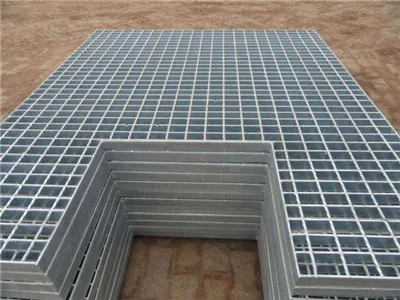
Hand-welded steel grating requires punching holes in the flat bars first, then inserting the cross bars and tack welding them. There is a certain gap between the cross bars and the flat bars, but every contact point can be welded, achieving an equal fusion bond between the flat bar and the twisted square cross bar, so the welding is firmer and the strength is somewhat improved, though the appearance is less attractive than pressure-welded grating. This production process is flexible and the products are diverse; it can basically produce the full range of steel grating and has advantages in producing heavy-duty steel grating.
The above are common specifications; actual ordered dimensions and tolerance requirements shall be confirmed against the layout drawing.
Bigger specifications are not always better. The selection of machine-made and hand-made steel grating should be as economical as possible while meeting load requirements; excessive thickening increases weight and cost and makes installation inconvenient. The product page provides a more complete comparison for steel grating, which can be consulted before making a decision.
Further Reading: Key Points for Selecting Steel Grating Specifications
In engineering, steel grating specifications are often used together with the components mentioned in this article. The two differ in load-bearing mode and installation practice, so when combining them pay special attention to the connection of support conditions and fixing methods; the treatment at junctions is often where problems most easily arise. If unified drawings are needed, submit the dimensions of both types of components together so the technical staff can process them with the same layout logic.
- For all product specifications and theoretical weights by series, visit Steel Grating Product Center
- To estimate cost by size and quantity, use Instant Quote PageSubmit Requirements
- To see how similar projects were executed, refer to Project Cases field applications
FAQ
Can the values in the article be applied directly?
Values in this article come from relevant standard clauses or common industry practice. For actual selection, recalculate based on site span, load class and service environment; direct copying is not recommended.
What information is needed for custom sizes?
Usually you need to provide the panel dimensions (length x width), bearing bar specs and direction, center-to-center pitch of bearing bars and cross bars, surface treatment, and special requirements such as cutouts, corner notches and banding. Site photos or sketches are even better.
What is most often overlooked during installation and acceptance?
First, bearing bars installed in the wrong direction reduce load capacity; second, insufficient fixing points or missing zinc touch-up paint; third, support beam spacing inconsistent with the layout drawing. These three items are most often overlooked on site.
The above is for sizing and construction reference. To verify specific parameters or request a quotation, please visitInstant Quote Page, or contact our technical staff.
The above is general guidance. For a specific project, we still recommend submitting span, load class and service environment to our technicians for review. Steel grating is a load-bearing component; rework caused by wrong specification choices costs far more than the time spent on upfront calculation.