







The application of steel grating in actual projects is not complicated; the difficulty lies in matching specifications, materials, and service environment. This article explains layout precautions for steel grating drawings, basic concepts, and specification parameters in turn, so that after reading you will have a complete judgment framework for platform steel grating.
Application Scenarios of Steel Grating Drawing Layout Precautions
Main applications are as follows:
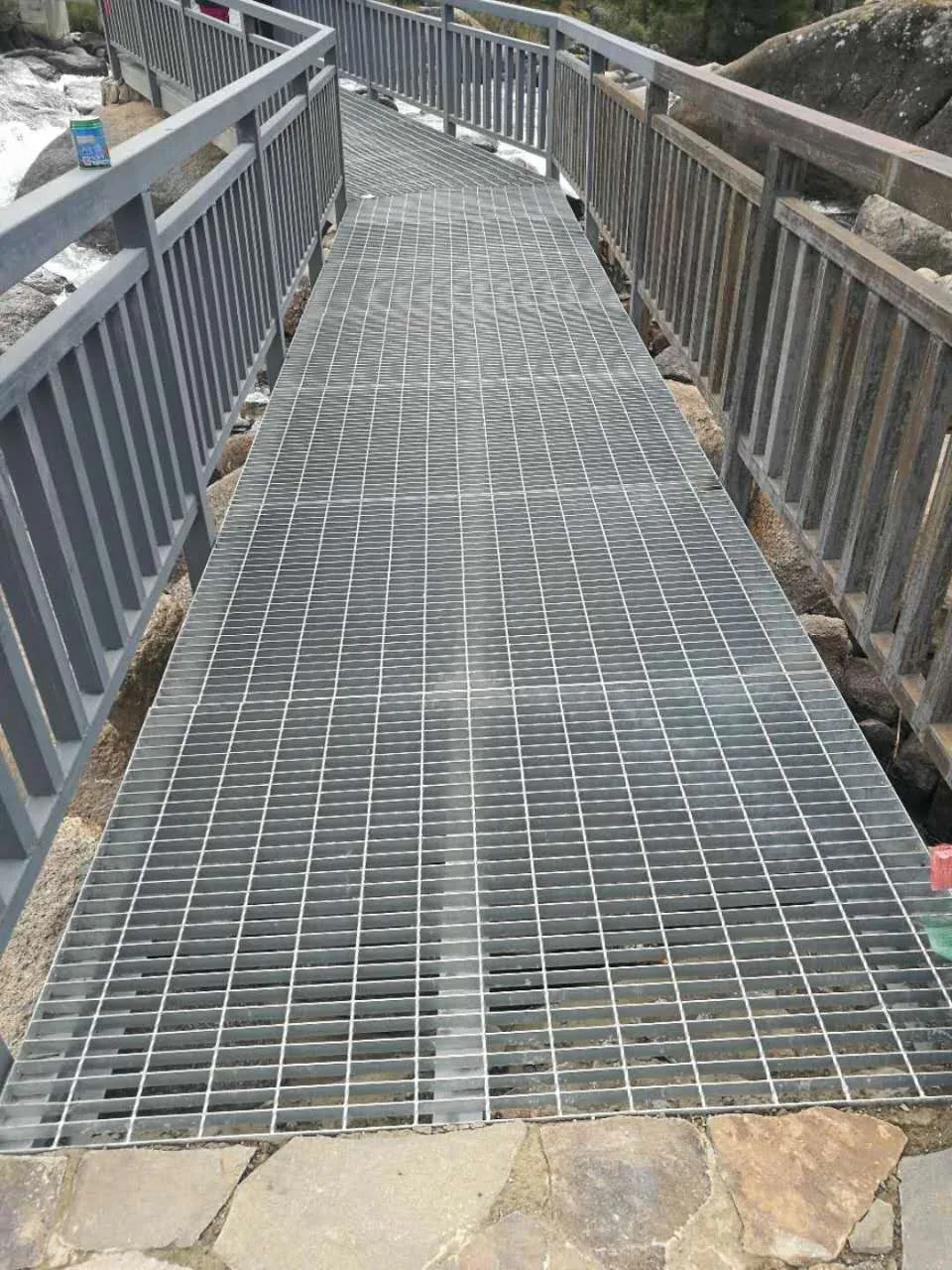
Steel GratingThe manufacturer should design the steel grating layout according to the component and opening layout drawings of the steel structure platform. The manufacturer's layout design drawing should conform to the designer's design intent and be approved by the design institute before production begins.
If your working conditions fall outside the above range, you can provide site photos and dimensions, and our technicians will help assess them.
Different application scenarios place different emphases on steel grating: pedestrian walkways value anti-slip and comfort, vehicle areas value panel stiffness and fixing reliability, and drainage trench covers value flow area and anti-theft. Clarify the usage first, then look at specifications, to avoid detours; the same approach applies to hot-dip galvanized steel grating.
Common Models and Sizes in Steel Grating Drawing Layout
Main specification comparison is as follows:
1. Steel grating bearing bar pitches come in three series: 30 mm, 40 mm, and 60 mm. To reduce machining time and material loss, layout dimensions of steel grating are standardized.
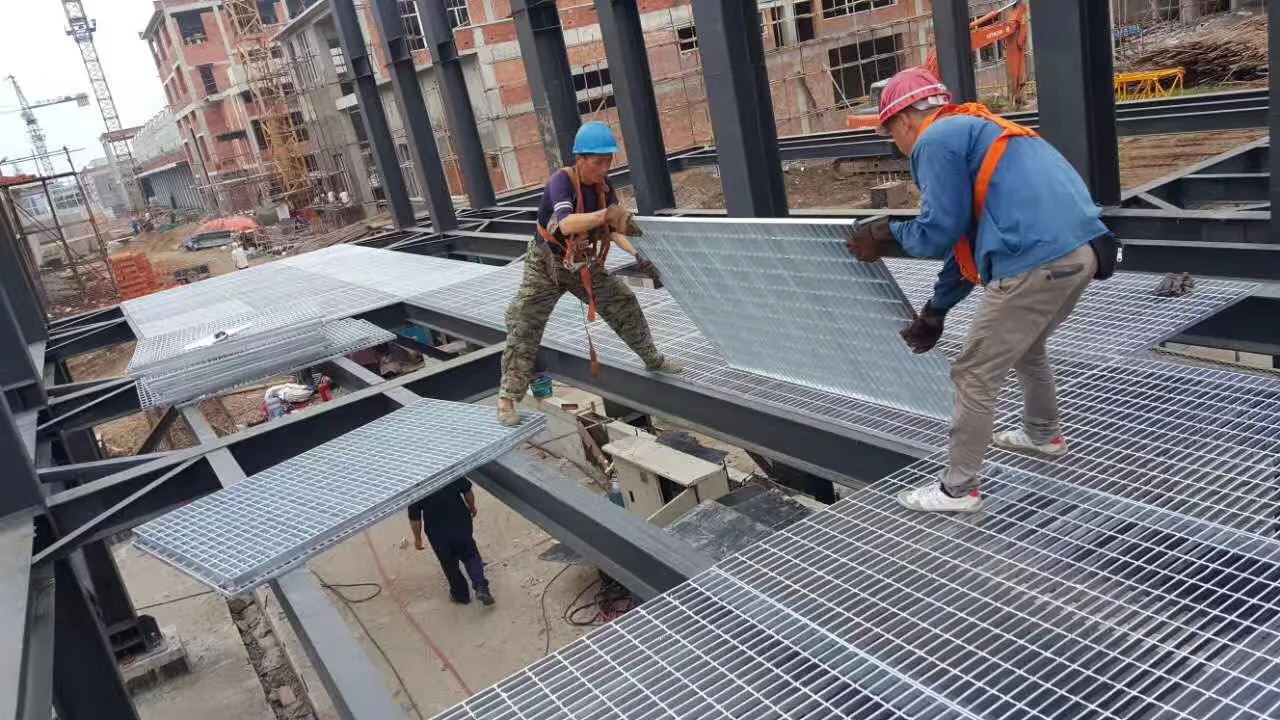
The above are common specifications; actual ordered dimensions and tolerance requirements shall be confirmed against the layout drawing.
Bigger specifications are not always better. The selection of steel grating should be as economical as possible while meeting load requirements; excessive thickening increases weight and cost and makes installation inconvenient. The product page provides a more complete comparison for platform steel grating, which can be consulted before making a decision.
Key Points on Steel Grating Drawing Layout Precautions
Additional key points are as follows:
The provisions are as follows:
The above points can serve as a pre-purchase checklist; confirm each item before moving to the quotation stage.
Quotations for the same specification may fluctuate with the steel market between batches, which is normal for steel products like steel grating. If the procurement schedule allows, prices can be locked in advance; the procurement plan for hot-dip galvanized steel grating can also be arranged at the same pace.
Specification Parameters for Steel Grating Drawing Layout
The standard original panel size is 6100LB x 995 mm. When laying out, use 995 mm as the width, leave a 5-10 mm gap between panels, and use the last panel to make up the remaining dimension.
If the panel width is less than 995 mm, choose the closest width from the table (number of flat bars of the steel grating and its corresponding nominal overall width); for example, a 1250LB x 590 mm panel should be changed to 1250LB x 605 mm. The length of the steel grating can be chosen freely, but a multiple of 50 mm is preferred.
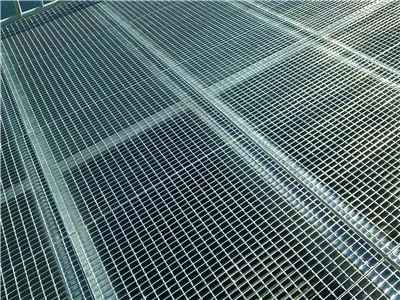
2. The layout of steel grating should ensure that the bearing flat bars are the load-bearing members and their direction must not be reversed; When laying panels around equipment (or pipe) openings with cutouts greater than or equal to 180 mm, a 20 mm gap should be left from the outer edge of the equipment (or pipe) insulation, and the binding bar on the side close to the equipment (or pipe) should use a 100x4 flat bar as a closing plate,
3. The bearing length of the bearing flat bars of steel grating on the beams at both ends should be no less than 25 mm per end; the installation gap between two panels is 10 mm, and there must be reliable support under both panels - no suspended spans are allowed,
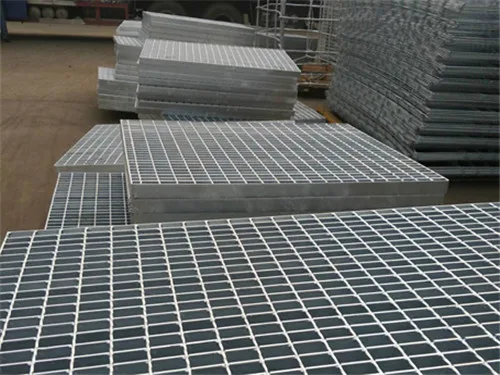
4. At equipment supports and columns, the steel grating should be notched, and binding bars should be set at the notches, using flat bars or section steel of the same specification as the bearing flat bars for binding.
What is most easily overlooked in spec tables are tolerances and end treatment. Steel grating usually has machining allowance in the length direction; if embedded installation is used on site, edge closing and corner notch requirements must be stated in advance. Hot-dip galvanized steel grating is handled similarly in these details; we recommend marking them clearly on the drawings as well.
Further Reading: Selection Reference for Platform Steel Grating and Hot-Dip Galvanized Steel Grating
Platform steel grating and hot-dip galvanized steel grating are different specification forms within the same product system, and the selection logic is consistent with this article: first clarify the usage, then determine specifications by span and load, and finally determine surface treatment by environment. The two may differ in corrosion and anti-slip requirements; it is advisable to note them separately before ordering rather than writing them as one general technical requirement.
- For all product specifications and theoretical weights by series, visit Steel Grating Product Center
- To estimate cost by size and quantity, use Instant Quote PageSubmit Requirements
- To see how similar projects were executed, refer to Project Cases field applications
FAQ
How to choose between hot-dip galvanizing and cold galvanizing?
The two anti-corrosion mechanisms differ: hot-dip galvanizing immerses steel in molten zinc to form a metallurgically bonded coating, thick and long-lasting, suitable for outdoor and humid environments; cold galvanizing is electrochemical deposition with a thinner, more uniform appearance, suitable for dry indoor environments or applications requiring high dimensional precision.
What is most often overlooked during installation and acceptance?
First, bearing bars installed in the wrong direction reduce load capacity; second, insufficient fixing points or missing zinc touch-up paint; third, support beam spacing inconsistent with the layout drawing. These three items are most often overlooked on site.
What maintenance is required during daily use?
Maintenance mainly involves periodically checking whether fasteners are loose, whether touch-up paint has peeled off, and whether the panel surface shows obvious deformation or rust. Issues found should be dealt with promptly; overall maintenance is minimal.
The above is for sizing and construction reference. To verify specific parameters or request a quotation, please visitInstant Quote Page, or contact our technical staff.
Note that this article presents sizing approaches and general practice, and does not constitute a strength commitment for any specific project. For load-bearing safety-critical areas, the design drawings and on-site calculations shall prevail; contact our technical staff if in doubt.