







This article introduces galvanized steel grating in the order of quality inspection before delivery, scope of application and engineering fields, and basic concepts. Each part gives actionable judgment methods as far as possible; if you only need a quick conclusion, start with the key points at the beginning of each part. The same method applies to hot-dip galvanized steel grating.
Selection and Purchasing Advice for Quality Inspection of Galvanized Steel Grating Before Delivery
Items to confirm before procurement are as follows:
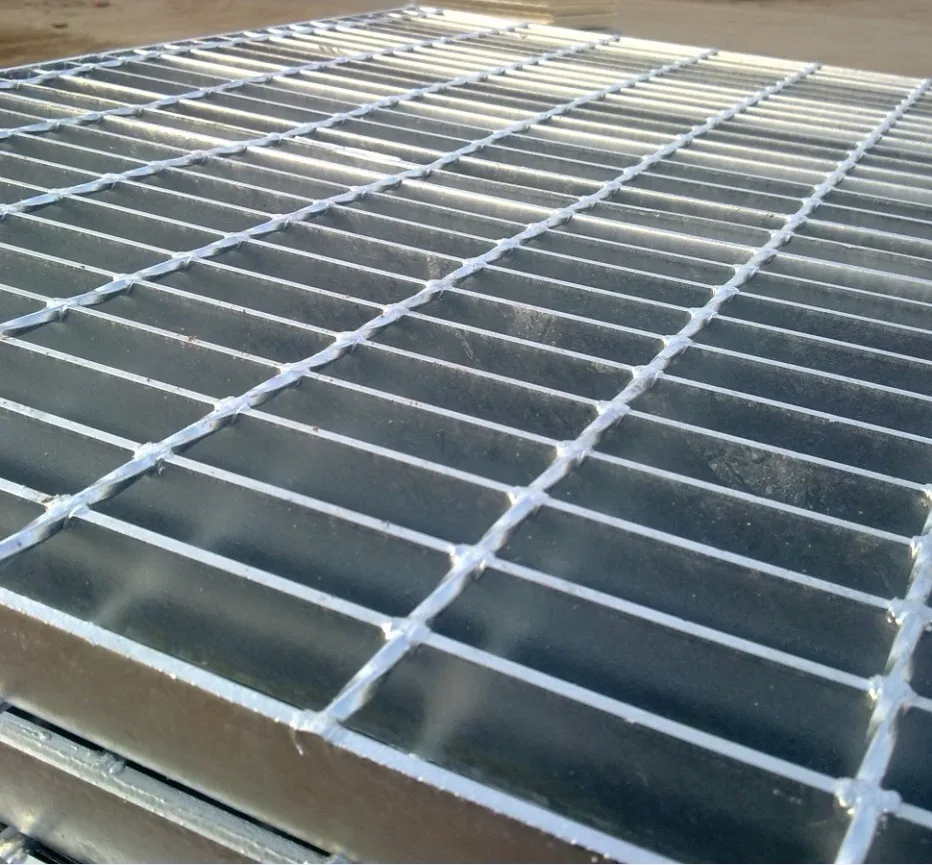
When steel grating is fabricated and leaves the factory, it must undergo quality inspection; only products that pass inspection may be sold on the market. The main purposes of inspecting products include the following: quality inspection gives a basic understanding of the hot-dip galvanized steel grating, confirms accurately whether the materials are suitable, and reveals the production level and product quality.
Placing the order after confirming these items effectively avoids specification mismatch and on-site rework.
Materials and surface treatment determine the field durability of galvanized steel grating. The same steel grating requires very different treatments in dry indoor conditions versus coastal or chemical environments, so the service environment should be raised as the primary condition during selection. The same applies to galvanized grating.
Scope of Application & Engineering Fields
Main applications are as follows:
Galvanized Steel GratingBecause the product performs well, it is used in a wide range of fields, mainly municipal engineering, environmental sanitation, sewage treatment and parking areas. Before use, the basic type of the product, the detailed installation method and the purpose of quality inspection should also be clarified. By welding method, the main types are welded and press-locked, and different types have different performance and somewhat different uses. In addition, there are two main installation methods: welded fixing and installation clips, each with different uses.
If your working conditions fall outside the above range, you can provide site photos and dimensions, and our technicians will help assess them.
Choosing a surface treatment is essentially balancing initial investment against later maintenance. Requirements for galvanized steel grating can be appropriately relaxed in dry indoor environments, and raised accordingly outdoors or in humid environments. The selection of galvanized grating can follow the same logic.
Specification Parameters for Quality Inspection of Galvanized Steel Grating Before Delivery
Main specification comparison is as follows:
Before using galvanized steel grating, the relevant specifications and dimensions should be clarified. To bring out its performance, its features should also be understood: good ventilation and light transmission, high strength, light structure and easy routine maintenance. Since the product is made of steel, it offers good corrosion resistance, long durability and no fading over long-term use. Once these features are understood, the purpose of quality inspection should be clear
The above are common specifications; actual ordered dimensions and tolerance requirements shall be confirmed against the layout drawing.
What is most easily overlooked in specification tables are tolerances and end treatment. Galvanized steel grating usually has machining allowance in the length direction; if recessed installation is used on site, state the banding and corner-cutting requirements in advance. Hot-dip galvanized steel grating is handled similarly in these details, so mark them clearly on the drawing.
Further reading: Selection points for hot-dip galvanized steel grating and galvanized grating
In engineering, galvanized grating is often used together with the components mentioned in this article. The two differ in load carrying and installation practices; when combining them, pay special attention to the connection of support conditions and fixing methods, as junction treatment is often where problems arise. For unified drawings, submit dimensions of both types and our technicians will process them under the same layout logic.
- For all product specifications and theoretical weights by series, visit Steel Grating Product Center
- To estimate cost by size and quantity, use Instant Quote PageSubmit Requirements
- To see how similar projects were executed, refer to Project Cases field applications
FAQ
Why do different manufacturers quote different weights for the same specifications?
The main difference lies in the actual measured thickness and tolerance control of the bearing bars. When bars are supplied at the lower tolerance limit, weight per unit area falls below the theoretical value, and load capacity drops accordingly. We recommend specifying thickness tolerance clearly when purchasing.
Where can I find specific specifications?
our websiteProductsCommon specifications and theoretical weights are organized by series, also available in Instant Quote PageEstimate by size, or contact us directly for sizing advice.
How to choose between hot-dip galvanizing and cold galvanizing?
The two anti-corrosion mechanisms differ: hot-dip galvanizing immerses steel in molten zinc to form a metallurgically bonded coating, thick and long-lasting, suitable for outdoor and humid environments; cold galvanizing is electrochemical deposition with a thinner, more uniform appearance, suitable for dry indoor environments or applications requiring high dimensional precision.
The above is for sizing and construction reference. To verify specific parameters or request a quotation, please visitInstant Quote Page, or contact our technical staff.
If you already have drawings or site dimensions, submit them directly and we will help verify specifications and layout, avoiding on-site cutting and rework caused by mismatched models. Without drawings, site photos and approximate dimensions are enough for an estimate.