







The application of I-type steel grating in actual projects is not complicated; the difficulty lies in matching specifications, material and service environment. This article covers, in order, what a construction site is, main advantages and application scenarios, giving you a complete approach to evaluating hot-dip galvanized steel grating.
What Is a Construction Site
This section first clarifies the basic concepts, structural forms and common names, laying the groundwork for what follows.
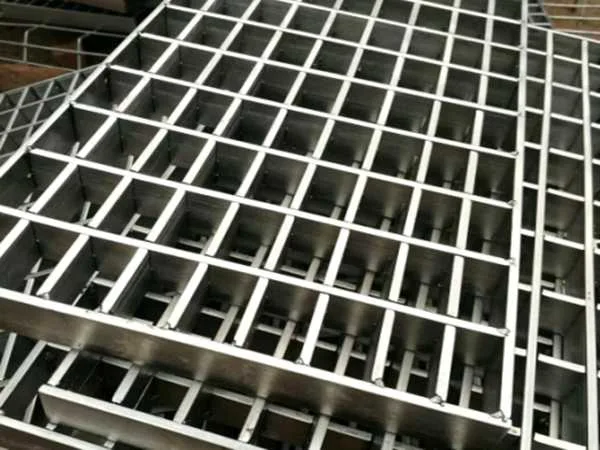
I-type steel grating is made of I-type bearing flat bars and cross bars arranged at certain spacing, welded into raw panels on high-pressure resistance welding machines, then cut, notched, punched and banded into finished products as requested by customers. Its features: high strength and light structure - the solid welded mesh structure provides high load capacity with light weight for easy hoisting; attractive appearance and durability - hot-dip galvanized surface treatment gives excellent corrosion resistance and a glossy finish; good ventilation, lighting, heat dissipation, explosion-proof and anti-slip performance; resistance to dirt accumulation.
Once you grasp these basic concepts, the specifications and sizing recommendations that follow will be much easier to understand.
During processing, dimension control of I-type steel grating mainly relies on dies and tooling, so consistency in mass production is good, while shaped pieces need separate layout. For on-site secondary processing, the anti-corrosion treatment of cut edges of hot-dip galvanized steel gratings must not be skipped either.
Key Advantages
Main features can be summarized as follows:
Traditionally, bamboo mats were expensive, short-lived, highly flammable, fragile in use and poor in drainage. Especially in rainy seasons and humid air, construction workers walking on them could easily slip and have accidents. Moreover, builders' quality control was poor in past years; flames from welding steel bars fell on bamboo mats and safety nets, causing many fires.
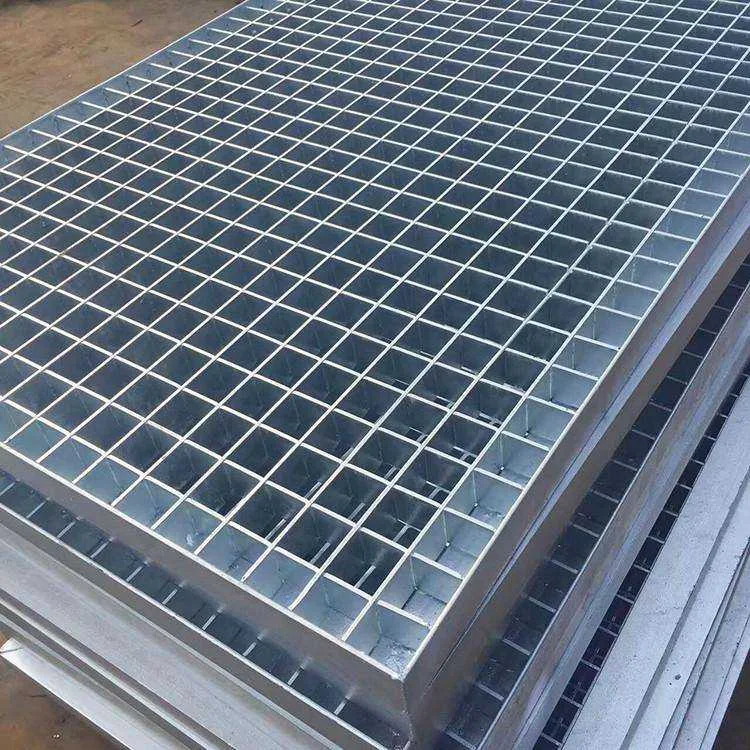
Overall, selection should weigh span, load and service environment together.
In cost structure, I-type steel grating cost is mainly affected by steel market prices, specifications, surface treatment and processing difficulty; zinc coating thickness and shaped processing have the largest impact on unit price. State these clearly when inquiring so quotations are comparable; the price factors for hot-dip galvanized steel gratings are basically the same.
Application Scenarios of Construction Sites
Main applications are as follows:
Construction accidents not only cause serious economic losses to a company but also damage its reputation, restrict its survival and development, bring misfortune to families, and even affect social stability. The birth of the new steel grating fully makes up for the drawbacks of old bamboo mats and has become the most popular choice.
If your working conditions fall outside the above range, you can provide site photos and dimensions, and our technicians will help assess them.
Different parts of the same scene often have different requirements. Take I-type steel grating: main walkways and edge areas, frequently used areas and occasional maintenance areas can be specified separately; combined use of hot-dip galvanized steel gratings is also suggested by zones, balancing safety and cost.
Supplementary Notes on Construction Sites
I-type steel grating plate is high-quality metal sheet punched and expanded by special equipment. The mesh has scale-like patterns with even lacing and flat texture, with outstanding anti-slip and fire performance, and the steel can be reused. It is the safeguard of construction sites.
This section describes common practice for I-type steel grating in most projects. If your site conditions are special - corrosive media, large temperature differences or frequent disassembly - adjust the treatment accordingly. Hot-dip galvanized steel gratings also need separate confirmation under such conditions; consult with site photos before deciding.
Scope of Application & Engineering Fields
Widely used for platforms, walkways, trestles, trench covers, manhole covers, ladders, fences and guardrails in petrochemicals, power plants, waterworks, sewage treatment plants, municipal engineering, sanitation projects and other fields.
The application scope of I-type steel grating is actually wider than many think, from industrial platforms to municipal gardens. The difference: industrial scenarios focus more on load capacity and corrosion resistance, while municipal scenarios also consider appearance, anti-theft and pedestrian safety. Common practices of hot-dip galvanized steel grating in these scenarios can be viewed on the case pages.
Further notes: Common combinations of hot-dip galvanized steel grating and hot-dip galvanized steel grating
Besides what this article covers, hot-dip galvanized steel grating is also common in actual projects. It shares similarities with this article's subject in structure and fabrication; for selection, check span, load and service environment in the same order. If both types of components are used in the same project, we recommend unifying material and surface treatment to avoid later galvanic corrosion or inconsistent appearance.
- For all product specifications and theoretical weights by series, visit Steel Grating Product Center
- To estimate cost by size and quantity, use Instant Quote PageSubmit Requirements
- To see how similar projects were executed, refer to Project Cases field applications
FAQ
Where can I find specific specifications?
our websiteProductsCommon specifications and theoretical weights are organized by series, also available in Instant Quote PageEstimate by size, or contact us directly for sizing advice.
What information is needed for custom sizes?
Usually you need to provide the panel dimensions (length x width), bearing bar specs and direction, center-to-center pitch of bearing bars and cross bars, surface treatment, and special requirements such as cutouts, corner notches and banding. Site photos or sketches are even better.
How to choose between hot-dip galvanizing and cold galvanizing?
The two anti-corrosion mechanisms differ: hot-dip galvanizing immerses steel in molten zinc to form a metallurgically bonded coating, thick and long-lasting, suitable for outdoor and humid environments; cold galvanizing is electrochemical deposition with a thinner, more uniform appearance, suitable for dry indoor environments or applications requiring high dimensional precision.
The above is for sizing and construction reference. To verify specific parameters or request a quotation, please visitInstant Quote Page, or contact our technical staff.
Note that this article presents sizing approaches and general practice, and does not constitute a strength commitment for any specific project. For load-bearing safety-critical areas, the design drawings and on-site calculations shall prevail; contact our technical staff if in doubt.