







Applying hot-dip galvanized steel grating in real projects is not complicated; the challenge lies in matching specifications, material and service environment. This article covers classification of steel grating specifications, classification by surface treatment and basic concepts in turn, giving you a complete framework for evaluating hot-dip galvanized steel grating.
Steel grating, also called steel grating panel, is a grating product made by arranging flat bearing bars and cross bars at set pitches and welding them into a panel with square mesh openings. It is commonly used for trench covers, steel grating platforms and steel stair treads. Cross bars are generally twisted square steel. It is usually made of low carbon steel; stainless steel versions are also available at higher cost.
Classification of Steel Grating Specifications
Common specifications and corresponding parameters are summarized below; confirm each item before ordering:
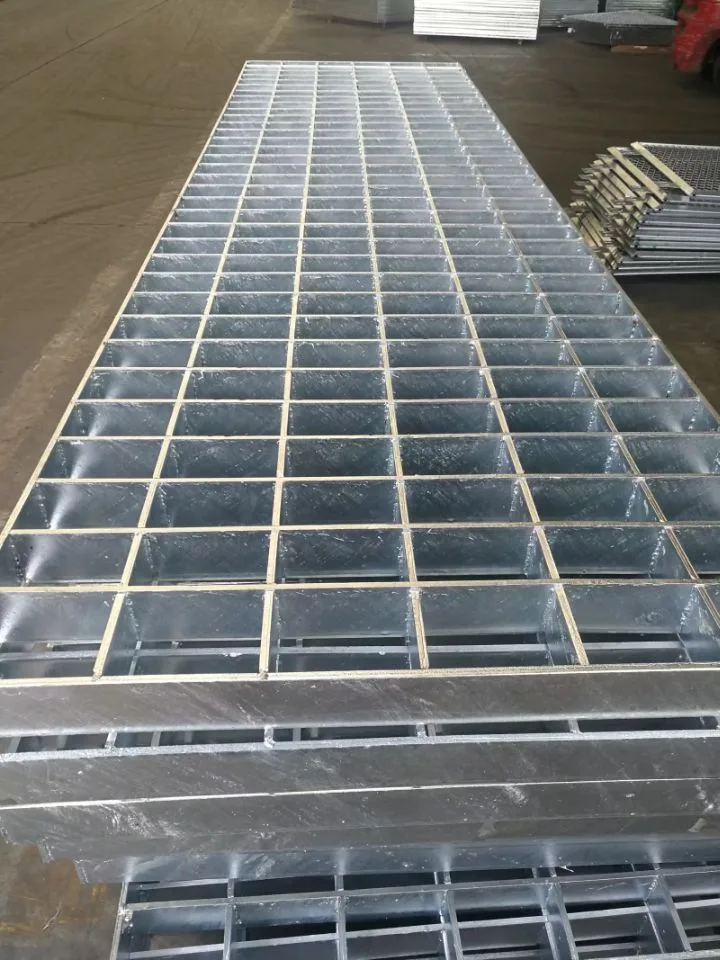
By welding method: welded steel grating (including manual and machine welding), press-locked steel grating, through-locked steel grating and through-welded steel grating.
By bearing bar type: flat steel grating, serrated steel grating and I-bar steel grating.
By material: q235 low carbon steel grating and stainless steel grating.
By application: general-purpose steel grating and special-purpose steel grating such as compound steel grating, trench covers and stair treads.
The products are widely used for engineering platforms, walkways, stairs, trench covers, fences, handrails and drainage manhole covers in petroleum, chemical, port, shipbuilding, power generation, municipal, construction, machinery and metallurgy industries.
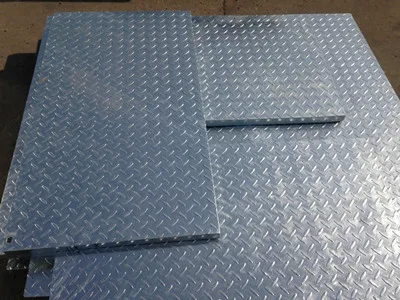
The above are common specifications; actual ordered dimensions and tolerance requirements shall be confirmed against the layout drawing.
Actual parameters for the same model may vary slightly between manufacturers, so acceptance should be based on measured values. Key dimensions of hot-dip galvanized steel grating should be sampled, especially for bulk deliveries. The corresponding parameters of galvanized steel grating can be checked the same way, with any deviation reported promptly.
Classification by Surface Treatment
Material and surface treatment are key to service life. Common practices and suitable environments are as follows:
Hot-dip galvanized steel grating - hot-dip galvanized after fabrication. Best anti-rust performance.
Electro-galvanized steel grating - cold galvanizing after fabrication. Moderate rust protection; humidity may cause slight rusting.
Spray-painted steel grating - spray-painted surface. Moderate rust protection.
Black plate steel grating - no surface treatment. Shorter service life.
The latest national quality standard for steel grating in China is the 2007 YB/T4001.1-2007 standard.
Once material and surface treatment are decided, we recommend writing zinc coating thickness and appearance requirements into the technical agreement.
For material selection, we do not recommend simply chasing high grades. The material of hot-dip galvanized steel grating should match load requirements and service environment; over-specifying causes unnecessary cost increases. For the corresponding treatment of hot-dip galvanized steel grating, refer to the product page and choose according to actual working conditions.
Further reading: Selection points for hot-dip galvanized steel grating and galvanized grating
Besides what this article covers, hot-dip galvanized steel grating is also common in actual projects. It shares similarities with this article's subject in structure and fabrication; for selection, check span, load and service environment in the same order. If both types of components are used in the same project, we recommend unifying material and surface treatment to avoid later galvanic corrosion or inconsistent appearance.
- For all product specifications and theoretical weights by series, visit Steel Grating Product Center
- To estimate cost by size and quantity, use Instant Quote PageSubmit Requirements
- To see how similar projects were executed, refer to Project Cases field applications
FAQ
Why do different manufacturers quote different weights for the same specifications?
The main difference lies in the actual measured thickness and tolerance control of the bearing bars. When bars are supplied at the lower tolerance limit, weight per unit area falls below the theoretical value, and load capacity drops accordingly. We recommend specifying thickness tolerance clearly when purchasing.
What maintenance is required during daily use?
Maintenance mainly involves periodically checking whether fasteners are loose, whether touch-up paint has peeled off, and whether the panel surface shows obvious deformation or rust. Issues found should be dealt with promptly; overall maintenance is minimal.
What is most often overlooked during installation and acceptance?
First, bearing bars installed in the wrong direction reduce load capacity; second, insufficient fixing points or missing zinc touch-up paint; third, support beam spacing inconsistent with the layout drawing. These three items are most often overlooked on site.
The above is for sizing and construction reference. To verify specific parameters or request a quotation, please visitInstant Quote Page, or contact our technical staff.
If you already have drawings or site dimensions, submit them directly and we will help verify specifications and layout, avoiding on-site cutting and rework caused by mismatched models. Without drawings, site photos and approximate dimensions are enough for an estimate.