







Many projects focus only on price when purchasing hot-dip galvanized steel grating and overlook specification matching and corrosion protection, which often leads to rework later. This article lists the conditions to confirm in order - material and surface, material and corrosion requirements, and basic concepts - and explains how to choose under common working conditions. The parts relating to hot-dip galvanized steel grating can be used directly as a technical briefing reference.
Material and Surface Treatment of Hot-Dip Galvanized Steel Grating
Common materials and surface treatments are as follows:
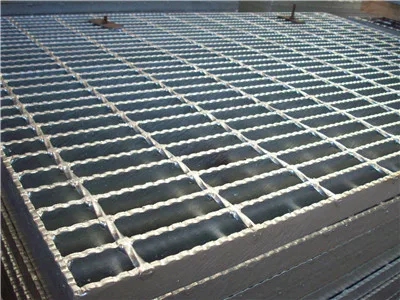
Hot-dip galvanized steel grating has brought convenience to many sectors. With a moderate price and attractive appearance, it has won praise from users. Whether in everyday life, construction projects or industrial production, this product shows its unique advantages. However, during use, irregular patches often appear on the surface. These not only affect the overall appearance but can also lead to rust after long service. What exactly causes this phenomenon?
Once material and surface treatment are decided, we recommend writing zinc coating thickness and appearance requirements into the technical agreement.
For material selection, we do not recommend simply chasing high grades. The material of hot-dip galvanized steel grating should match load requirements and service environment; over-specifying causes unnecessary cost increases. For the corresponding treatment of hot-dip galvanized steel grating, refer to the product page and choose according to actual working conditions.
Material and Anti-Corrosion Requirements
Common materials and surface treatments are as follows:
This is mostly caused by uneven zinc deposition. Here are the main reasons: if the surface of hot-dip galvanized steel grating is not thoroughly cleaned before galvanizing and a layer of dirt remains, that dirt forms an oxide film on the surface, which hinders zinc deposition and results in an uneven coating.
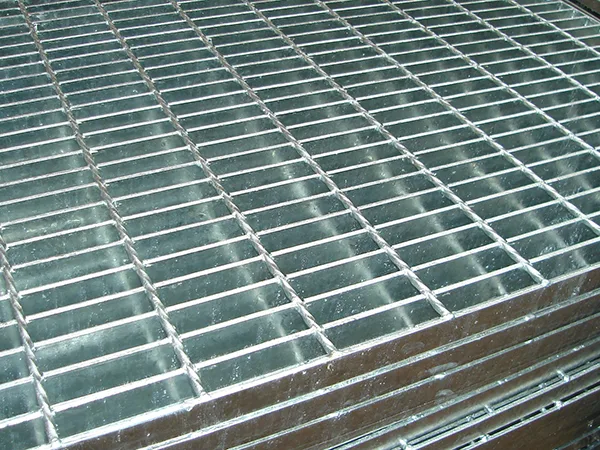
A high carbon content reduces the potential and current flow during galvanizing, causing uneven current distribution over the surface and lowering plating efficiency; this is generally a major cause of uneven zinc coatings. Incorrect arrangement of the grating in the bath can also cause an uneven coating - for example, if bundling is too dense, some areas are shielded and the overall galvanizing result is affected.
Once material and surface treatment are decided, we recommend writing zinc coating thickness and appearance requirements into the technical agreement.
Regarding corrosion protection, one thing is easily overlooked: on-site cutting and welding damage the original coating, and these areas need zinc touch-up after construction, otherwise rust often starts from the cut edges. Hot-dip galvanized steel grating has the same issue; it is best to include this in the technical requirements at the construction disclosure.
Further Explanation: How to Combine Hot-Dip Galvanized Steel Grating with Hot-Dip Galvanized Steel Grating
In engineering, hot-dip galvanized steel grating is often used together with the components mentioned in this article. The two differ in load carrying and installation practices; when combining them, pay special attention to the connection of support conditions and fixing methods, as junction treatment is often where problems arise. For unified drawings, submit dimensions of both types and our technicians will process them under the same layout logic.
- For all product specifications and theoretical weights by series, visit Steel Grating Product Center
- To estimate cost by size and quantity, use Instant Quote PageSubmit Requirements
- To see how similar projects were executed, refer to Project Cases field applications
FAQ
What maintenance is required during daily use?
Maintenance mainly involves periodically checking whether fasteners are loose, whether touch-up paint has peeled off, and whether the panel surface shows obvious deformation or rust. Issues found should be dealt with promptly; overall maintenance is minimal.
Where can I find specific specifications?
our websiteProductsCommon specifications and theoretical weights are organized by series, also available in Instant Quote PageEstimate by size, or contact us directly for sizing advice.
Why do different manufacturers quote different weights for the same specifications?
The main difference lies in the actual measured thickness and tolerance control of the bearing bars. When bars are supplied at the lower tolerance limit, weight per unit area falls below the theoretical value, and load capacity drops accordingly. We recommend specifying thickness tolerance clearly when purchasing.
The above is for sizing and construction reference. To verify specific parameters or request a quotation, please visitInstant Quote Page, or contact our technical staff.
Note that this article presents sizing approaches and general practice, and does not constitute a strength commitment for any specific project. For load-bearing safety-critical areas, the design drawings and on-site calculations shall prevail; contact our technical staff if in doubt.