







This article introduces steel grating in sequence: installation and construction key points, material and anti-corrosion requirements, and maintenance and care. Each section provides actionable criteria; if you only need a quick conclusion, start with the key points at the beginning of each section. The same approach applies to galvanized grating.
Steel Grating Installation and Construction Key Points
On-site construction generally follows the steps and technical requirements below; complete the technical disclosure before starting work:
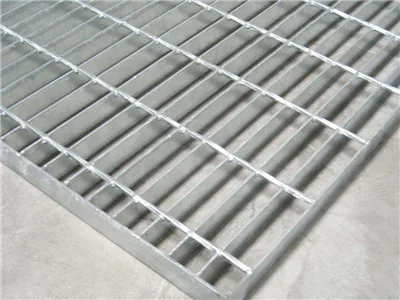
Many customers choose spot welding for steel grating installation. Because the surface is galvanized, spot welding damages the zinc layer and the welded spots rust easily. After welding, it is best to spray silver powder paint to isolate air contact and prevent rust.
After installation, check each panel's fixing points and flatness; put into use only after confirming no warping or looseness.
When selecting material, do not simply chase the highest grade. The material of steel grating should match the load requirements and service environment; over-specifying adds unnecessary cost. See the products page for the corresponding treatment of galvanized grating, and choose according to actual conditions.
Material and Anti-Corrosion Requirements
Material and surface treatment are key to service life. Common practices and suitable environments are as follows:
Steel grating is also called steel grating panels. Service life varies by region: hot-dip galvanizing provides corrosion protection, works even in special environments, and extends the service life of steel grating. After hot-dip galvanizing, steel grating typically lasts more than 10 years outdoors and more than 30 years indoors.
Once material and surface treatment are decided, we recommend writing zinc coating thickness and appearance requirements into the technical agreement.
Material and surface treatment determine the durability of steel grating on site. For the same steel grating, the treatment differs greatly between dry indoor use and coastal or chemical environments, so the service environment should be stated as the primary condition when selecting. The same applies to hot-dip galvanized steel grating.
Maintenance and care of steel grating
Key inspection and maintenance points during use are as follows:
Untreated steel grating develops a water film on its surface; water dissolves oxygen, and water and oxygen ionize iron. As oxygen continuously dissolves in water, the reaction keeps going. Because the main reaction product Fe3O4 is red, the oxidized iron product is commonly called 'red rust'. Red rust is loose and easily dissolved, unable to protect the steel surface from continuous corrosion, so corrosion proceeds until the steel is fully corroded. For this reason, steel must rely on metallic or non-metallic protective coatings applied to its surface to effectively prevent corrosion.
Regular inspection and maintenance as required effectively extends service life and reduces replacement costs.
Regarding service life, the actual lifespan of steel grating depends heavily on the service environment. The difference between dry indoor environments and coastal or chemical environments is significant; clarifying the environment at the selection stage is more effective than remedying later. The same applies to galvanized grating.
Material and surface treatment of steel grating
Features of hot-dip galvanized steel grating: high strength, light structure, attractive appearance, durability; hot-dip galvanized surface treatment provides excellent corrosion resistance and a glossy finish; good ventilation, daylighting, heat dissipation, explosion-proof, and anti-slip performance; resistance to dirt accumulation. Cold galvanized steel grating is generally for indoor use: bright in appearance and low in cost, but less corrosion-resistant than hot-dip galvanized steel grating; mostly used for indoor treads, and can be produced to customer requirements.
Choosing a surface treatment is essentially balancing initial investment against later maintenance. Requirements for steel grating can be appropriately relaxed in dry indoor environments, and raised accordingly outdoors or in humid environments. The selection of galvanized grating can follow the same logic.
Applications of Steel Grating
Steel grating is widely used in hundreds of factories at home and abroad, such as power plants, chemical plants, refineries, steel mills, machinery manufacturers, paper mills, cement plants, pharmaceutical and food processing plants.
Different areas of the same site often have different requirements. Take steel grating: main passages and corner areas, frequently used areas and occasional maintenance areas can be specified separately; the combination with galvanized grating should also be considered by zone, balancing safety and cost.
Further notes: How to combine galvanized grating and hot-dip galvanized steel grating in use
In engineering, hot-dip galvanized steel grating is often used together with the components mentioned in this article. The two differ in load carrying and installation practices; when combining them, pay special attention to the connection of support conditions and fixing methods, as junction treatment is often where problems arise. For unified drawings, submit dimensions of both types and our technicians will process them under the same layout logic.
- For all product specifications and theoretical weights by series, visit Steel Grating Product Center
- To estimate cost by size and quantity, use Instant Quote PageSubmit Requirements
- To see how similar projects were executed, refer to Project Cases field applications
FAQ
Where can I find specific specifications?
our websiteProductsCommon specifications and theoretical weights are organized by series, also available in Instant Quote PageEstimate by size, or contact us directly for sizing advice.
Why do different manufacturers quote different weights for the same specifications?
The main difference lies in the actual measured thickness and tolerance control of the bearing bars. When bars are supplied at the lower tolerance limit, weight per unit area falls below the theoretical value, and load capacity drops accordingly. We recommend specifying thickness tolerance clearly when purchasing.
What is most often overlooked during installation and acceptance?
First, bearing bars installed in the wrong direction reduce load capacity; second, insufficient fixing points or missing zinc touch-up paint; third, support beam spacing inconsistent with the layout drawing. These three items are most often overlooked on site.
The above is for sizing and construction reference. To verify specific parameters or request a quotation, please visitInstant Quote Page, or contact our technical staff.
If you already have drawings or site dimensions, submit them directly and we will help verify specifications and layout, avoiding on-site cutting and rework caused by mismatched models. Without drawings, site photos and approximate dimensions are enough for an estimate.