







Regarding irregular steel grating, this article explains the area standard, common area models and basic concepts in turn, giving directly actionable criteria rather than theory alone. If you have drawings or site dimensions, check them against the points here; galvanized steel grating can follow the same sequence.
Area Standard and Acceptance Requirements for Irregular Steel Grating
The main standard clauses and acceptance requirements involved are as follows:
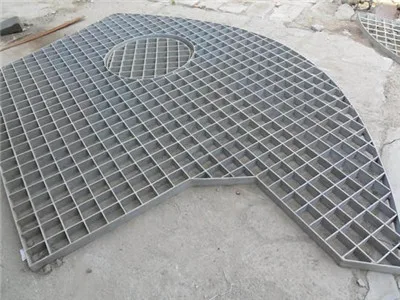
1. In the "Steel Grating Standard YB/T4004--1998", section 7.2 specifies the method for calculating the area of steel grating.
We recommend checking each clause above during acceptance and keeping the factory inspection records.
Installation has the greatest impact on long-term performance. When laying irregular steel grating, make sure the direction is not reversed: the flat bearing bars must run parallel to the main load direction, a point most often overlooked on site. Fasteners must also be supplied in full according to the layout drawing; a single missing clip can cause local loosening. The same applies to galvanized steel grating.
Common Models and Sizes for Irregular Steel Grating Area
Main specification comparison is as follows:
1.1 Where no drawing exists and the grating is made to the user's stated dimensions, the area is the total of the number of delivered grating panels multiplied by width and length, including cut-outs and notches.
1.2 For steel grating made to a customer-supplied drawing, the area is calculated from the overall outer dimensions on the drawing, including cut-outs and notches.
- 3 For shaped steel grating, as shown in the figure, the area is width (W) X length (L), without deducting the removed portions.
- If the user has special requirements but provides no drawing, the grating area = number of grating panels actually produced × width of a single panel × length (including cut-out and notch areas).
- If the user has special requirements and provides a drawing, the area is calculated from the outer dimensions on the drawing (including cut-out and notch areas).
Area calculation for irregular steel grating: fan-shaped steel grating is produced in the same way as standard platform steel grating, with one extra step of cutting to shape and edge banding. Where no precise drawing is available, it is processed to the dimensions specified by the user.
The above are common specifications; actual ordered dimensions and tolerance requirements shall be confirmed against the layout drawing.
Actual parameters for the same model may vary slightly between manufacturers, so acceptance should be based on measured values. Key dimensions of irregular steel grating should be sampled, especially for bulk deliveries. The corresponding parameters of galvanized steel grating can be checked the same way, with any deviation reported promptly.
Further notes: Common combinations of galvanized grating and hot-dip galvanized steel grating
Besides what this article covers, galvanized grating is also common in actual projects. It shares similarities with this article's subject in structure and fabrication; for selection, check span, load and service environment in the same order. If both types of components are used in the same project, we recommend unifying material and surface treatment to avoid later galvanic corrosion or inconsistent appearance.
- For all product specifications and theoretical weights by series, visit Steel Grating Product Center
- To estimate cost by size and quantity, use Instant Quote PageSubmit Requirements
- To see how similar projects were executed, refer to Project Cases field applications
FAQ
What is most often overlooked during installation and acceptance?
First, bearing bars installed in the wrong direction reduce load capacity; second, insufficient fixing points or missing zinc touch-up paint; third, support beam spacing inconsistent with the layout drawing. These three items are most often overlooked on site.
What maintenance is required during daily use?
Maintenance mainly involves periodically checking whether fasteners are loose, whether touch-up paint has peeled off, and whether the panel surface shows obvious deformation or rust. Issues found should be dealt with promptly; overall maintenance is minimal.
What information is needed for custom sizes?
Usually you need to provide the panel dimensions (length x width), bearing bar specs and direction, center-to-center pitch of bearing bars and cross bars, surface treatment, and special requirements such as cutouts, corner notches and banding. Site photos or sketches are even better.
The above is for sizing and construction reference. To verify specific parameters or request a quotation, please visitInstant Quote Page, or contact our technical staff.
If you already have drawings or site dimensions, submit them directly and we will help verify specifications and layout, avoiding on-site cutting and rework caused by mismatched models. Without drawings, site photos and approximate dimensions are enough for an estimate.