







This article focuses on anti-slip serrated steel grating, covering in turn what its advantages are, its scope of application and engineering fields, and its performance, with practical advice added after each part. If you are comparing options or preparing a purchase, check the items in the order given; parts involving hot-dip galvanized steel grating can be verified against this article, and adjusted to actual site conditions where they differ.
What Are the Advantages of Anti-Slip Serrated Steel Grating
Below we first briefly explain the relevant concepts and basic construction to make the following parameters and sizing content easier to understand.
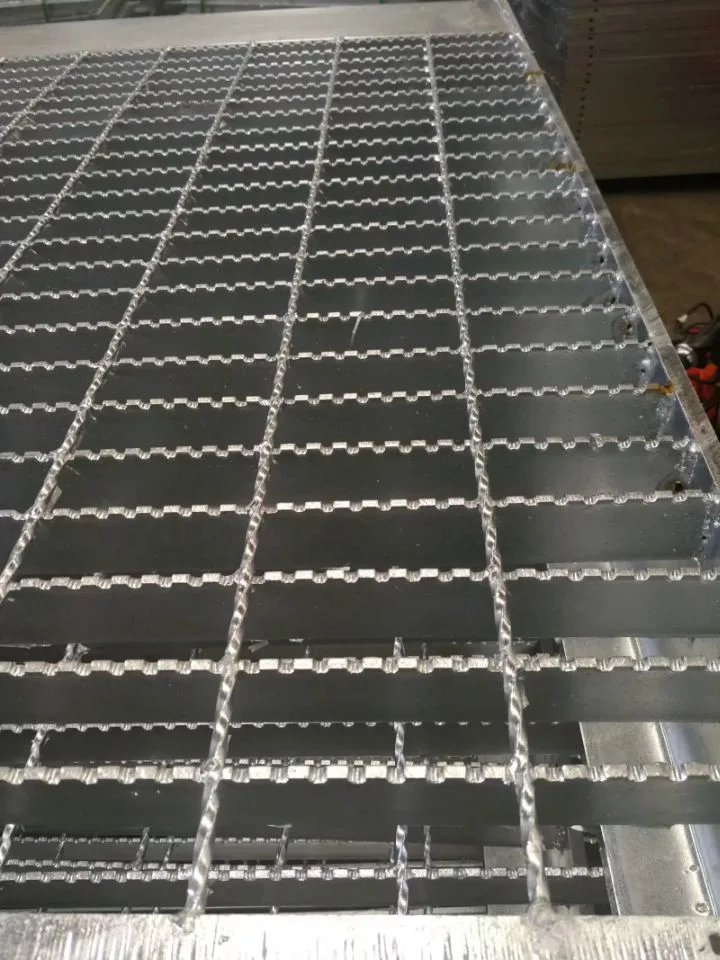
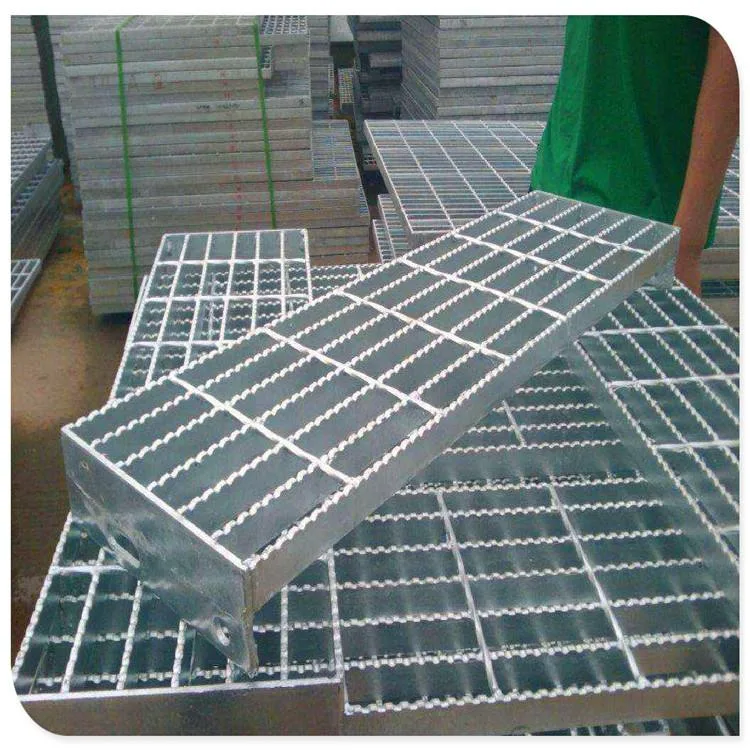
Serrated steel grating, also called grating made of serrated flat bars, has all the features and uses of ordinary steel grating plus strong slip resistance, especially suitable for wet, greasy places and offshore oil platforms. Serrated steel grating uses a hot-dip galvanized surface treatment with strong rust resistance. The trench covers of this product can be hinge-connected to their frames: theft-proof, safe and easy to open.
Once you grasp these basic concepts, the specifications and sizing recommendations that follow will be much easier to understand.
What is most easily overlooked when reading a specification table is tolerance and end treatment. Anti-slip serrated steel grating usually retains machining allowance in the length direction; if the site uses recessed installation, the banding and corner-cut requirements should be stated in advance. Hot-dip galvanized steel grating is handled similarly in such details, so it is recommended to mark them clearly on the drawings as well.
Scope of Application & Engineering Fields
Typical applications mainly include the following categories, which can help you judge suitability for your project:
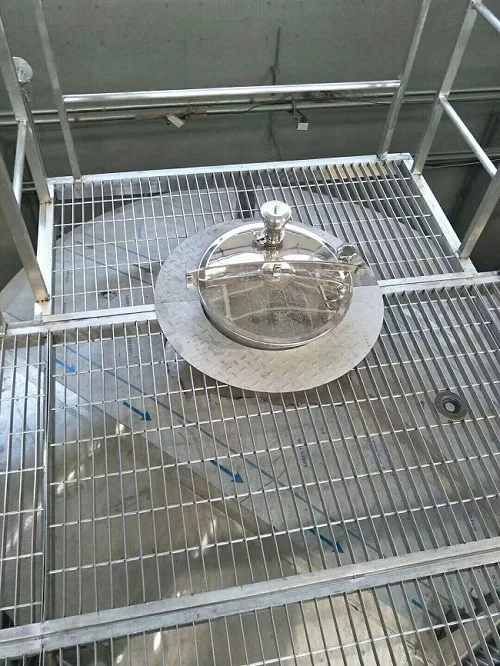
Serrated flat bars, besides having the features and uses of ordinary steel plate, also have strong anti-slip ability, especially suitable for wet, oily places and offshore oil platforms. With hot-dip galvanized surface treatment, they have strong rust resistance - 30 years without maintenance or replacement. This product can be used for trench covers hinge-connected to frames: safe and easy to open.
If your working conditions fall outside the above range, you can provide site photos and dimensions, and our technicians will help assess them.
Material and surface treatment determine the on-site durability of anti-slip serrated steel grating. Even for the same steel grating, the treatment differs greatly between dry indoor use and coastal or chemical environments, so the service environment should be raised as the primary condition during selection. This judgment holds equally for hot-dip galvanized steel grating.
Performance Characteristics of Anti-Slip Serrated Steel Grating
Its overall performance focuses on the following aspects; we suggest comparing item by item in actual selection:
Made of high-strength carbon steel, the plate has high strength; both strength and toughness exceed cast iron. It can be used in docks, airports and other large-span, heavy-load environments. Best mesh drainage: open area of 83.3%, more than twice that of cast iron. Attractive appearance: clean lines, silver finish, modern design. Material savings: for large spans and heavy loads it costs less than cast iron.
Overall, selection should weigh span, load and service environment together.
Different parts of the same scene often have different requirements. Taking anti-slip serrated steel grating as an example, the specifications of main walkways and corner areas, or of frequently used areas and occasional maintenance areas, can be set separately; the use of hot-dip galvanized steel grating is also recommended by zone, balancing safety and cost.
Basic Concepts of Anti-Slip Serrated Steel Grating
Below we first briefly explain the relevant concepts and basic construction to make the following parameters and sizing content easier to understand.
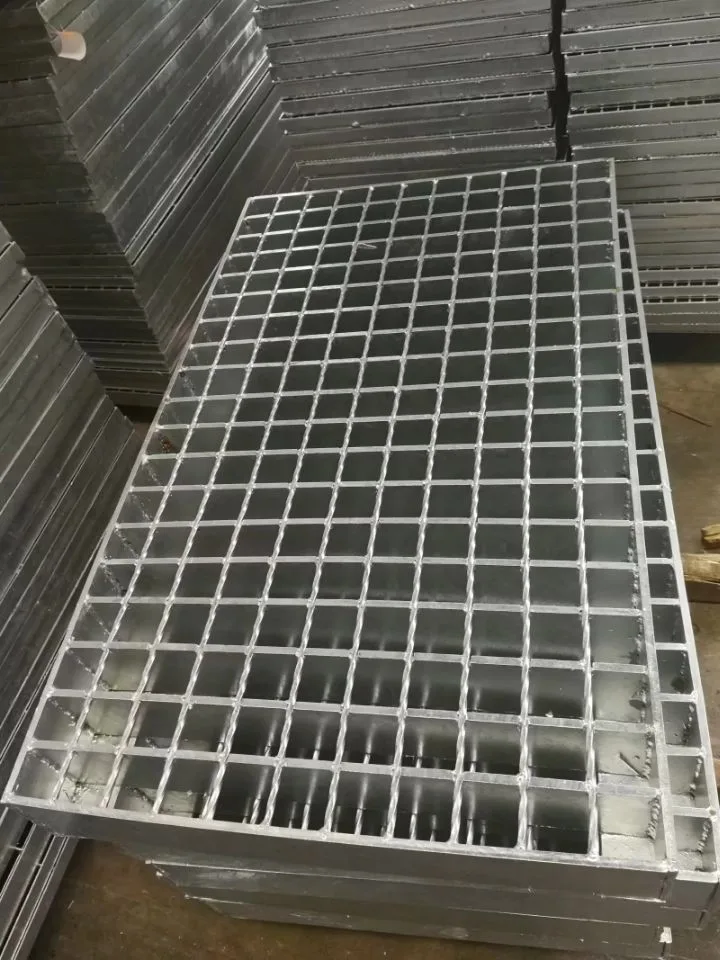
The cost of replacing stolen or broken cast iron covers can also be saved. Serrated steel grating refers to welded grating with a bar pitch of less than 25mm. Standard welded grating has advantages such as attractive appearance and easy installation, and can also meet strict requirements on the size of objects passing through or dropped in special situations.
Once you grasp these basic concepts, the specifications and sizing recommendations that follow will be much easier to understand.
Bigger is not always better. Anti-slip serrated steel grating should be selected as economically as possible while meeting load requirements; excessive thickening increases weight and cost and complicates installation. The product page offers a more complete comparison of hot-dip galvanized steel grating for reference before deciding.
Key Advantages
Serrated steel grating uses high-strength carbon steel, giving the grating very high strength: strength and toughness far exceeding cast iron; it canbe used in docks, airports and other large-span, heavy-load environments. Large mesh provides optimal drainage: the open area reaches 83.3%, more than twice that of cast iron. Attractive appearance: clean lines, silver finish, modern design. Material savings reduce investment: for large spans and heavy loads it costs less than cast iron, and saves the replacement costs of cast iron covers lost to theft or breakage.
The scope of application of anti-slip serrated steel grating is actually wider than many people think, from industrial platforms to municipal landscaping. The difference is that industrial settings focus more on load capacity and anti-corrosion, while municipal settings also consider appearance, theft prevention and pedestrian safety. Common practices for hot-dip galvanized steel grating in these scenarios can be viewed on the project cases page.
Supplementary Notes on Anti-Slip Serrated Steel Grating
Raw materials of serrated steel grating:
It should be noted that the specific practice for anti-slip serrated steel grating varies with project conditions; what this article gives are general guidelines rather than fixed answers. In actual execution, it is recommended to first confirm the site span, support conditions and traffic requirements, then implement the items of this section one by one; for hot-dip galvanized steel grating the judgment logic is the same, and it is still advisable to double-check before ordering.
Specification Parameters of Anti-Slip Serrated Steel Grating
Plain flat bars: common models are 253 255 303 305 323 325 403 404 405 503 505 605 705 and similar specifications. We mainly use slit flat bars cut from steel plate. Serrated flat bars: models are the same as plain flat bars; the difference is that one side of the bar has uneven serrations, mainly for slip resistance.
Bigger is not always better. Anti-slip serrated steel grating should be selected as economically as possible while meeting load requirements; excessive thickening increases weight and cost and complicates installation. The product page offers a more complete comparison of hot-dip galvanized steel grating for reference before deciding.
Basic Concepts of Anti-Slip Serrated Steel Grating (Continued)
Twisted square bar: also called twisted square cross bar, usually 5x5, 6x6 or 8x8 square steel twisted into bars.
Serrated steel grating is welded from flat bars with a saw-toothed face, giving strong slip resistance, especially suitable for wet, greasy places and offshore oil platforms, but at a higher price - please consider cost when purchasing. Serrated steel grating uses a hot-dip galvanized surface treatment with strong rust resistance: 30 years maintenance-free and replacement-free.
To quickly judge whether anti-slip serrated steel grating suits a given location, check three angles: whether there are corrosive media, whether the traffic is people or vehicles, and roughly what the span is. Once these three points are clear, the required specifications and surface treatment of the steel grating can basically be determined.
Further reading: Sizing reference for hot-dip galvanized steel grating and hot-dip galvanized steel grating
Besides what this article covers, hot-dip galvanized steel grating is also common in actual projects. It shares similarities with this article's subject in structure and fabrication; for selection, check span, load and service environment in the same order. If both types of components are used in the same project, we recommend unifying material and surface treatment to avoid later galvanic corrosion or inconsistent appearance.
- For all product specifications and theoretical weights by series, visit Steel Grating Product Center
- To estimate cost by size and quantity, use Instant Quote PageSubmit Requirements
- To see how similar projects were executed, refer to Project Cases field applications
FAQ
What information is needed for custom sizes?
Usually you need to provide the panel dimensions (length x width), bearing bar specs and direction, center-to-center pitch of bearing bars and cross bars, surface treatment, and special requirements such as cutouts, corner notches and banding. Site photos or sketches are even better.
How to choose between hot-dip galvanizing and cold galvanizing?
The two anti-corrosion mechanisms differ: hot-dip galvanizing immerses steel in molten zinc to form a metallurgically bonded coating, thick and long-lasting, suitable for outdoor and humid environments; cold galvanizing is electrochemical deposition with a thinner, more uniform appearance, suitable for dry indoor environments or applications requiring high dimensional precision.
Can the values in the article be applied directly?
Values in this article come from relevant standard clauses or common industry practice. For actual selection, recalculate based on site span, load class and service environment; direct copying is not recommended.
The above is for sizing and construction reference. To verify specific parameters or request a quotation, please visitInstant Quote Page, or contact our technical staff.
The above is general guidance. For a specific project, we still recommend submitting span, load class and service environment to our technicians for review. Steel grating is a load-bearing component; rework caused by wrong specification choices costs far more than the time spent on upfront calculation.