







This article explains steel grating for public pigeon lofts in order: what pigeon loft grating is, common models and sizes, and basic concepts, aiming to give directly actionable criteria rather than theory alone. If you have drawings or site dimensions, check them against the points listed here; hot-dip galvanized steel grating can follow the same sequence.
What Is Pigeon Loft Grating
Below we first briefly explain the relevant concepts and basic construction to make the following parameters and sizing content easier to understand.
With the growth of comprehensive national strength, stricter environmental requirements and costly labor, plus the rapid development of demand at home and abroad, China's FRP grating manufacturing has been infused with vitality. For domestic manufacturers this is both an opportunity and a challenge. Building their own unique systems and a brand strategy is the necessary path for Chinese grating enterprises to enter the international market and succeed.
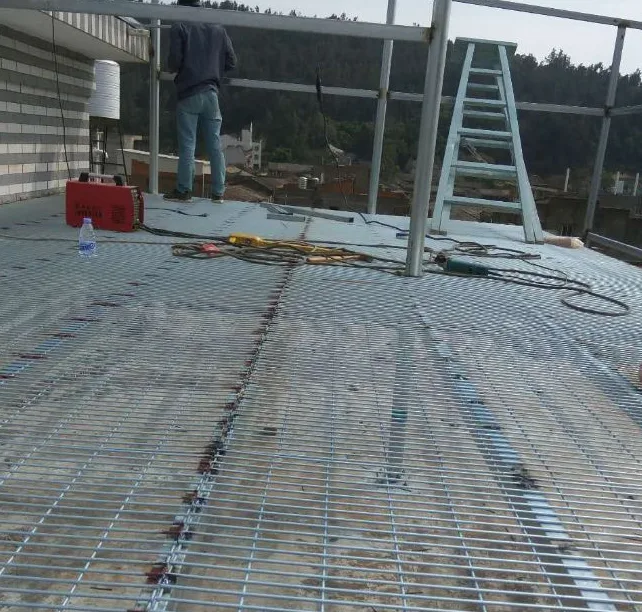
Once you grasp these basic concepts, the specifications and sizing recommendations that follow will be much easier to understand.
Bigger is not always better. Steel grating for public pigeon lofts should be selected as economically as possible while meeting load requirements; over-thickening adds weight and cost and complicates installation. The product page gives a fuller comparison for hot-dip galvanized steel grating, which is worth checking before deciding.
Common Models and Sizes of Pigeon Loft Grating
Main specification comparison is as follows:
During pressure welding of steel grating, the twisted square cross bar is fed by two pairs of feed rollers 1 and 8. The rollers are made of tin bronze and are arranged at the front and rear ends of the straightening cylinder. The twisted square bar moves forward as the rollers rotate synchronously; adjusting the roller springs changes the wire feed speed, whose maximum equals the peripheral speed of the rollers. Roller adjustment is critical to the surface quality of the twisted square bar: too tight, and the bar deforms or shows mechanical marks; too loose, and the bar slips on the rollers, causing surface scratches. Both cases result in rejected products. Spring pressure should therefore be set according to product specifications and rigidity to achieve the best straightening effect and production efficiency.
The above are common specifications; actual ordered dimensions and tolerance requirements shall be confirmed against the layout drawing.
Actual parameters for the same model may vary slightly between manufacturers, so acceptance should be based on measured values. Key dimensions of steel grating for public pigeon lofts should be sampled, especially for bulk deliveries. The corresponding parameters of galvanized steel grating can be checked the same way, with any deviation reported promptly.
Performance Features of Pigeon Loft Grating
FRP grating manufacturers should learn from the damage caused by cutthroat competition in the FRP industry and instead build on complementary strengths and promote mutual improvement, so that the sector can develop in a healthy and vigorous way.
Clarifying the definition mainly prevents misunderstandings later. Names for steel grating used in public pigeon lofts may differ between manufacturers and regions, so orders should state the structural form, material and surface treatment explicitly rather than just a product name. Galvanized steel grating has the same naming variations, so attach drawings or photos during technical discussions.
Further notes: Common combinations of hot-dip galvanized steel grating and galvanized grating
Besides what this article covers, hot-dip galvanized steel grating is also common in actual projects. It shares similarities with this article's subject in structure and fabrication; for selection, check span, load and service environment in the same order. If both types of components are used in the same project, we recommend unifying material and surface treatment to avoid later galvanic corrosion or inconsistent appearance.
- For all product specifications and theoretical weights by series, visit Steel Grating Product Center
- To estimate cost by size and quantity, use Instant Quote PageSubmit Requirements
- To see how similar projects were executed, refer to Project Cases field applications
FAQ
Can the values in the article be applied directly?
Values in this article come from relevant standard clauses or common industry practice. For actual selection, recalculate based on site span, load class and service environment; direct copying is not recommended.
How to choose between hot-dip galvanizing and cold galvanizing?
The two anti-corrosion mechanisms differ: hot-dip galvanizing immerses steel in molten zinc to form a metallurgically bonded coating, thick and long-lasting, suitable for outdoor and humid environments; cold galvanizing is electrochemical deposition with a thinner, more uniform appearance, suitable for dry indoor environments or applications requiring high dimensional precision.
What maintenance is required during daily use?
Maintenance mainly involves periodically checking whether fasteners are loose, whether touch-up paint has peeled off, and whether the panel surface shows obvious deformation or rust. Issues found should be dealt with promptly; overall maintenance is minimal.
The above is for sizing and construction reference. To verify specific parameters or request a quotation, please visitInstant Quote Page, or contact our technical staff.
Note that this article presents sizing approaches and general practice, and does not constitute a strength commitment for any specific project. For load-bearing safety-critical areas, the design drawings and on-site calculations shall prevail; contact our technical staff if in doubt.