







When purchasing steel grating for delivery before the Spring Festival, many projects focus only on price and overlook specification matching and corrosion protection requirements, which often leads to rework later. This article lists, in order, the typical application scenarios, the conditions to confirm during selection, and the basic concepts, and explains how to make trade-offs under common working conditions. The parts related to hot-dip galvanized steel grating can be used directly as a reference for technical disclosure.
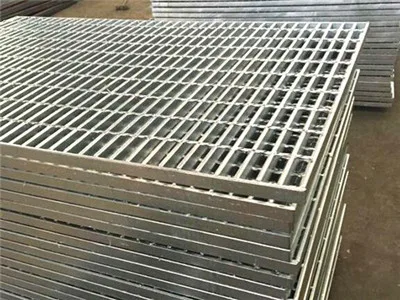
As the Spring Festival approaches, our company offers special discounts to reward new and old customers: all steel grating orders placed before the festival are sold at the lowest cost price. Friends planning to use steel grating after the festival are welcome to place orders.13323188871
Typical Applications
Main applications are as follows:
- Industrial Platforms & Maintenance Walkways: equipment platforms and inspection passages in power plants, chemical plants and steel-structure workshops;
- Municipal & Landscape: road drainage trench covers, rainwater grates, tree grates, park boardwalks;
- Transportation & Ports: wharf trestles, multi-story parking garage lanes, railway bridge walkways;
- Environmental & Water Treatment: walkways in wastewater treatment plants, tank platforms, screening machine platforms;
- Others: elevated tower platforms, stair treads, fences and railings, etc.
If your working conditions fall outside the above range, you can provide site photos and dimensions, and our technicians will help assess them.
The applicable scope of ordering steel grating before the Spring Festival is actually wider than many people think, from industrial platforms to municipal gardens. The difference is that industrial scenarios focus more on load capacity and corrosion protection, while municipal scenarios also consider appearance, anti-theft and pedestrian safety. Common practices of hot-dip galvanized steel grating in these scenarios can be viewed on the project cases page.
Key Conditions to Confirm During Selection
We recommend confirming the following factors in order according to service conditions during selection:
- First clarify the span and support beam spacing to determine the required series;
- Then check load requirements by usage type (pedestrian, maintenance, vehicular);
- Finally, determine the surface treatment by service environment (dry indoor, outdoor, coastal, chemical).
Placing the order after confirming these items effectively avoids specification mismatch and on-site rework.
Bigger specifications are not always better. The selection of steel grating ordered before the Spring Festival should be as economical as possible while meeting load requirements; excessive thickening increases self-weight and cost, and also brings inconvenience to installation. The product page provides a more complete comparison of hot-dip galvanized steel grating, which can be consulted before making a decision.
Further reading: Sizing reference for hot-dip galvanized steel grating and hot-dip galvanized steel grating
In engineering, hot-dip galvanized steel grating is often used together with the components mentioned in this article. The two differ in load carrying and installation practices; when combining them, pay special attention to the connection of support conditions and fixing methods, as junction treatment is often where problems arise. For unified drawings, submit dimensions of both types and our technicians will process them under the same layout logic.
- For all product specifications and theoretical weights by series, visit Steel Grating Product Center
- To estimate cost by size and quantity, use Instant Quote PageSubmit Requirements
- To see how similar projects were executed, refer to Project Cases field applications
FAQ
Can the values in the article be applied directly?
Values in this article come from relevant standard clauses or common industry practice. For actual selection, recalculate based on site span, load class and service environment; direct copying is not recommended.
What is most often overlooked during installation and acceptance?
First, bearing bars installed in the wrong direction reduce load capacity; second, insufficient fixing points or missing zinc touch-up paint; third, support beam spacing inconsistent with the layout drawing. These three items are most often overlooked on site.
How to choose between hot-dip galvanizing and cold galvanizing?
The two anti-corrosion mechanisms differ: hot-dip galvanizing immerses steel in molten zinc to form a metallurgically bonded coating, thick and long-lasting, suitable for outdoor and humid environments; cold galvanizing is electrochemical deposition with a thinner, more uniform appearance, suitable for dry indoor environments or applications requiring high dimensional precision.
The above is for sizing and construction reference. To verify specific parameters or request a quotation, please visitInstant Quote Page, or contact our technical staff.
Note that this article presents sizing approaches and general practice, and does not constitute a strength commitment for any specific project. For load-bearing safety-critical areas, the design drawings and on-site calculations shall prevail; contact our technical staff if in doubt.