
Many projects focus only on price when purchasing steel grating, ignoring specification matching and anti-corrosion requirements, which often leads to rework. This article lists, in the order of steel grating manufacturing methods, platform steel grating classification, and basic concepts, the conditions to confirm one by one, and explains how to make trade-offs under common working conditions; the content related to platform steel grating can be used directly as technical disclosure reference.
Steel grating manufacturing methods
Typical production steps and control points are as follows:
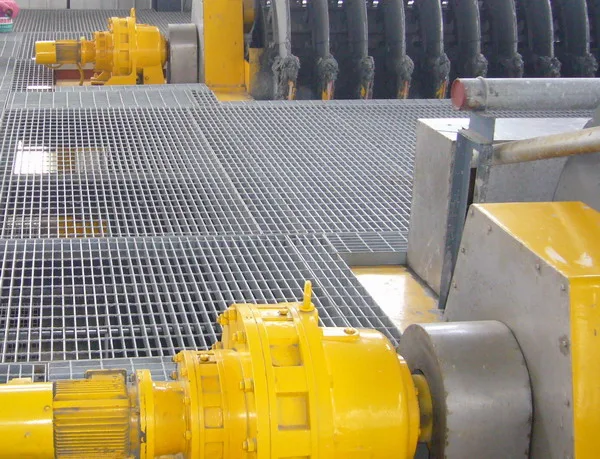
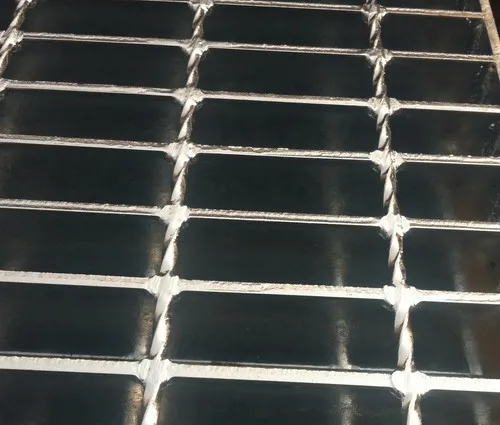
There are two types: machine press-welding and manual production. Machine press-welding uses a high-pressure resistance welding machine, where a robot automatically places the cross bars horizontally on evenly arranged bearing bars, and strong welding power and hydraulic force press-weld the cross bars into the bearing bars, producing high-quality grating with firm weld points, extremely high stability and strength. For manually made steel grating, holes are first punched in the bearing bars, then cross bars are inserted and spot-welded; gaps exist between cross bars and bearing bars, and not every contact point can be welded, so welding is not firm and strength is reduced. Uses of steel grating: widely applied in petrochemicals, municipal engineering, port engineering, machinery industry, power plants and waterworks, steel industry, manufacturing, food processing and many other industries.
This is an economical, simple-structure anti-slip steel grating, comprising a fixed frame and flat bars and cross bars arranged longitudinally and transversely in the fixed frame; the flat bars are inclined along the vertical direction of the fixed frame. With inclined flat bars, when people walk on the grating, the sole contact area is large, improving foot comfort, effectively increasing friction, and while walking the inclined flat bars act like reverse serrations to prevent slipping under force. To ensure no slipping when walking back and forth on the grating, preferably, adjacent flat bars are inclined in opposite directions. To avoid bumps from cross bars protruding above the flat bar surface, the highest point of the cross bars is below or flush with the flat bar height. This simple structure effectively increases the contact area between sole and flat bars, increases friction, provides an anti-slip effect, and while walking, the inclined flat bars act like reverse serrations to prevent slipping under force.
The quality of steel grating products is inseparable from raw material producers and suppliers, which require consistent and stable raw material quality. Using quality materials can to some extent improve product quality, grade, reputation and production efficiency, improve the performance/price ratio, and reduce relative costs. At present, domestic raw materials have reached the same level as imported materials in both product quality and grade.
Only when control points of each process are implemented can dimensional accuracy and appearance quality of finished products be guaranteed.
In process arrangement, the processing sequence of steel grating manufacturing and platform steel grating is generally cutting, welding or press-locking, edge trimming, and surface treatment; each step affects final product quality. Surface treatment is usually done last; if secondary processing is needed in intermediate steps, the coating protection of hot-dip galvanized steel grating must be correspondingly re-done.
Platform steel grating classification
Main types are classified as follows:
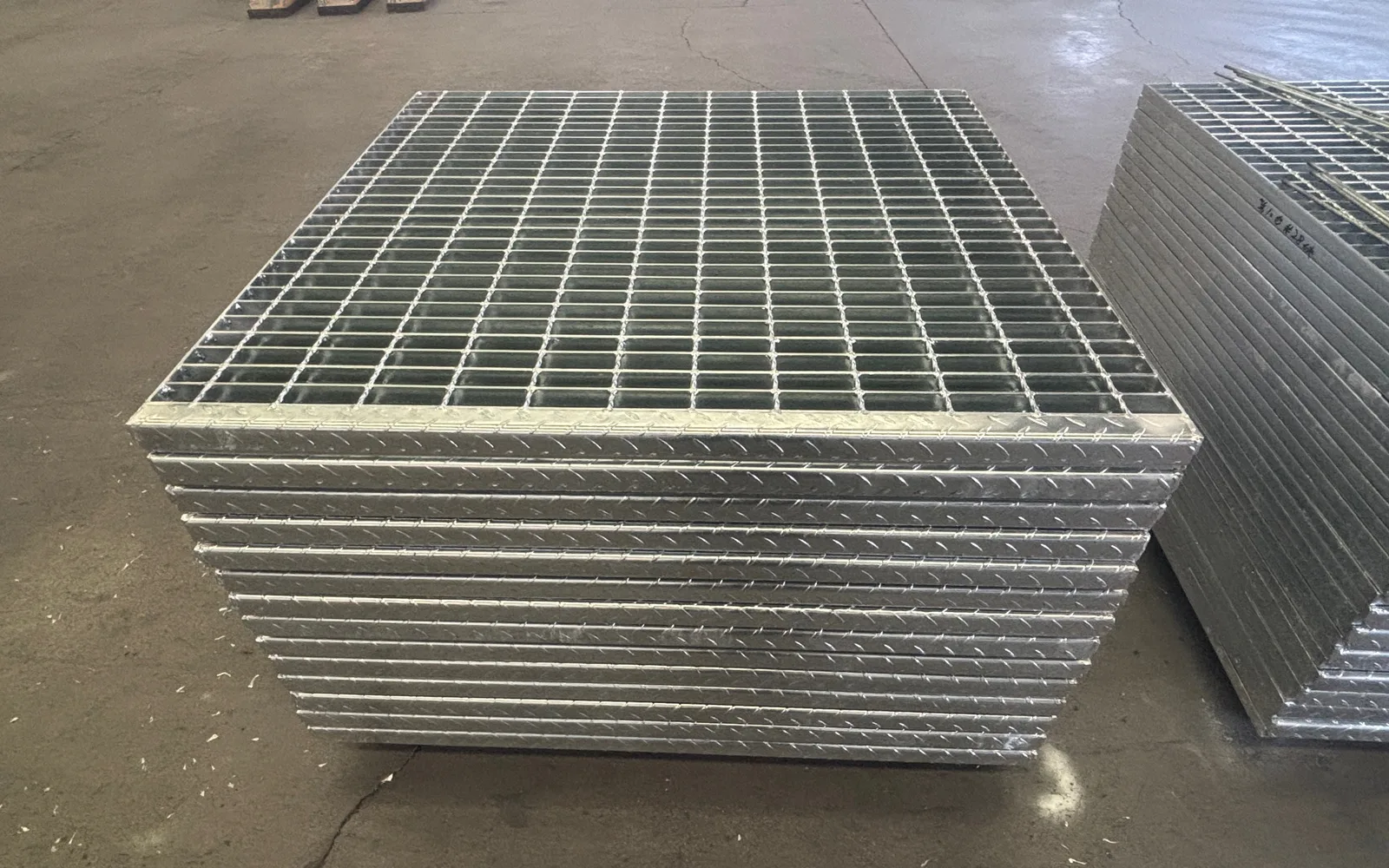
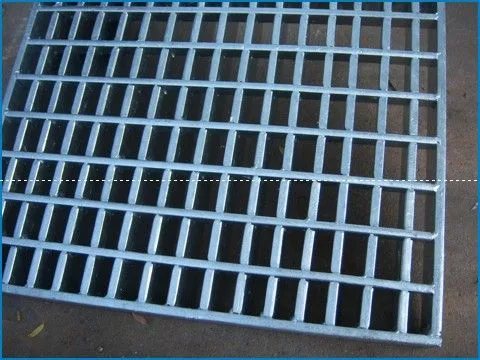
1 By welding method: press-welded platform steel grating, interlocked platform steel grating, through-locked platform steel grating and through-welded platform steel grating.
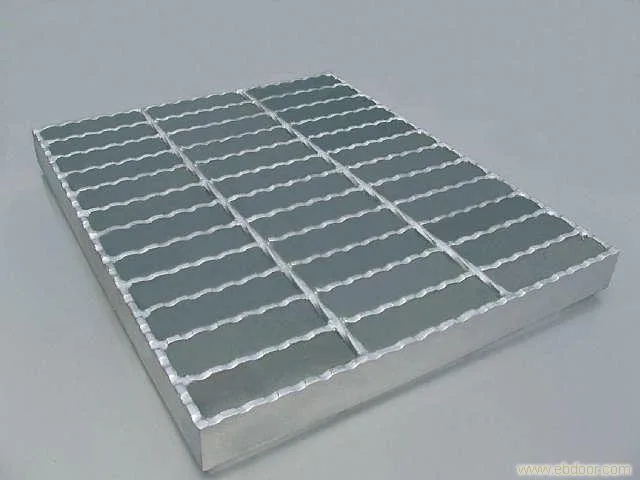
2. By the side surface shape of the bearing bars: plain steel grating, serrated steel grating and I-type steel grating, etc.
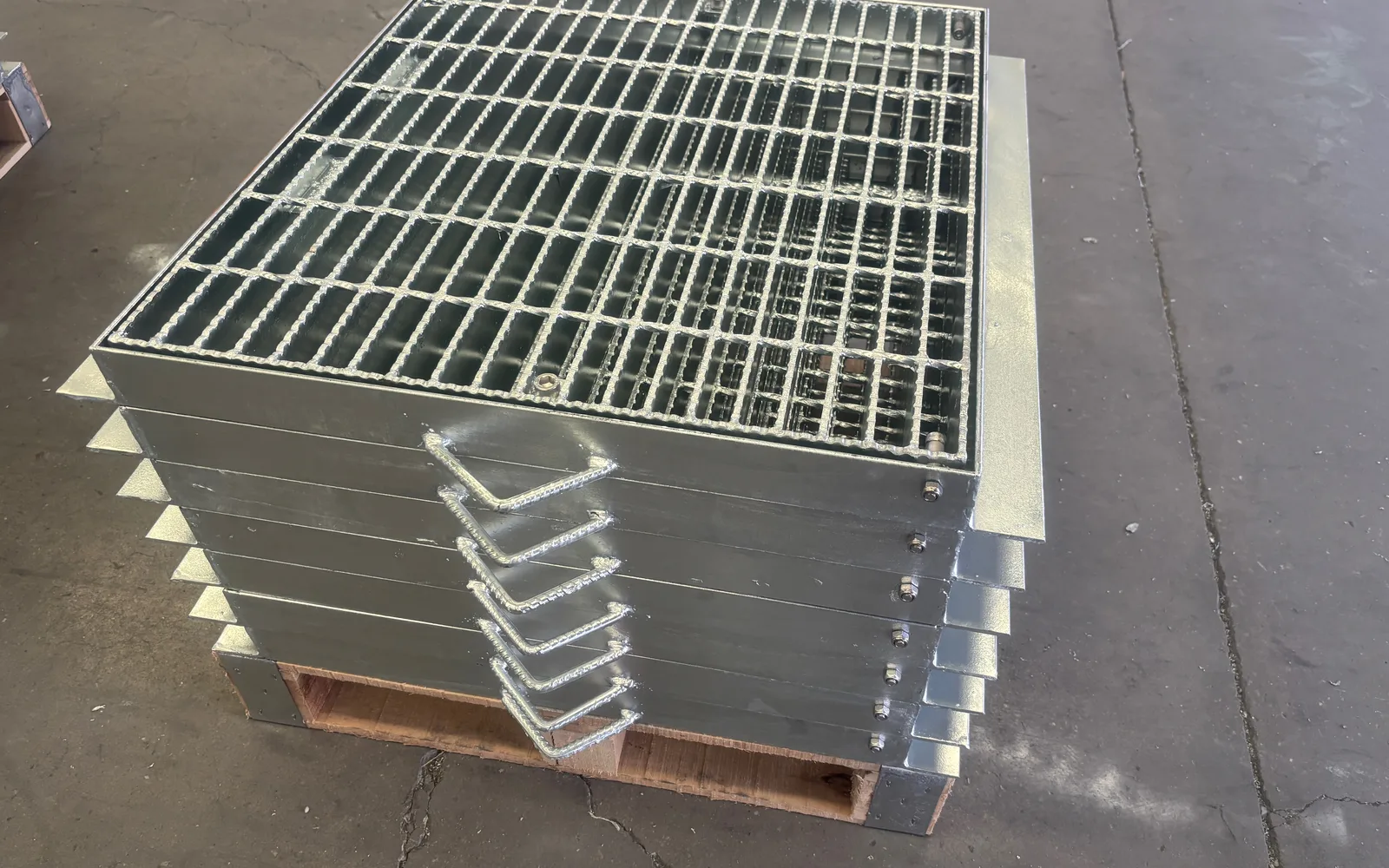
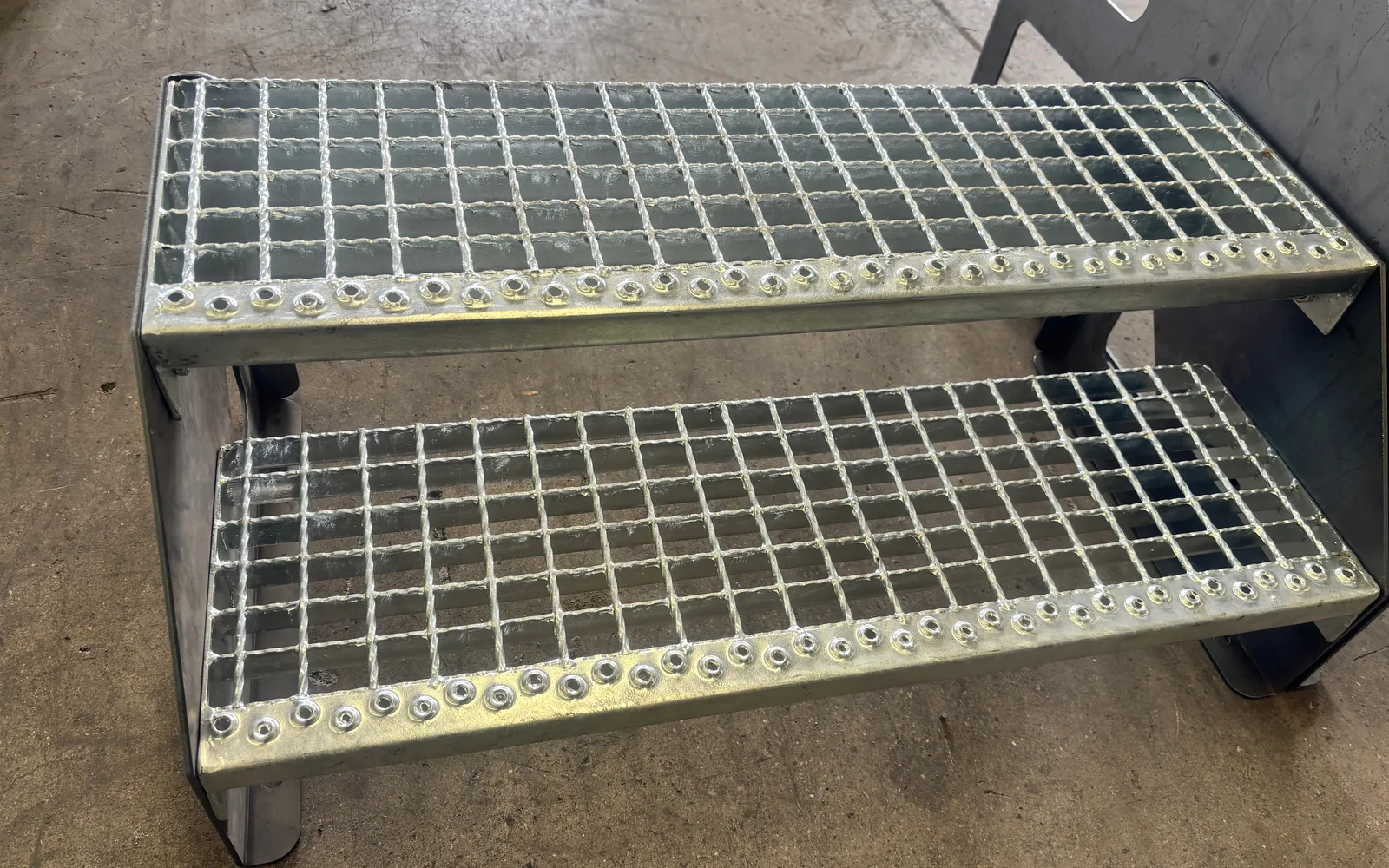
3. By use: general-purpose steel grating and special-purpose steel grating such as trench covers, stair treads, etc.
4 By bearing bar pitch: the center distance between two adjacent bearing bars, commonly 30MM, 40MM and 60MM.
5 By cross bar pitch: the center pitch of two adjacent cross bars is usually 50MM or 100MM, two types."
Determine the category first and then the specific model; this saves detours and makes comparison with other materials easier.
During processing, the dimensional control of steel grating manufacturing and platform steel grating mainly relies on molds and tooling, so consistency in mass production is good, while special-shaped parts need separate layout. When secondary processing is needed on site, the cut-edge anti-corrosion treatment of hot-dip galvanized steel grating must not be omitted.
Further reading: selection reference for platform steel grating and hot-dip galvanized steel grating
Platform steel grating and hot-dip galvanized steel grating are different specification forms under the same product system; the selection logic is the same as described in this article: first the usage, then specifications by span and load, finally surface treatment by environment. They may differ in anti-corrosion and anti-slip requirements; state them separately before ordering rather than writing one general technical requirement.
- For all product specifications and theoretical weights by series, visit Steel Grating Product Center
- To estimate cost by size and quantity, use Instant Quote PageSubmit Requirements
- To see how similar projects were executed, refer to Project Cases field applications
FAQ
Can the values in the article be applied directly?
Values in this article come from relevant standard clauses or common industry practice. For actual selection, recalculate based on site span, load class and service environment; direct copying is not recommended.
What information is needed for custom sizes?
Usually you need to provide the panel dimensions (length x width), bearing bar specs and direction, center-to-center pitch of bearing bars and cross bars, surface treatment, and special requirements such as cutouts, corner notches and banding. Site photos or sketches are even better.
What is most often overlooked during installation and acceptance?
First, bearing bars installed in the wrong direction reduce load capacity; second, insufficient fixing points or missing zinc touch-up paint; third, support beam spacing inconsistent with the layout drawing. These three items are most often overlooked on site.
The above is for sizing and construction reference. To verify specific parameters or request a quotation, please visitInstant Quote Page, or contact our technical staff.
If you already have drawings or site dimensions, submit them directly and we will help verify specifications and layout, avoiding on-site cutting and rework caused by mismatched models. Without drawings, site photos and approximate dimensions are enough for an estimate.