







Many projects focus only on price when purchasing platform steel grating and overlook specification matching and anti-corrosion requirements, which often leads to rework later. This article lists the conditions to confirm one by one, in the order of all three being based on steel grating but differing in structure, platform steel grating, and basic concepts, and explains how to choose under common working conditions. The parts concerning hot-dip galvanized steel grating can be used directly as a reference for technical briefings.
All three are based on steel grating, but differ in structural form and application
Typical applications mainly include the following categories, which can help you judge suitability for your project:
If your working conditions fall outside the above range, you can provide site photos and dimensions, and our technicians will help assess them.
A practical tip for confirming specifications: put all four items - bearing bar size, bearing bar centers, cross bar pitch and overall dimensions - into the purchase list at once; listing only one or two often leads to a delivery mismatch. A complete reference for the specification notation of platform steel grating is given on the product page; before ordering, number and check each panel against the layout drawing, and the same applies to hot-dip galvanized steel grating.
Platform Steel Grating
The following aspects most need to be confirmed in advance in actual procurement and use:
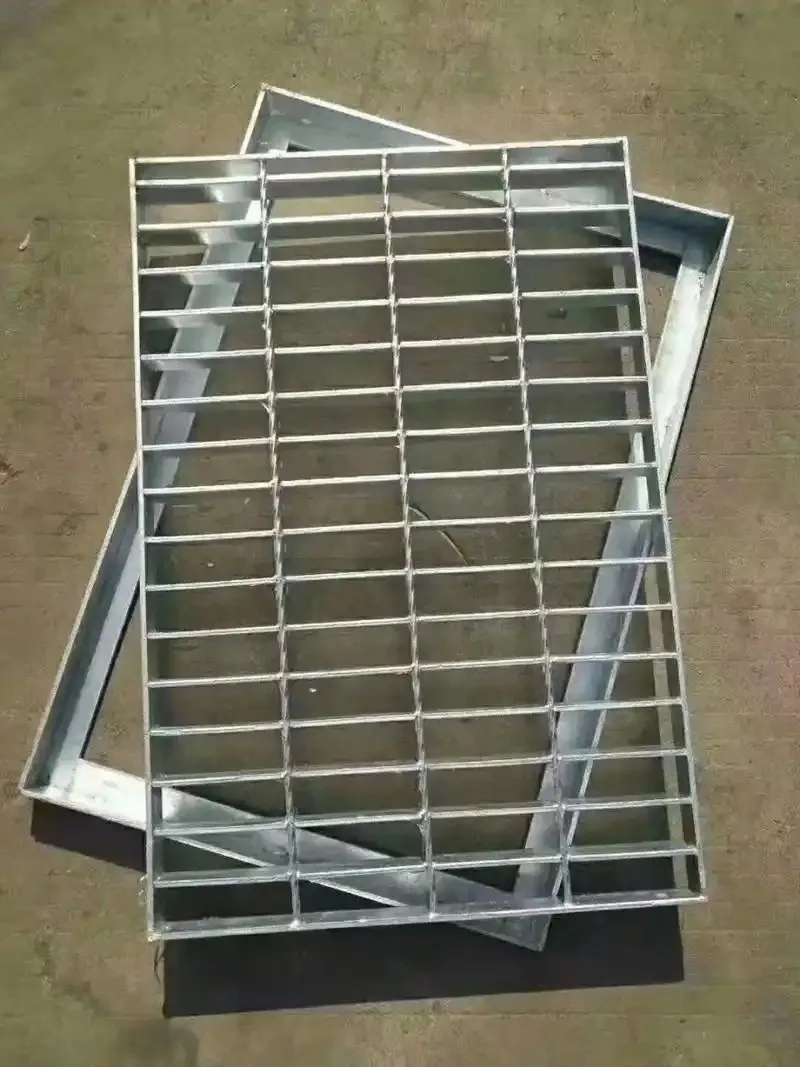
is a flat panel laid over steel beams to serve as walkways and equipment platforms;Trench Covercomes with a frame and can be opened; it covers the drainage trench, must carry wheel loads, and is often fitted with hinges;Stair Treadshas side plates and an anti-slip nosing, and is classified T1-T4 by the presence or absence of side plates/end plates. For sizing, simply match the load capacity and service environment.
| Type | Form | Uses | Key |
|---|---|---|---|
| Type | Form | Typical Uses | Key Indicators |
| Platform Steel Grating | Flat Panel | Walkways, Platforms | Span, Load Capacity |
| Trench Cover | Framed, Openable | Drainage Trenches, Channels | Load Class |
| Stair Treads | With Side Plates and Nosings | Stairs | Anti-Slip, Tread Width |
The above points can serve as a pre-purchase checklist; confirm each item before moving to the quotation stage.
When making a sizing decision, the one thing to avoid with platform steel grating is 'picking a model by rule of thumb'. A change in any of the three conditions - span, load and service environment - can alter the conclusion. Set out the conditions clearly and then compare them with the standard practice for hot-dip galvanized steel grating; this is far more efficient.
Further notes: How to combine hot-dip galvanized steel grating and hot-dip galvanized steel grating in use
Hot-dip galvanized steel grating and hot-dip galvanized steel grating are different specification forms within the same product system. The selection logic is the same as described in this article: first the usage type, then span and load to determine specifications, and finally the environment to determine surface treatment. Their corrosion protection and anti-slip requirements may differ; state them separately when ordering rather than writing one general technical requirement.
- For all product specifications and theoretical weights by series, visit Steel Grating Product Center
- To estimate cost by size and quantity, use Instant Quote PageSubmit Requirements
- To see how similar projects were executed, refer to Project Cases field applications
FAQ
Where can I find specific specifications?
our websiteProductsCommon specifications and theoretical weights are organized by series, also available in Instant Quote PageEstimate by size, or contact us directly for sizing advice.
How to choose between hot-dip galvanizing and cold galvanizing?
The two anti-corrosion mechanisms differ: hot-dip galvanizing immerses steel in molten zinc to form a metallurgically bonded coating, thick and long-lasting, suitable for outdoor and humid environments; cold galvanizing is electrochemical deposition with a thinner, more uniform appearance, suitable for dry indoor environments or applications requiring high dimensional precision.
What maintenance is required during daily use?
Maintenance mainly involves periodically checking whether fasteners are loose, whether touch-up paint has peeled off, and whether the panel surface shows obvious deformation or rust. Issues found should be dealt with promptly; overall maintenance is minimal.
The above is for sizing and construction reference. To verify specific parameters or request a quotation, please visitInstant Quote Page, or contact our technical staff.
If you already have drawings or site dimensions, submit them directly and we will help verify specifications and layout, avoiding on-site cutting and rework caused by mismatched models. Without drawings, site photos and approximate dimensions are enough for an estimate.