
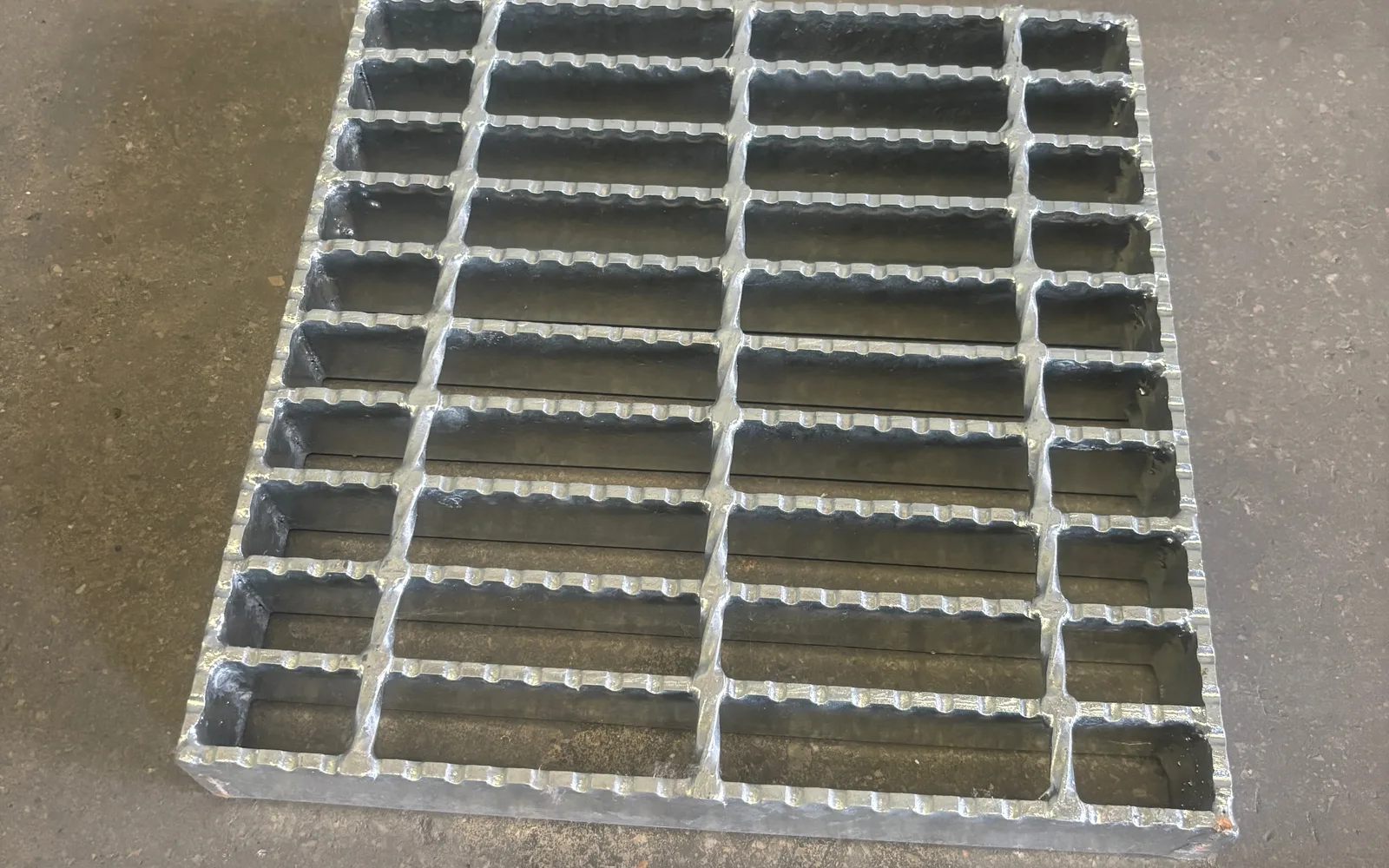
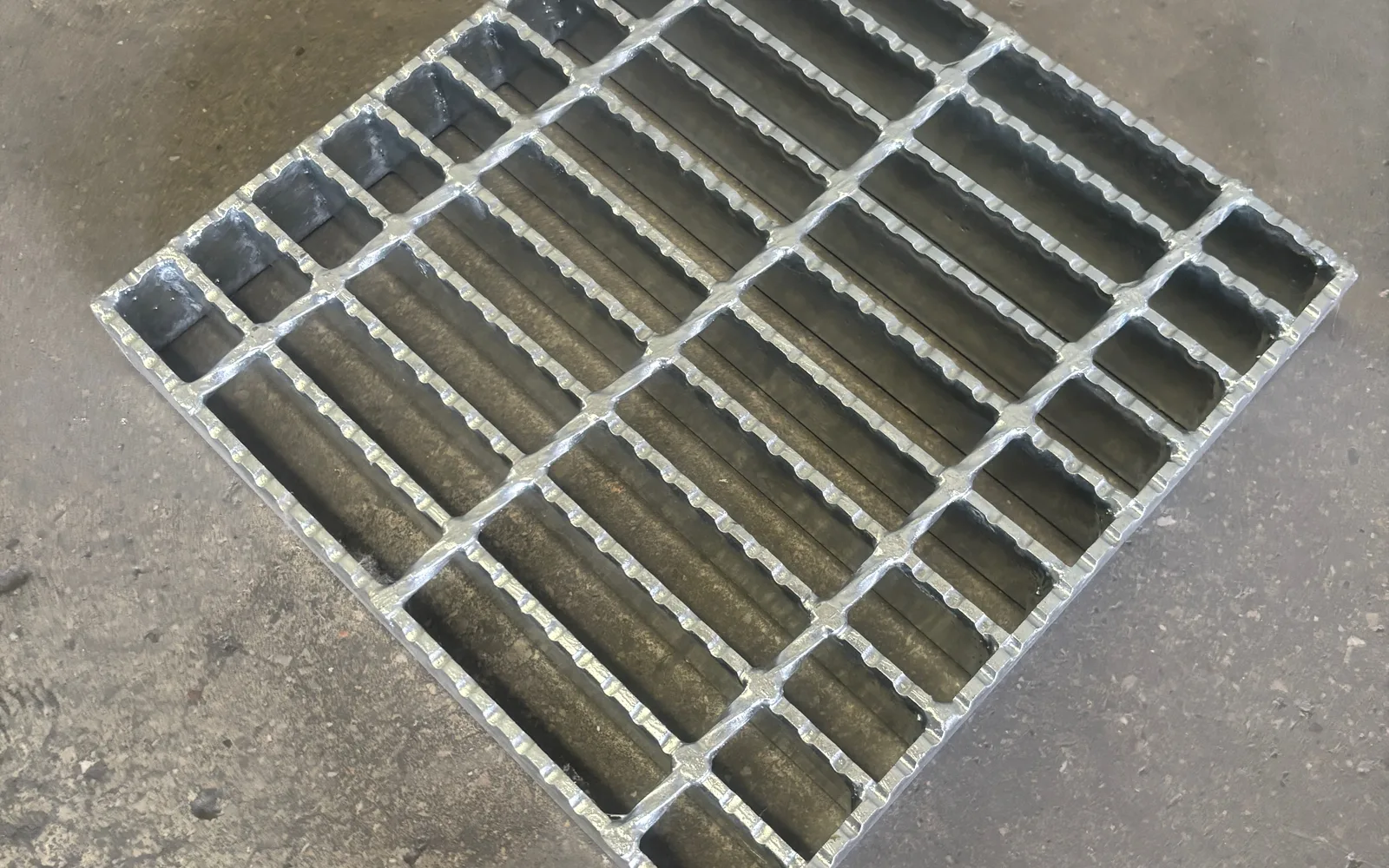
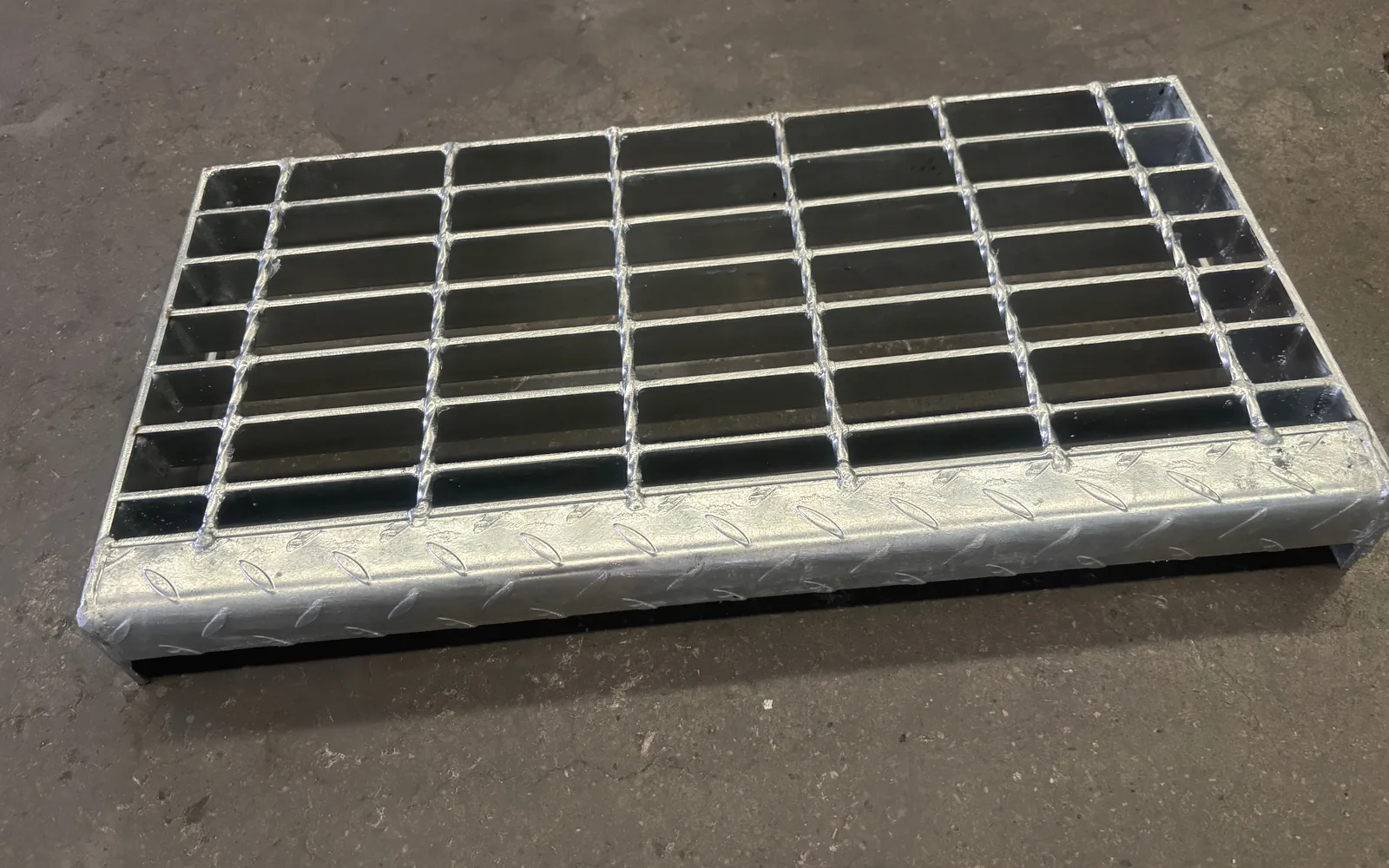




Grating trench covers are used to cover trenches, drainage ditches and pits, meeting both traffic loads and drainage and anti-theft needs. This page covers trench types, load classes, panel types and fixing methods in turn, with selection suggestions for different traffic conditions; drainage trench covers can follow the same decision order.
Grating trench cover quick specification table
The table below summarizes the specification markings on this page and their meanings for quick reference; see the detailed explanation later. Actual orders are subject to drawing annotations and the layout drawing; specifications not included in the table can be custom-fabricated to drawings.
| Marking/Item | Meaning and Description |
|---|---|
| Light-Duty | 25 t/m2; for light vehicles and pedestrians - campuses, residential areas, parks, underground parking and kitchens, etc. |
| Heavy-Duty | 70 t/m2; for plants with vehicles under 20 t, general roads, arterial roadside, parking lots and streets, etc. |
| Extra Heavy-Duty | 140 t/m2; for arterial highways carrying heavy trailers, container forklifts, cranes and aircraft, extra-large parking lots, mines, docks and airports, etc. |
Performance features of drainage grating
Compared with traditional solutions, drainage grating differs markedly in weight, strength, anti-corrosion life and later maintenance cost. When selecting, prioritize these performance items:
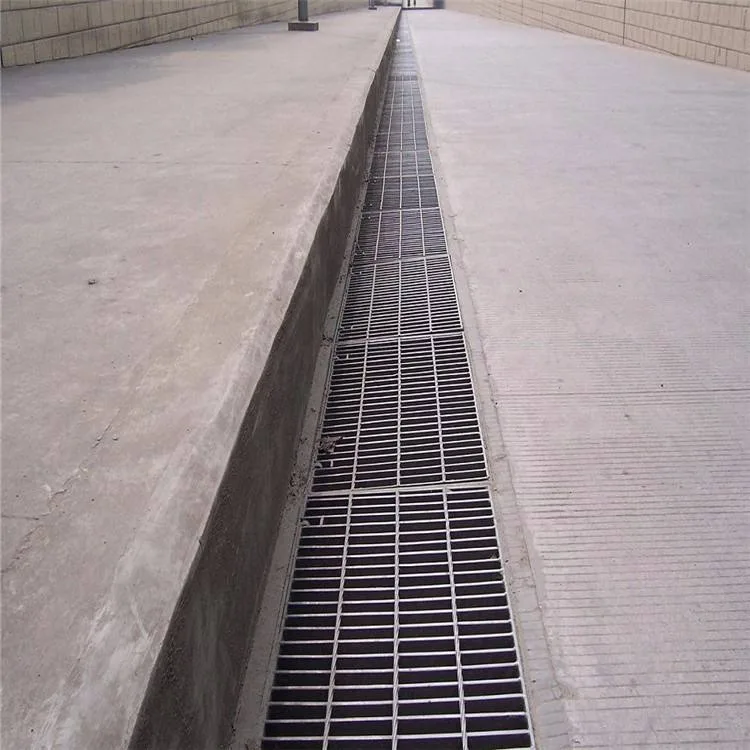
Drainage grating:
Overall, selection should weigh span, load and service environment together.
Scope of Application & Engineering Fields
The application scope of drainage grating covers many industrial and municipal scenarios. The most typical use cases are listed below for a quick fit check on your project:
Drainage grating refers to trench (manhole) covers made of steel grating, available in various models to suit different spans, loads and requirements. It is widely used in municipal roads, garden facilities, residential communities, schools, stadiums and other places. Depending on the site, covers of different specifications can be hot-dip galvanized, cold galvanized (electro-galvanized) or untreated. Trench covers are mainly used in factories and high-end communities, mainly because cement trench covers are often crushed and the road surface damaged. Steel grating trench covers are therefore made to suit different load capacities.
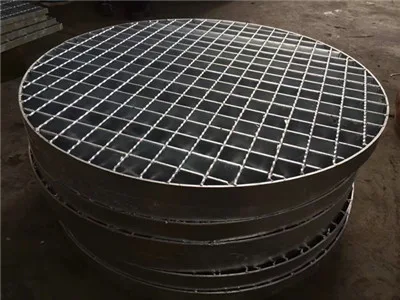
If your working conditions fall outside the above range, you can provide site photos and dimensions, and our technicians will help assess them.
Features of drainage grating
Drainage grating is widely adopted in engineering for its outstanding combined performance in load bearing, drainage, anti-corrosion and maintenance. Compared with cast iron covers and checkered steel plates, its advantages mainly lie in:
| Item | Description |
|---|---|
| Attractive Appearance | Clean lines and a silvery look, in line with modern trends. |
| Drainage | The drainage area reaches 83.3%, more than twice that of cast iron. |
| Hot-Dip Galvanizing | Strong rust resistance, maintenance-free and replacement-free. |
| Anti-Theft Design | The cover is hinged to the frame: anti-theft, safe and easy to open. |
| Cost Savings | For large spans and heavy loads, it costs less than cast iron and saves the cost of replacing stolen or crushed covers. |
| High Strength | Strength and toughness far exceed cast iron; suitable for docks, airports and other large-span, heavy-load environments. |
| Wide Range of Specifications | Meeting requirements for different environments, loads, spans, sizes and shapes. |
The product is simple to construct, lightweight, high in load capacity, impact-resistant, bends rather than breaks, high in drainage capacity, and after hot-dip galvanizing is attractive, durable and corrosion-resistant, with advantages cast iron covers cannot match. Hinged or hook connections make it easy to open, with anti-theft function.
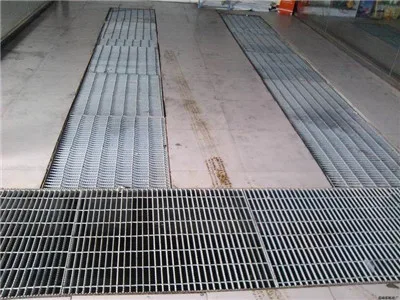
Overall, selection should weigh span, load and service environment together.
Dimension selection of drainage grating
The specification parameters of drainage grating mainly consist of bearing bar specs, bearing bar pitch, cross bar pitch and overall panel dimensions. Confirm each item before ordering; common parameters are cross-referenced below:
1. For trench covers used on sidewalks, roadways, parking lots, docks or building floors, design and selection should consider actual conditions due to different loads and traffic directions.
2. For road ditches and cross-trench covers (traffic direction parallel to bearing bars), consider not only wheel pressure and impact but also the risk of covers bouncing and shifting. The cover must be fixed to angle steel or support beams (by welding or steel grating installation clips).
Load selection
Light duty: 25 t/m2; for light vehicles and pedestrians - campuses, residential areas, parks, underground parking and kitchens, etc.
Heavy duty: 70 t/m2; for plants with vehicles under 20 t, general roads, arterial roadside, parking lots and streets, etc.
Extra-heavy duty: 140 t/m2; for arterial highways carrying heavy trailers, container forklifts, cranes and aircraft, extra-large parking lots, mines, docks and airports, etc.
The above are common specifications; actual ordered dimensions and tolerance requirements shall be confirmed against the layout drawing.
Key selection points for grating trench covers
Confirm each item in the order below during selection to avoid most later rework. Record the conclusion of each step and submit it with your inquiry:
- Step 1 · Confirm Trench Type and Edge Detail: Concrete trenches without flanges and trenches with support flanges correspond to different panel types; whether the flange needs angle steel protection must be clarified in advance.
- Step 2 · Confirm Vehicle Types: Whether it carries pedestrians, light vehicles or heavy vehicles directly determines the panel type and load class.
- Step 3 · Confirm Trench Width and Laying Direction: Side trench covers and cross trench covers have different bearing bar orientations, which must match the traffic direction to avoid reversed installation affecting load capacity.
- Step 4 · Confirm Anti-Theft and Fixing Requirements: For outdoor public areas, hinged or bolted fixing is recommended to reduce displacement and theft risk.
Once the above conditions are confirmed, proceed to Instant Quote PageEstimate quantities by dimensions, or send the condition list to customer service for model recommendations from our technicians.
Grating trench cover working-condition comparison
The same specifications last very differently in different environments. The table below gives recommended practices by common service environment for your selection reference:
| Operating Environment | Recommended Practices | Note: |
|---|---|---|
| Outdoor and Open-Air Environments | Hot-dip galvanized surface treatment recommended | Check zinc coating integrity and re-zinc cut edges |
| Humid or Water Treatment Environments | Use a higher corrosion protection grade with matching fasteners | Regularly inspect fixing points and surface corrosion |
| Vehicle Traffic Areas | Check load class against vehicle types | Note that bearing bars must run parallel to traffic direction |
| High-Temperature or Large Temperature-Difference Environments | Select material and connection method by temperature | Watch for loosening caused by thermal expansion and contraction |
| Clean Rooms and Food & Pharmaceutical | Prioritize surface treatment and cleaning convenience | Avoid dust-collecting structures and cleaning dead corners |
| Temporary or Short-Term Use | Can be configured with the light-duty series | For short schedules, prioritize easy disassembly and turnover |
Custom Fabrication & Quotation
Before ordering, we recommend providing site photos, trench or platform dimensions and traffic requirements together, so we can give the model and layout plan in one go and reduce on-site cutting and rework. Common specifications are usually in stock; lead times for shaped parts and bulk orders depend on specification and quantity. For reference on similar projects, seeProject Cases; for a quotation, go directly to Instant Quote Page.
FAQ
How is the price of drainage grating calculated?
Usually calculated as the theoretical weight for the model times the material unit price, plus hot-dip galvanizing or other surface treatment costs, and fluctuating with steel and zinc prices. You canInstant Quote PageEnter specifications and dimensions for a quick estimate.
What are the common specifications of drainage grating?
Common specifications are determined by combinations of bearing bar width and thickness, bearing bar pitch, and cross bar pitch; different combinations correspond to different load capacities and theoretical weights. Our Products section lists common models by series; you can also send span and load requirements to customer service for sizing help.
Which surface treatment should I choose?
Hot-dip galvanizing is recommended for outdoor or humid environments; for dry indoor environments, untreated or painted is fine; coastal, chemical and other strongly corrosive environments need thicker zinc coatings or stainless steel, depending on the expected service life.
The above are the main specifications and selection points for drainage grating. To determine a specific model by site span and load, you canInstant Quote PageQuick estimation, or contact customer service directly for sizing advice and layout drawings.