







This article covers steel grating in three parts - precautions when using drainage trench grates, routine maintenance and testing, and basic concepts - with practical advice after each section. If you are comparing options or preparing a purchase, work through the points in order, cross-check the parts concerning hot-dip galvanized trench covers against the same list, and adjust anything that conflicts with actual site conditions.
Performance Features of Precautions When Using Drainage Trench Grates
Its overall performance focuses on the following aspects; we suggest comparing item by item in actual selection:
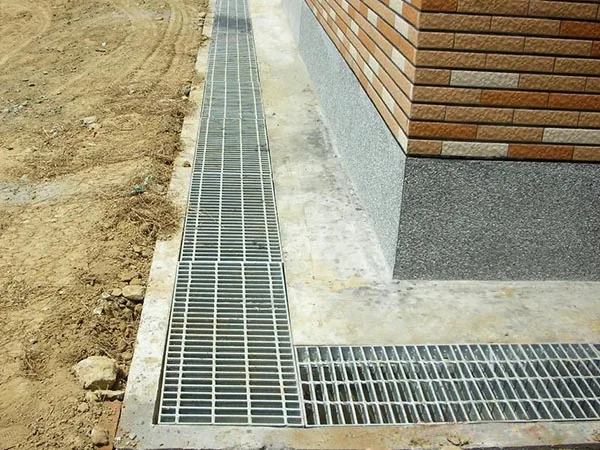
Drainage ditches are generally laid at both ends or at the lower end of a slope interceptor ditch, to discharge surface runoff that the interceptor cannot hold. The end of the drainage ditch connects to a storage pond or a natural watercourse
Precautions to observe when using drainage ditches!
Overall, selection should weigh span, load and service environment together.
When making a selection, the one thing to avoid with steel grating is "picking a model by guesswork". Change any one of span, load or service environment and the conclusion may change. Listing the conditions clearly first and then comparing them with standard practice for hot-dip galvanized trench covers is much more efficient.
Focus on Routine Maintenance and Testing
Pay attention to the following in daily maintenance:
Routine maintenance of drainage ditches is essential. Whatever the drainage system, an effective inspection plan should be established, with proper supervision and maintenance equipment assigned. Only then can concrete drainage ditches keep performing well in drainage at all times.
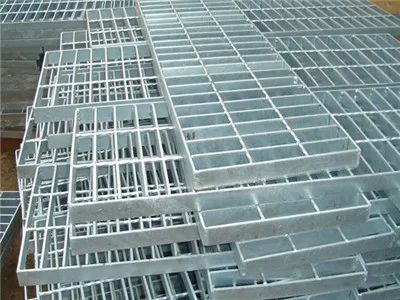
Regular inspection and maintenance as required effectively extends service life and reduces replacement costs.
To decide quickly whether steel grating suits a site, check three things: whether corrosive media are present, whether the traffic is pedestrian or vehicular, and the approximate span. Once these are clear, you can basically determine the specifications and surface treatment required for steel grating trench covers.
Pay Attention to Substrate Preparation
Any drainage work, i.e. the installation position of a concrete drainage ditch, presupposes excavation and casting of the works. On the one hand, note the geological and environmental features of the site, then plan a suitable drainage ditch installation scheme, and then remove factors that could cause damage.
For installation sequence, lay out first and fix afterwards - never cut and adjust as you go. Once the grating layout drawing is confirmed, avoid random cutting on site; where adjustments are unavoidable, change the fixing and edge finishing of the steel grating trench covers at the same time to avoid loose panels.
Ensure Specification-Compliant Installation
Drainage ditch installation must be carried out by an installation team under the manufacturer's guidance - this is the basis for ensuring the whole drainage system meets the design standard. Technicians should then test and evaluate the drainage system effectively in a rational, scientific way. The system can be put into service once all data requirements are met.
A practical tip for specification confirmation: write bearing bar specs, bearing bar pitch, cross bar pitch and overall dimensions into the purchase list at the same time; specifying only one or two often leads to mismatched deliveries. The specification marking system is fully cross-referenced on the product page; number and check each panel against the layout drawing before ordering. The same applies to hot-dip galvanized trench covers.
Further notes: Common combinations of hot-dip galvanized trench covers and steel grating trench covers
In engineering, steel grating trench covers are often used together with the components mentioned in this article. The two differ in load carrying and installation practices; when combining them, pay special attention to the connection of support conditions and fixing methods, as junction treatment is often where problems arise. For unified drawings, submit dimensions of both types and our technicians will process them under the same layout logic.
- For all product specifications and theoretical weights by series, visit Steel Grating Product Center
- To estimate cost by size and quantity, use Instant Quote PageSubmit Requirements
- To see how similar projects were executed, refer to Project Cases field applications
FAQ
What is most often overlooked during installation and acceptance?
First, bearing bars installed in the wrong direction reduce load capacity; second, insufficient fixing points or missing zinc touch-up paint; third, support beam spacing inconsistent with the layout drawing. These three items are most often overlooked on site.
Why do different manufacturers quote different weights for the same specifications?
The main difference lies in the actual measured thickness and tolerance control of the bearing bars. When bars are supplied at the lower tolerance limit, weight per unit area falls below the theoretical value, and load capacity drops accordingly. We recommend specifying thickness tolerance clearly when purchasing.
Can the values in the article be applied directly?
Values in this article come from relevant standard clauses or common industry practice. For actual selection, recalculate based on site span, load class and service environment; direct copying is not recommended.
The above is for sizing and construction reference. To verify specific parameters or request a quotation, please visitInstant Quote Page, or contact our technical staff.
Note that this article presents sizing approaches and general practice, and does not constitute a strength commitment for any specific project. For load-bearing safety-critical areas, the design drawings and on-site calculations shall prevail; contact our technical staff if in doubt.