







The application of 304 stainless steel grating in actual projects is not complicated; the difficulty lies in matching specifications, material, and service environment. This article covers the wide application of 304 stainless steel grating, material and anti-corrosion requirements, and basic concepts, giving you a complete framework for judging galvanized grating as well.
Material and surface treatment related to the wide application of 304 stainless steel grating
Common materials and surface treatments are as follows:
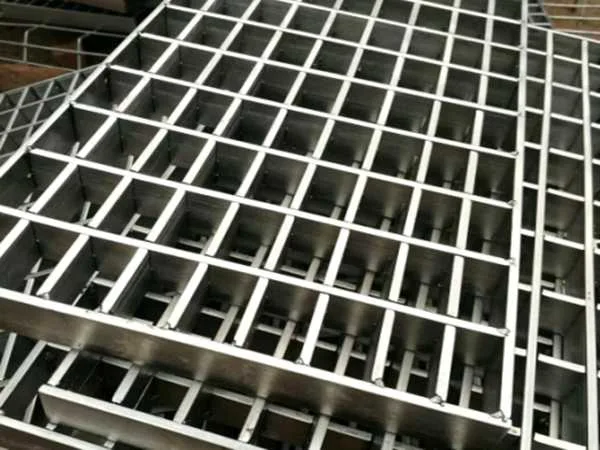
The production process of stainless steel grating is broadly similar to that of ordinary steel grating; being made of stainless steel, it requires surface polishing to remove welding slag or scars left during welding. Grade 304 stainless steel is commonly used in daily life.
Once material and surface treatment are decided, we recommend writing zinc coating thickness and appearance requirements into the technical agreement.
Material and surface treatment determine the durability of 304 stainless steel grating on site. For the same steel grating, the treatment differs greatly between dry indoor use and coastal or chemical environments, so the service environment should be stated as the primary condition when selecting. The same applies to galvanized grating.
Basic concepts of the wide application of 304 stainless steel grating
Below we first briefly explain the relevant concepts and basic construction to make the following parameters and sizing content easier to understand.
304 stainless steel is a common material in stainless steel grating, usually used as raw material for steel grating. It is a widely used chromium-nickel stainless steel with a density of 7.93 g/cm3, also known as 18/8 stainless steel in the industry. It withstands temperatures up to 800 degrees, offers good corrosion resistance, heat resistance, low-temperature strength, and mechanical properties; it has good hot-working properties such as stamping and bending, excellent workability, high toughness, and no hardening from heat treatment (service temperature -196 to 800 degrees C).
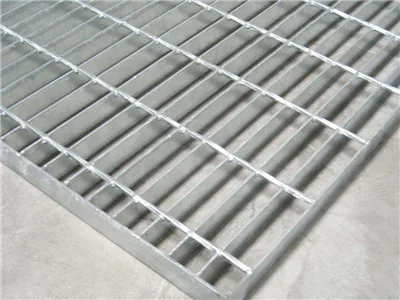
Once you grasp these basic concepts, the specifications and sizing recommendations that follow will be much easier to understand.
The most easily overlooked items in a spec sheet are tolerances and end treatment. 304 stainless steel grating usually has machining allowance along its length; for recessed installation, banding and corner-cut requirements should be stated in advance. Galvanized grating is handled similarly in these details, so mark them clearly on the drawings.
Material and Anti-Corrosion Requirements
Common materials and surface treatments are as follows:
304 stainless steel is widely used for equipment and parts requiring good overall performance (corrosion resistance and formability). To maintain the inherent corrosion resistance of stainless steel, the steel must contain more than 18% chromium and more than 8% nickel. For 304 stainless steel, the nickel content is crucial, directly determining its corrosion resistance and value.
When determining which stainless steel type to use for steel grating, the main considerations are the required aesthetic standard, the corrosivity of the local atmosphere, and the cleaning regime to be adopted. To achieve aesthetic results outdoors, nickel-containing stainless steel is required.
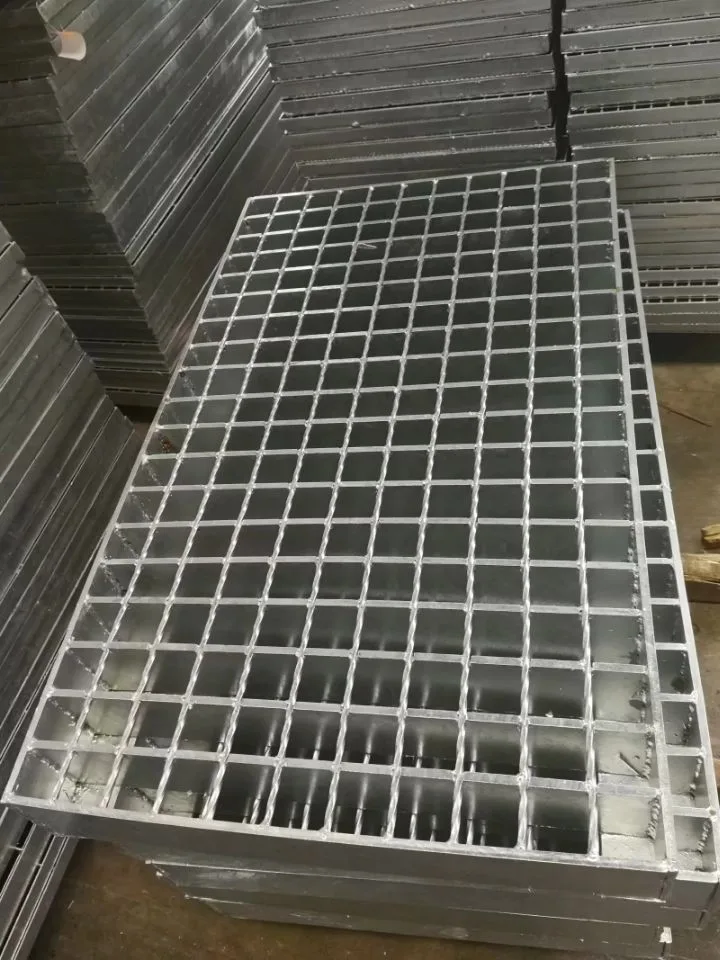
Once material and surface treatment are decided, we recommend writing zinc coating thickness and appearance requirements into the technical agreement.
When selecting material, do not simply chase the highest grade. The material of 304 stainless steel grating should match the load requirements and service environment; over-specifying adds unnecessary cost. See the products page for the corresponding treatment of galvanized grating, and choose according to actual conditions.
Use and Maintenance Key Points
304 stainless steel performs quite well in dry indoor environments where the requirement is to keep the building's original appearance over the long term. However, in rural and urban areas, keeping its appearance outdoors requires regular cleaning. In heavily polluted industrial areas and coastal regions, surfaces become very dirty and may even rust. In industrial atmospheres or heavily polluted areas, timely cleaning is needed to prevent corrosion.
Choosing a surface treatment is essentially a trade-off between initial investment and later maintenance. Requirements can be moderately relaxed for 304 stainless steel grating in dry indoor environments, and should be raised for outdoor or humid environments. The same logic applies to selecting hot-dip galvanized steel grating.
Further notes: Common combinations of galvanized grating and hot-dip galvanized steel grating
If a project uses both galvanized grating and hot-dip galvanized steel grating, we recommend planning them on the same layout drawing. This way edge closing, fixing and cutouts at junctions can be handled uniformly, avoiding dimension conflicts during installation and making later maintenance easier.
- For all product specifications and theoretical weights by series, visit Steel Grating Product Center
- To estimate cost by size and quantity, use Instant Quote PageSubmit Requirements
- To see how similar projects were executed, refer to Project Cases field applications
FAQ
What is most often overlooked during installation and acceptance?
First, bearing bars installed in the wrong direction reduce load capacity; second, insufficient fixing points or missing zinc touch-up paint; third, support beam spacing inconsistent with the layout drawing. These three items are most often overlooked on site.
What maintenance is required during daily use?
Maintenance mainly involves periodically checking whether fasteners are loose, whether touch-up paint has peeled off, and whether the panel surface shows obvious deformation or rust. Issues found should be dealt with promptly; overall maintenance is minimal.
Can the values in the article be applied directly?
Values in this article come from relevant standard clauses or common industry practice. For actual selection, recalculate based on site span, load class and service environment; direct copying is not recommended.
The above is for sizing and construction reference. To verify specific parameters or request a quotation, please visitInstant Quote Page, or contact our technical staff.
Note that this article presents sizing approaches and general practice, and does not constitute a strength commitment for any specific project. For load-bearing safety-critical areas, the design drawings and on-site calculations shall prevail; contact our technical staff if in doubt.