







This article presents hot-dip galvanized steel grating in order - what it is, material and anti-corrosion requirements, and basic concepts - with actionable checks in each part. If you only need a quick answer, read the opening point of each section; the same method applies to galvanized bar grating.
What Is Hot-Dip Galvanized Steel Grating
This section first clarifies the basic concepts, structural forms and common names, laying the groundwork for what follows.
The steel grating we useSteel Grating is, after production is completed, in most cases hot-dip galvanized; a few are spray-painted or cold galvanized, and stainless steel grating is used in some special environments. Hot-dip galvanized steel grating is very strong in both corrosion resistance and service life, but missed coating can occur during hot-dip galvanizing. The GB/T13912-2002 hot-dip galvanizing standard explicitly states that "the area of each missed coating surface shall not exceed 10cm"; once missed coating is found, the usual method is to cover the steel grating with other anti-corrosion materials.
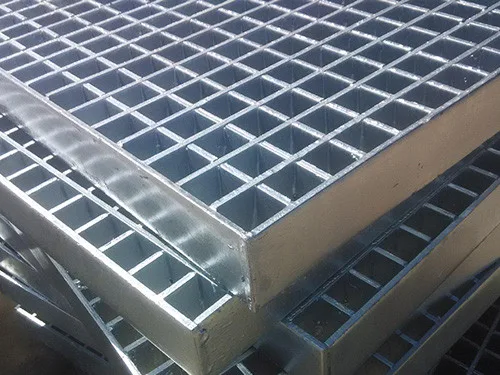
Once you grasp these basic concepts, the specifications and sizing recommendations that follow will be much easier to understand.
Choosing a surface treatment is essentially a trade-off between upfront cost and later maintenance. Requirements can be relaxed when hot-dip galvanized steel grating is used indoors in dry conditions, but should be raised outdoors or in damp environments. The same logic applies when selecting galvanized bar grating.
Material and Anti-Corrosion Requirements
Material and surface treatment are key to service life. Common practices and suitable environments are as follows:
Common repair materials include aluminum powder paint, silver aerosol paint and zinc-rich aerosol paint. Zinc-rich aerosol paint is recommended for repairing missed coating on steel grating: it is inexpensive, close in price to ordinary paint, yet contains up to 36% zinc, making it an ideal product for repairing missed hot-dip galvanizing.
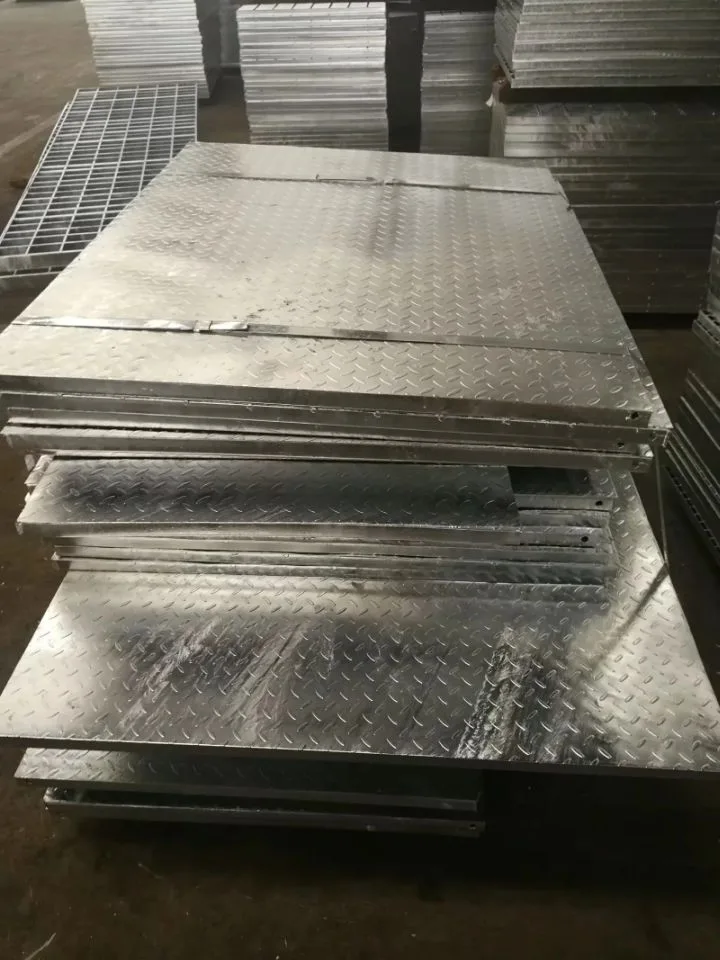
Once material and surface treatment are decided, we recommend writing zinc coating thickness and appearance requirements into the technical agreement.
Material and surface treatment determine how hot-dip galvanized steel grating performs on site. For the same grating, the treatment used in a dry interior differs greatly from that used in coastal or chemical environments, so the service environment should be stated as the primary condition during selection. The same holds for galvanized bar grating.
Key Points on Hot-Dip Galvanized Steel Grating
Our repair process for missed coating is roughly as follows: first grind the missed area with coarse sandpaper, then with fine sandpaper until the natural color of the steel is fully exposed; then spray with any of the materials above, leave it to air dry after spraying, and the job is done once dry.
Do not simply chase higher grades when choosing material. The material of hot-dip galvanized steel grating should match the load requirements and service environment; over-specifying adds unnecessary cost. The corresponding treatment for hot-dip galvanized steel grating can be found on the product page - select according to actual working conditions.
Further notes: Common combinations of galvanized grating and hot-dip galvanized steel grating
Besides what this article covers, galvanized grating is also common in actual projects. It shares similarities with this article's subject in structure and fabrication; for selection, check span, load and service environment in the same order. If both types of components are used in the same project, we recommend unifying material and surface treatment to avoid later galvanic corrosion or inconsistent appearance.
- For all product specifications and theoretical weights by series, visit Steel Grating Product Center
- To estimate cost by size and quantity, use Instant Quote PageSubmit Requirements
- To see how similar projects were executed, refer to Project Cases field applications
FAQ
How to choose between hot-dip galvanizing and cold galvanizing?
The two anti-corrosion mechanisms differ: hot-dip galvanizing immerses steel in molten zinc to form a metallurgically bonded coating, thick and long-lasting, suitable for outdoor and humid environments; cold galvanizing is electrochemical deposition with a thinner, more uniform appearance, suitable for dry indoor environments or applications requiring high dimensional precision.
Can the values in the article be applied directly?
Values in this article come from relevant standard clauses or common industry practice. For actual selection, recalculate based on site span, load class and service environment; direct copying is not recommended.
What maintenance is required during daily use?
Maintenance mainly involves periodically checking whether fasteners are loose, whether touch-up paint has peeled off, and whether the panel surface shows obvious deformation or rust. Issues found should be dealt with promptly; overall maintenance is minimal.
The above is for sizing and construction reference. To verify specific parameters or request a quotation, please visitInstant Quote Page, or contact our technical staff.
The above is general guidance. For a specific project, we still recommend submitting span, load class and service environment to our technicians for review. Steel grating is a load-bearing component; rework caused by wrong specification choices costs far more than the time spent on upfront calculation.