







This article covers platform steel grating in three parts - application scenarios, grating tolerances, and basic concepts - each followed by practical suggestions. If you are comparing solutions or preparing procurement, check the items in order; the parts involving hot-dip galvanized steel grating can be confirmed against this article, adjusting where site conditions differ.
Application Scenarios of Platform Steel Grating
Main applications are as follows:
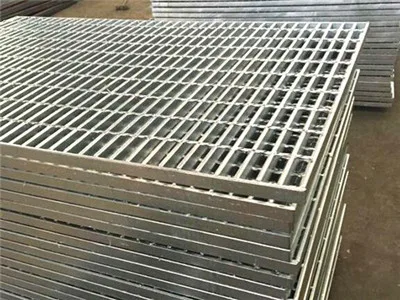
Platform grating is a type developed especially for mining applications, solving the problem of mineral splatter on the panel surface.
What factors determine the quality of platform grating?
If your working conditions fall outside the above range, you can provide site photos and dimensions, and our technicians will help assess them.
The most easily overlooked items in a specification table are tolerances and end treatment. Platform steel grating usually has machining allowance along its length; if the site uses recessed installation, state the closing edge and corner-cut requirements in advance. Hot-dip galvanized steel grating needs similar details, which should be clearly marked on the drawings.
1. Tolerances of platform grating, including whether diagonal tolerances are controlled within the standard
The main standard clauses and acceptance requirements involved are as follows:
2. The leveling of bearing bars and the welding quality also strongly affect the quality of platform grating
3. The quality of platform grating mainly depends on the galvanizing of the surface, which is the customer's primary standard for judging galvanized platform grating
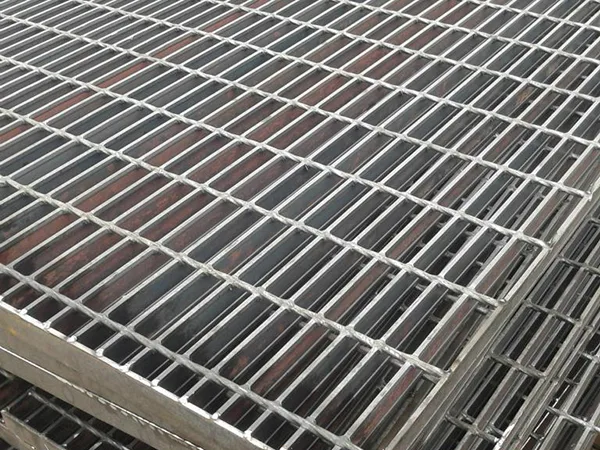
1. Galvanizing weight determines the quality of platform grating: the zinc coating thickness determines the authenticity and quality of the galvanizing. Ordinary hot-dip galvanized platform grating requires a coating of 70μm or more, while ordinary electro-plated grating is doing well to reach 10μm. This is why we have always recommended hot-dip galvanized platform grating to customers. Coating thickness determines the level of corrosion protection.
2. Hot-dip galvanizing or cold galvanizing: platform grating can be treated by either. Hot-dip galvanized grating has the advantage of strong corrosion resistance, while cold galvanizing - electroplating - deposits a coating by electrolyzing a zinc salt solution, generally without heating, with very little zinc that easily falls off in humid environments. On environmental issues, hot-dip galvanizing discharges fewer pollutants: mainly waste acid from pickling, whereas cold galvanizing produces pickling waste acid, electroplating waste liquid, waste passivation liquid and more, with far more pollutant types and quantities than hot-dip galvanizing. So hot-dip galvanizing is the better choice for platform grating.
We recommend checking each clause above during acceptance and keeping the factory inspection records.
Choosing a surface treatment is essentially a trade-off between initial investment and later maintenance. Requirements can be relaxed for platform steel grating in dry indoor environments and should be raised for outdoor or humid environments. Galvanized grating can be selected following the same logic.
Further reading: Sizing reference for hot-dip galvanized steel grating and galvanized grating
If a project uses both hot-dip galvanized steel grating and galvanized grating, we recommend planning them on the same layout drawing. This way edge closing, fixing and cutouts at junctions can be handled uniformly, avoiding dimension conflicts during installation and making later maintenance easier.
- For all product specifications and theoretical weights by series, visit Steel Grating Product Center
- To estimate cost by size and quantity, use Instant Quote PageSubmit Requirements
- To see how similar projects were executed, refer to Project Cases field applications
FAQ
Can the values in the article be applied directly?
Values in this article come from relevant standard clauses or common industry practice. For actual selection, recalculate based on site span, load class and service environment; direct copying is not recommended.
What is most often overlooked during installation and acceptance?
First, bearing bars installed in the wrong direction reduce load capacity; second, insufficient fixing points or missing zinc touch-up paint; third, support beam spacing inconsistent with the layout drawing. These three items are most often overlooked on site.
What maintenance is required during daily use?
Maintenance mainly involves periodically checking whether fasteners are loose, whether touch-up paint has peeled off, and whether the panel surface shows obvious deformation or rust. Issues found should be dealt with promptly; overall maintenance is minimal.
The above is for sizing and construction reference. To verify specific parameters or request a quotation, please visitInstant Quote Page, or contact our technical staff.
The above is general guidance. For a specific project, we still recommend submitting span, load class and service environment to our technicians for review. Steel grating is a load-bearing component; rework caused by wrong specification choices costs far more than the time spent on upfront calculation.