







This article introduces steel grating in the order of requirements for marine steel grating, typical application scenarios and basic concepts. Each part gives actionable judgment methods as far as possible; if you only need a quick conclusion, start with the key points at the beginning of each part. The same method applies to steel grating trench covers.
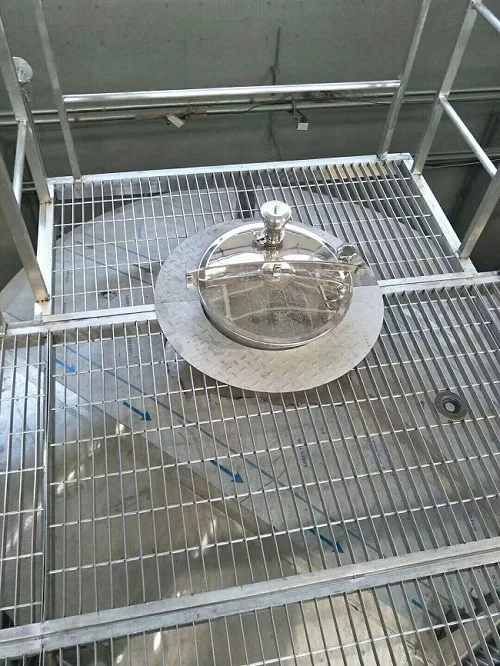
Thanks to its light structure, high strength and easy installation, steel grating is widely used in shipbuilding, in large numbers in engine and boiler room passages, deck passages, maintenance passages and platforms. The standard for marine steel grating is YB/T4001.1-2007, and grating is commonly made from 32*3, 40*3 and 50*5 flat bars. Depending on the service environment and purpose, marine steel grating is also often produced in stainless steel and aluminum alloy.
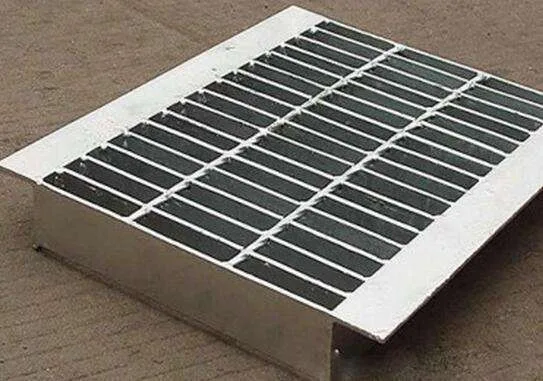
Requirements for Marine Steel Grating
The standards and inspection items to check are as follows:
- Dimensional deviations of steel grating shall comply with YB/T4001.1-2007.
- For manual welding of steel grating, use a 3mm fillet weld on both sides with wrap-around corner welds at the ends; there shall be no missed welds, cold welds or undercut.
- After welding, the steel grating shall be straightened flat.
- After fabrication, the steel grating surface shall be smooth, with no sharp edges, burrs or spatter.
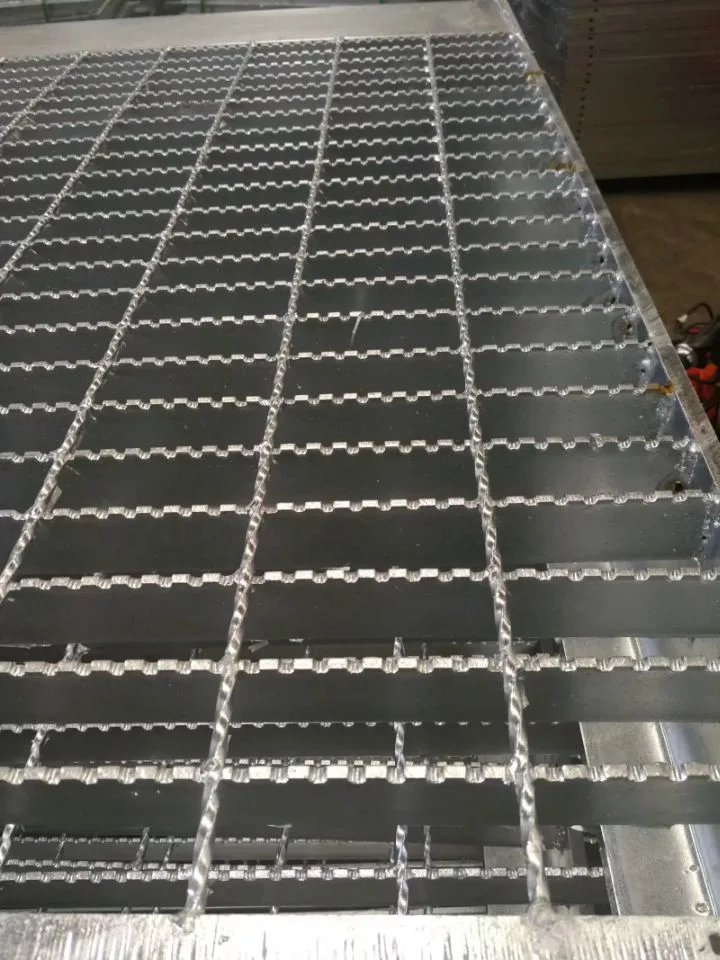
- Fabrication and surface treatment requirements for steel grating shall comply with YB/T4001.1-2007
- Allowable fabrication deviations for steel grating: length and width ±3mm, diagonal 3mm. Flatness shall not exceed 3mm.
- When BC-type steel grating is assembled manually, the adhesive shall be applied evenly with no squeeze-out, and the appearance shall be clean.
- After fabrication, the steel grating shall be free of burrs, laminations, cracks and other defects.
- The color of the steel grating shall be uniform.
- The safe load of the steel grating is 300kg, with deflection below 2mm.
We recommend checking each clause above during acceptance and keeping the factory inspection records.
The actual parameters of the same model may differ slightly between manufacturers; acceptance should be based on measured values. Spot-check the key dimensions of steel grating, especially for bulk deliveries. Check the corresponding parameters of steel grating trench covers the same way, and communicate promptly if deviations are found.
Typical Applications
Main applications are as follows:
- Industrial Platforms & Maintenance Walkways: equipment platforms and inspection passages in power plants, chemical plants and steel-structure workshops;
- Municipal & Landscape: road drainage trench covers, rainwater grates, tree grates, park boardwalks;
- Transportation & Ports: wharf trestles, multi-story parking garage lanes, railway bridge walkways;
- Environmental & Water Treatment: walkways in wastewater treatment plants, tank platforms, screening machine platforms;
- Others: elevated tower platforms, stair treads, fences and railings, etc.
If your working conditions fall outside the above range, you can provide site photos and dimensions, and our technicians will help assess them.
To judge quickly whether steel grating suits a given site, three angles suffice: whether there are corrosive media, whether the traffic is pedestrians or vehicles, and roughly what span is involved. With these three points clear, the required specifications and surface treatment of the steel grating trench cover can basically be determined.
Key Conditions to Confirm During Selection
- First clarify the span and support beam spacing to determine the required series;
- Then check load requirements by usage type (pedestrian, maintenance, vehicular);
- Finally, determine the surface treatment by service environment (dry indoor, outdoor, coastal, chemical).
What is most easily overlooked in specification tables are tolerances and end treatment. Steel grating usually has machining allowance in the length direction; if recessed installation is used on site, state the banding and corner-cutting requirements in advance. Drainage trench covers are handled similarly in these details, so mark them clearly on the drawing.
Further Reading: Common Pairings of Steel Grating Trench Covers and Drainage Trench Covers
Steel grating trench covers and drainage trench covers are different specification forms within the same product family, and the selection logic is the same as described here: first look at the nature of use, then set the specification by span and load, and finally determine the surface treatment by environment. The two may differ in corrosion and anti-slip requirements, so specify them separately when ordering rather than writing one general technical requirement.
- For all product specifications and theoretical weights by series, visit Steel Grating Product Center
- To estimate cost by size and quantity, use Instant Quote PageSubmit Requirements
- To see how similar projects were executed, refer to Project Cases field applications
FAQ
What maintenance is required during daily use?
Maintenance mainly involves periodically checking whether fasteners are loose, whether touch-up paint has peeled off, and whether the panel surface shows obvious deformation or rust. Issues found should be dealt with promptly; overall maintenance is minimal.
Can the values in the article be applied directly?
Values in this article come from relevant standard clauses or common industry practice. For actual selection, recalculate based on site span, load class and service environment; direct copying is not recommended.
What information is needed for custom sizes?
Usually you need to provide the panel dimensions (length x width), bearing bar specs and direction, center-to-center pitch of bearing bars and cross bars, surface treatment, and special requirements such as cutouts, corner notches and banding. Site photos or sketches are even better.
The above is for sizing and construction reference. To verify specific parameters or request a quotation, please visitInstant Quote Page, or contact our technical staff.
If you already have drawings or site dimensions, submit them directly and we will help verify specifications and layout, avoiding on-site cutting and rework caused by mismatched models. Without drawings, site photos and approximate dimensions are enough for an estimate.