







This article introduces platform steel grating in sequence: installation precautions, application scope and engineering fields, and basic concepts. Each section provides actionable criteria; if you only need a quick conclusion, start with the key points at the beginning of each section. The same approach applies to hot-dip galvanized steel grating.
Installation and construction key points of platform steel grating installation precautions
Key points for construction and fixing are as follows:
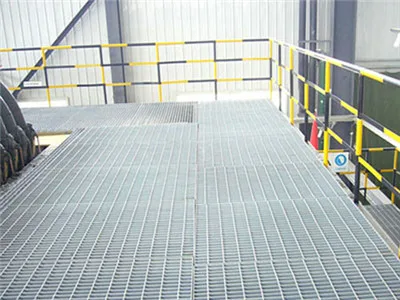
Securely installed grating prevents the risk of walkway platform grating sagging. To prevent the risk of falling, walkway platform grating should be installed by welding. The grating of walkway platforms is mounted on steel structural members and must not move laterally or detach from the supports after installation. The bearing length of the grating on the supports at both bar ends must not be less than 25mm.
After installation, check each panel's fixing points and flatness; put into use only after confirming no warping or looseness.
Installation most affects later user experience. When laying platform steel grating, the direction must not be reversed: the bearing bars should align with the main load direction, the point most easily overlooked on site. Fasteners should also be complete per the layout drawing; a missing one can cause local loosening. The same requirement applies to hot-dip galvanized steel grating.
Scope of Application & Engineering Fields
Typical applications mainly include the following categories, which can help you judge suitability for your project:
Besides preventing objects from falling through gaps, the grating should also be smooth and stable to avoid hazards. Walkway platform grating should be designed to avoid tripping risks. To prevent pedestrians from catching their feet, panels should be flat, and the maximum height difference between adjacent panels and structural members should not exceed 4mm. Therefore, the bearing bars should be leveled before producing the grating to ensure the flatness of walkway platform grating.
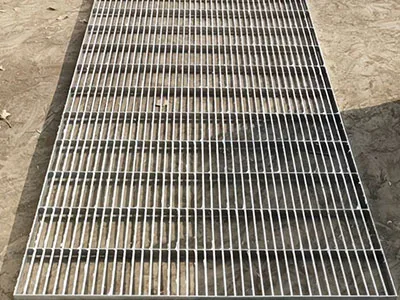
If your working conditions fall outside the above range, you can provide site photos and dimensions, and our technicians will help assess them.
To quickly judge whether a site can use platform steel grating, consider three angles: whether corrosive media are present, whether the traffic is pedestrian or vehicular, and the approximate span range. Once these three points are clear, the required specifications and surface treatment of hot-dip galvanized steel grating can basically be determined.
Installation and Fixing Method
Movable platforms and removable walkway platform grating must be fixed to the steel frame with special fastening devices to prevent component displacement; installation clips can be supplied by the manufacturer per the customer's needs. Except for stainless steel clips, clips made of carbon steel must be hot-dip galvanized, and clip bolts are recommended to be hot-dip galvanized on the surface. Bolt diameter must not be less than 8mm, and each grating panel must use at least 4 clips.
Choosing a surface treatment is essentially a trade-off between initial investment and later maintenance. Requirements can be moderately relaxed for platform steel grating in dry indoor environments, and should be raised for outdoor or humid environments. The same logic applies to selecting hot-dip galvanized steel grating.
Supplementary notes on platform steel grating installation precautions
Our steel grating products undergo a strict leveling process, ensuring that qualified grating leaves the factory.
The installation quality of platform steel grating largely depends on preparation: whether the bearing surface is flat, whether beam spacing matches the layout, and whether fasteners are prepared in advance. Once these are in place, installation itself is not complicated. If cutting is required on site, the cut-edge treatment requirements for hot-dip galvanized steel grating should also be clarified.
Further reading: Sizing reference for hot-dip galvanized steel grating and hot-dip galvanized steel grating
Besides what this article covers, hot-dip galvanized steel grating is also common in actual projects. It shares similarities with this article's subject in structure and fabrication; for selection, check span, load and service environment in the same order. If both types of components are used in the same project, we recommend unifying material and surface treatment to avoid later galvanic corrosion or inconsistent appearance.
- For all product specifications and theoretical weights by series, visit Steel Grating Product Center
- To estimate cost by size and quantity, use Instant Quote PageSubmit Requirements
- To see how similar projects were executed, refer to Project Cases field applications
FAQ
How to choose between hot-dip galvanizing and cold galvanizing?
The two anti-corrosion mechanisms differ: hot-dip galvanizing immerses steel in molten zinc to form a metallurgically bonded coating, thick and long-lasting, suitable for outdoor and humid environments; cold galvanizing is electrochemical deposition with a thinner, more uniform appearance, suitable for dry indoor environments or applications requiring high dimensional precision.
What maintenance is required during daily use?
Maintenance mainly involves periodically checking whether fasteners are loose, whether touch-up paint has peeled off, and whether the panel surface shows obvious deformation or rust. Issues found should be dealt with promptly; overall maintenance is minimal.
Where can I find specific specifications?
our websiteProductsCommon specifications and theoretical weights are organized by series, also available in Instant Quote PageEstimate by size, or contact us directly for sizing advice.
The above is for sizing and construction reference. To verify specific parameters or request a quotation, please visitInstant Quote Page, or contact our technical staff.
The above is general guidance. For a specific project, we still recommend submitting span, load class and service environment to our technicians for review. Steel grating is a load-bearing component; rework caused by wrong specification choices costs far more than the time spent on upfront calculation.