







The application of stainless steel grating quality testing in actual projects is not complicated; the difficulty lies in matching specifications, material, and service environment. This article covers application scenarios of stainless steel grating, material and anti-corrosion requirements, and features of 304 stainless steel grating, giving you a complete framework for judging galvanized grating as well.
Application scenarios of stainless steel grating
Main applications are as follows:
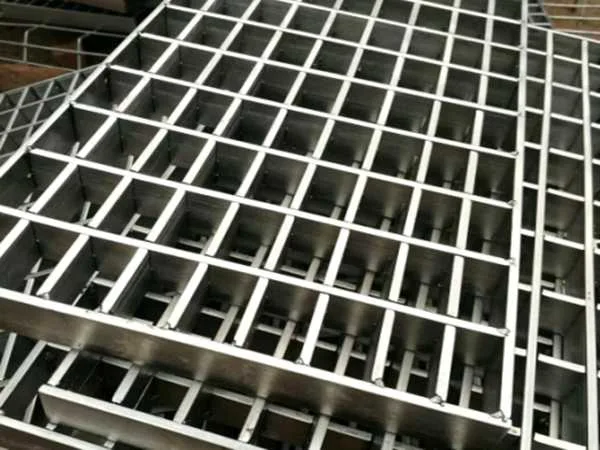
Stainless SteelSteel GratingThe advantage is its ability to prevent oxidation. 304 stainless steel grating is widely used for platform grating, walkway grating, trestle grating, and trench cover grating in petrochemicals, power plants, water plants, and other fields.
If your working conditions fall outside the above range, you can provide site photos and dimensions, and our technicians will help assess them.
Regarding corrosion protection, one thing is easily overlooked: on-site cutting and welding damage the original coating, and these areas need zinc touch-up after construction, otherwise rust often starts from the cut edges. Galvanized grating has the same issue; it is best to include this in the technical requirements at the construction disclosure.
Material and Anti-Corrosion Requirements
Material and surface treatment are key to service life. Common practices and suitable environments are as follows:
To judge the quality of stainless steel grating, the acid pickling method can be used: pickled stainless steel has a snow-white glossy surface: chrome-nickel stainless steel is snow-white with a jade hue; chrome stainless steel is white with a slightly gray, weaker luster; chrome-manganese-nitrogen stainless steel is similar to but slightly paler than chrome-nickel stainless steel.
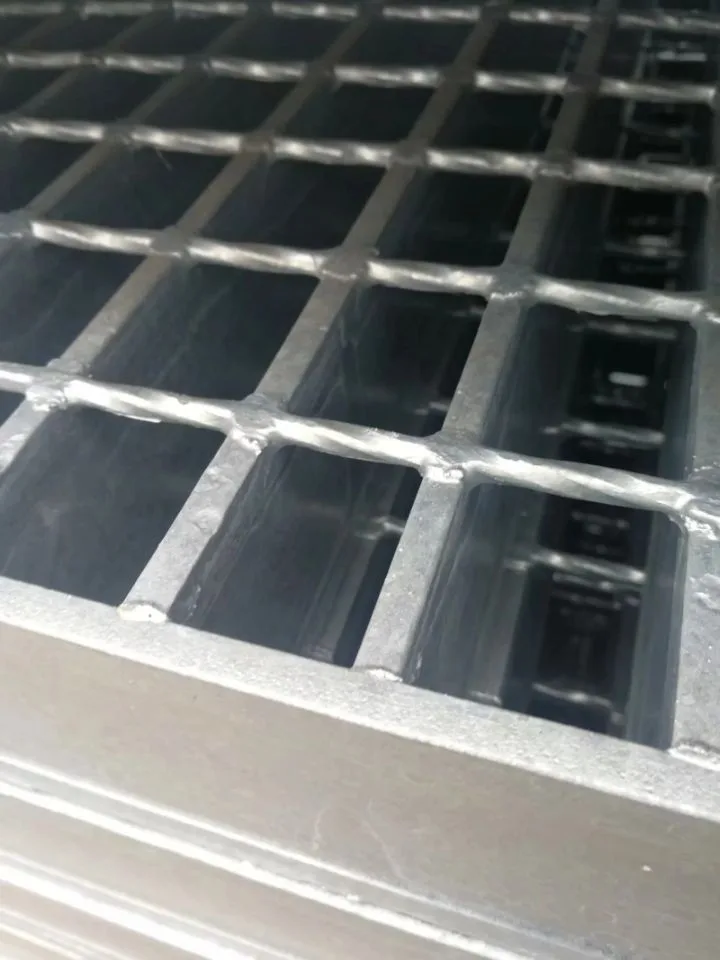
Unpickled chrome-nickel steel is brownish white; chrome steel is brownish black; chrome-manganese-nitrogen is black. Stainless steel at any temperature, whether hot or cold, can be attracted by a magnet and is magnetic. Nickel stainless steel is non-magnetic at high temperature, but some become magnetic after cooling.
High-manganese steel with higher manganese content is non-magnetic. Nickel-nitrogen stainless steel is sometimes non-magnetic, sometimes magnetic, or non-magnetic along its length but magnetic across it. Rub off the oxide layer on the steel, place a drop of water on it, and wipe with copper sulfate.
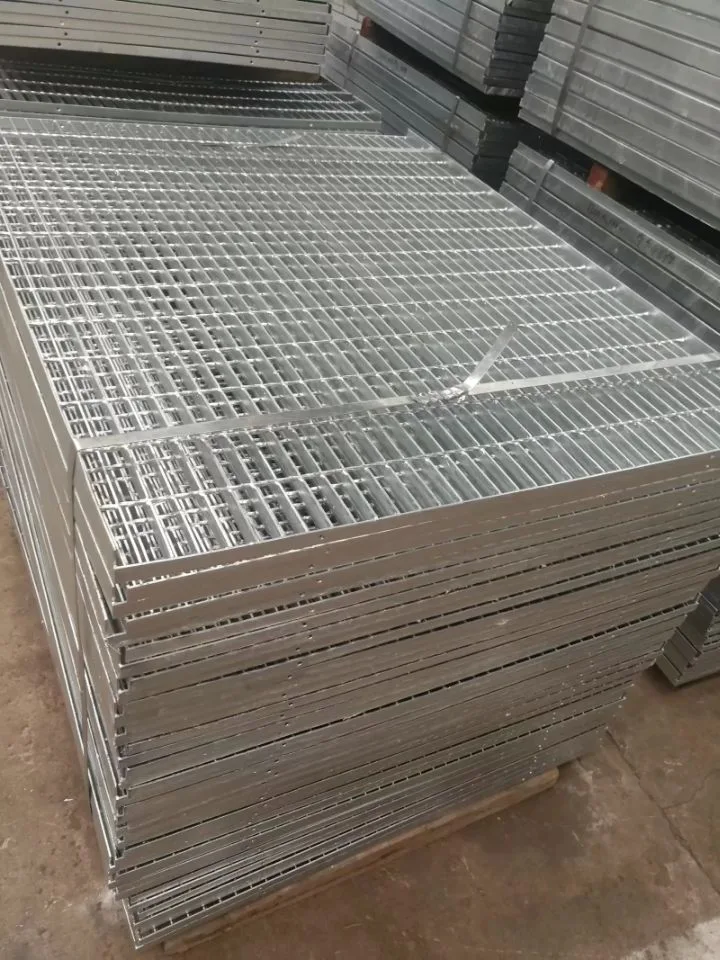
Once material and surface treatment are decided, we recommend writing zinc coating thickness and appearance requirements into the technical agreement.
Choosing a surface treatment is essentially a trade-off between initial investment and later maintenance. Requirements can be moderately relaxed for stainless steel grating in dry indoor environments, and should be raised for outdoor or humid environments. The same logic applies to selecting galvanized grating.
Features of 304 stainless steel grating
Main features can be summarized as follows:
| Item | Description |
|---|---|
| Material savings | Uses less material under the same load conditions, and in turn reduces the material needed for supporting structures. |
| Easy installation | Can be fixed to pre-installed supports with bolt clips or steel grating installation clips, completed by one person. |
| Shorter schedules | No on-site reprocessing needed; installation is fast. |
| Durable | Pickled or polished for anti-corrosion before delivery, with strong resistance to impact and heavy pressure. |
| Modern look | Attractive appearance, standardized design, ventilated and translucent, giving a smooth modern feel. |
| Light structure | Less material, light structure, and easy to hoist. |
| Dirt resistance | Does not accumulate rainwater, snow, ice, or dust, and is also anti-slip. |
| Simple design | No small support beams needed; simple structure and simplified design; no detailed grating drawings required - just note the model. |
Overall, selection should weigh span, load and service environment together.
When selecting material, do not simply chase the highest grade. The material of stainless steel grating should match the load requirements and service environment; over-specifying adds unnecessary cost. See the products page for the corresponding treatment of hot-dip galvanized steel grating, and choose according to actual conditions.
Stainless steel grating materials
Stainless steel is generally 201, 304, 316, 316L, etc.
Material and surface treatment determine the durability of stainless steel grating on site. For the same steel grating, the treatment differs greatly between dry indoor use and coastal or chemical environments, so the service environment should be stated as the primary condition when selecting. The same applies to hot-dip galvanized steel grating.
Further notes: Common combinations of galvanized grating and hot-dip galvanized steel grating
Galvanized grating and hot-dip galvanized steel grating are different specification forms within the same product system. The selection logic is the same as described in this article: first the usage type, then span and load to determine specifications, and finally the environment to determine surface treatment. Their corrosion protection and anti-slip requirements may differ; state them separately when ordering rather than writing one general technical requirement.
- For all product specifications and theoretical weights by series, visit Steel Grating Product Center
- To estimate cost by size and quantity, use Instant Quote PageSubmit Requirements
- To see how similar projects were executed, refer to Project Cases field applications
FAQ
What is most often overlooked during installation and acceptance?
First, bearing bars installed in the wrong direction reduce load capacity; second, insufficient fixing points or missing zinc touch-up paint; third, support beam spacing inconsistent with the layout drawing. These three items are most often overlooked on site.
What maintenance is required during daily use?
Maintenance mainly involves periodically checking whether fasteners are loose, whether touch-up paint has peeled off, and whether the panel surface shows obvious deformation or rust. Issues found should be dealt with promptly; overall maintenance is minimal.
Can the values in the article be applied directly?
Values in this article come from relevant standard clauses or common industry practice. For actual selection, recalculate based on site span, load class and service environment; direct copying is not recommended.
The above is for sizing and construction reference. To verify specific parameters or request a quotation, please visitInstant Quote Page, or contact our technical staff.
Note that this article presents sizing approaches and general practice, and does not constitute a strength commitment for any specific project. For load-bearing safety-critical areas, the design drawings and on-site calculations shall prevail; contact our technical staff if in doubt.