







On galvanized steel grating, this article explains, in the order of what galvanized steel grating is, its scope of application and engineering fields, and the installation and construction points of galvanized steel grating, aiming to give judgment methods that can be executed directly rather than merely theory. If you have drawings or site dimensions at hand, check the key points in the text one by one; hot-dip galvanized steel grating can follow the same decision sequence.
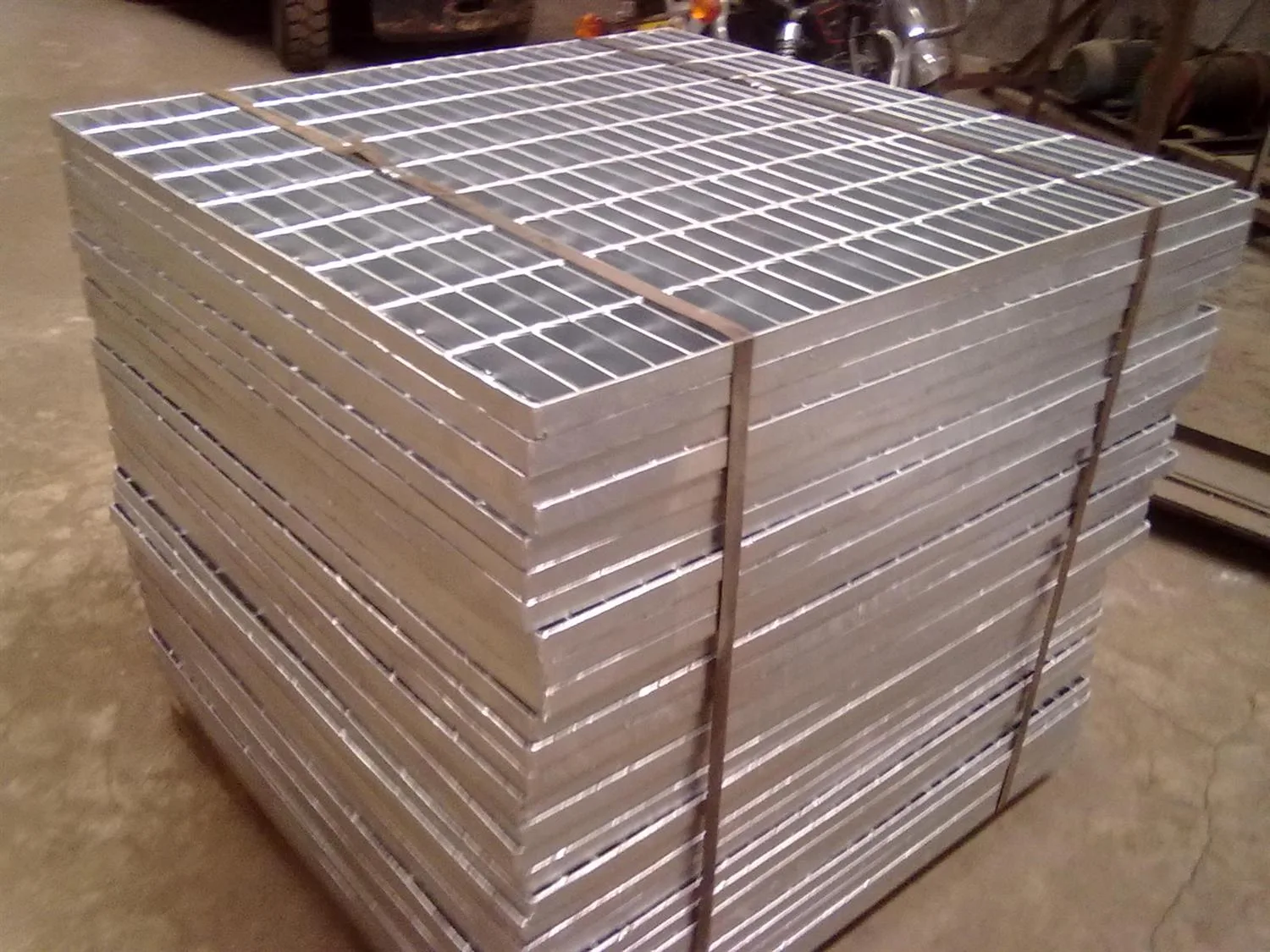
What Is Galvanized Steel Grating
Below we first briefly explain the relevant concepts and basic construction to make the following parameters and sizing content easier to understand.
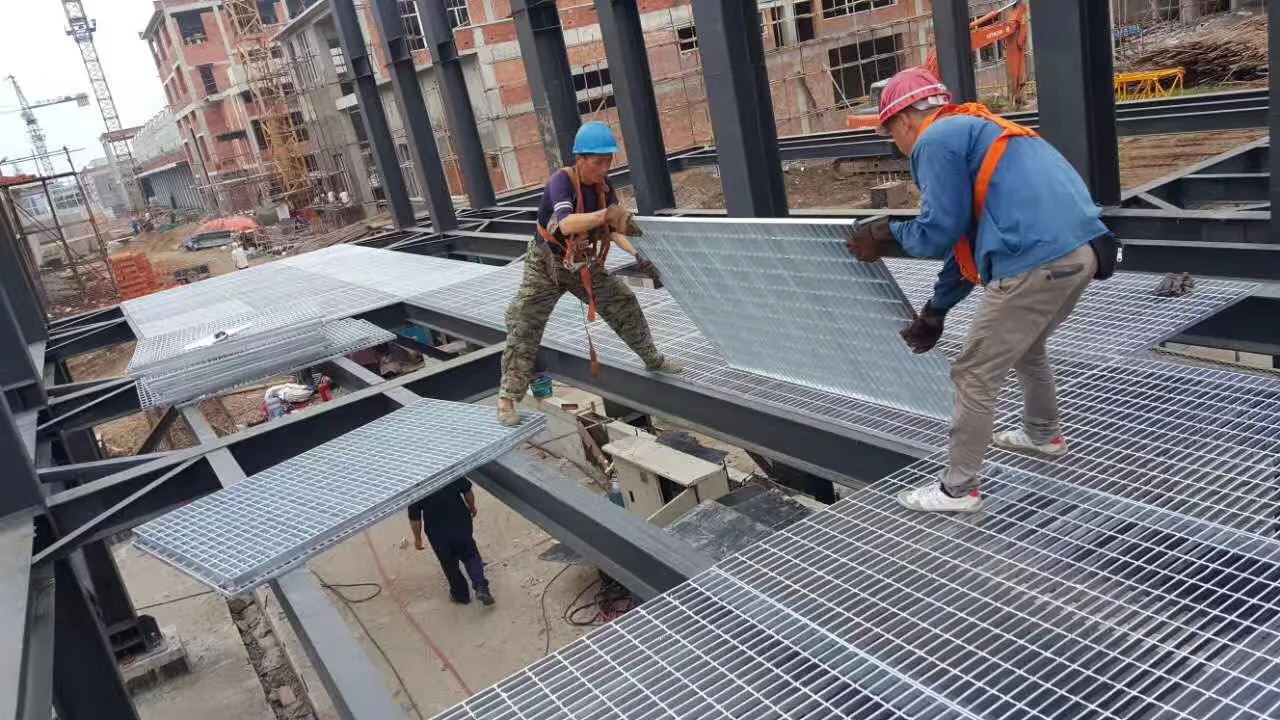
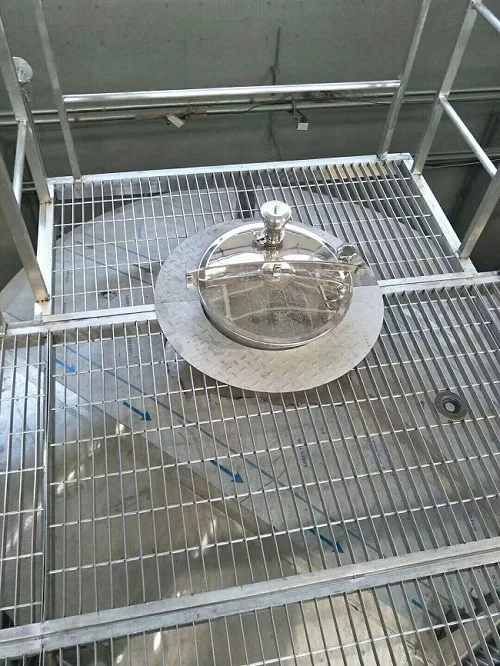
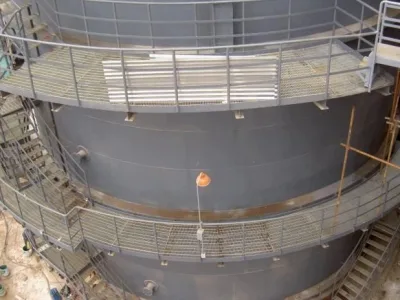
Platform Steel GratingPlatform steel grating, also called the "hot-dip galvanized steel grating platform", is a steel grating product widely applied in recent years and used most widely across industries. It has the strongest resistance to surface impact; grating with a 50mm cross bar pitch in particular has strong resistance to lateral impact. Platform steel grating has an extremely wide range of applications: all kinds of platforms in factories, workshops, mining and ports can use it. Good-looking and easy to install, it is a new-generation building product. Toe plates (kerb plates) and checkered plate guards can be welded around it, with connectors and other accessories installed. Banding can use flat bars of different specifications as bearing bars, or angle steel, channel steel, square tubes and the like; handles and hinges can also be installed on grating that needs to be moved or opened frequently.
Once you grasp these basic concepts, the specifications and sizing recommendations that follow will be much easier to understand.
There is a practical trick for confirming specifications: write the bearing bar size, bearing bar center pitch, cross bar pitch and overall dimensions into the purchase list at the same time; specifying only one or two of them easily leads to goods that do not match. The complete specification notation of galvanized steel grating is compared on the product page; before ordering, check panel by panel against the layout drawing, and the same applies to galvanized grating.
Scope of Application & Engineering Fields
Typical applications mainly include the following categories, which can help you judge suitability for your project:
Design of Steel Grating Working Platforms and Walkways
The design of working platform and walkway grating should avoid hazards caused by falling objects
To prevent hazards from objects falling through platform and walkway grating, the grating should have no gaps larger than the net openings of the grating.
The net openings of working platform or walkway grating must not allow a ball 35mm in diameter to pass through and fall.
Where people are present below, the net openings of the platform and walkway grating above must not allow a ball 20mm in diameter to pass through and fall; otherwise other appropriate measures should be adopted to ensure an equivalent level of safety.
The design of working platform and walkway grating should avoid tripping hazards for pedestrians
To avoid tripping hazards, the grating should be flat, and the maximum height difference between adjacent grating panels or between grating and structural members should not exceed 4mm.
If your working conditions fall outside the above range, you can provide site photos and dimensions, and our technicians will help assess them.
Different parts of the same scenario often have different requirements. Take galvanized steel grating as an example: the specifications of main walkways and corner areas, of frequently used areas and of occasional maintenance areas can be set separately, and galvanized grating should also be combined by zone, balancing safety and cost.
Galvanized Steel Grating Installation and Construction Key Points
Key points for construction and fixing are as follows:
Preventing the Risk of Grating Falling
To prevent the risk of falling, the grating should as far as possible be fixed by welding.
Grating is installed as a flat steel structural component; after installation it must not move laterally or leave its supports, and the bearing length of the two bearing bar ends on the supports must be not less than 25mm per end.
Grating that needs to be movable or removable must be fixed with special steel grating installation clips to prevent any displacement of the panel. Clips can be supplied by the manufacturer on request; except for clips made of stainless steel, carbon steel clips must be hot-dip galvanized. It is recommended that clip bolts be hot-dip galvanized, with a bolt diameter of not less than 8mm, and each panel must use no fewer than 4 clips.
To detect any corrosion, any dangerous loosening or any change in the position of the fasteners, the fastening state of the accessories should be checked at any time. Preventing pedestrian slip hazards:
Steel grating has good slip resistance. For working platforms with a slope not exceeding 10% or places where liquids or oil accumulate, serrated steel grating is recommended; for working platforms with slopes exceeding 10%, more practical anti-slip measures should be taken to prevent pedestrians from slipping.
After installation, check each panel's fixing points and flatness; put into use only after confirming no warping or looseness.
In material selection it is not advisable to simply chase high grades. The material of galvanized steel grating should match the load requirements and service environment; over-selecting the material causes unnecessary cost increases. The corresponding treatment of galvanized grating can refer to the product page and be chosen against the actual service conditions.
Application Scenarios of Galvanized Steel Grating
Typical applications mainly include the following categories, which can help you judge suitability for your project:
Dimensions of Steel Grating Platforms and Walkways
The width of a single-person steel grating walkway should be not less than 600mm. When the walkway is frequently used or crossed by several people at the same time, the width should be increased to 1200mm.
If a steel grating walkway serves as an escape route, its width must meet the requirements of specific regulations. If there are no specific regulations, the width should be not less than 1200mm.
Design Loads for Steel Grating Platforms and Walkways
For platforms operated by a single person, the design load is usually 1.5 kN distributed over the entire area of 200mm × 200mm.
Maintenance platforms are generally designed for a uniformly distributed load of 4kN/m2.
A steel grating walkway for single-person traffic should have a uniformly distributed load capacity of not less than 3.0 kN/m2; one for two-way traffic, not less than 5.0 kN/m2.
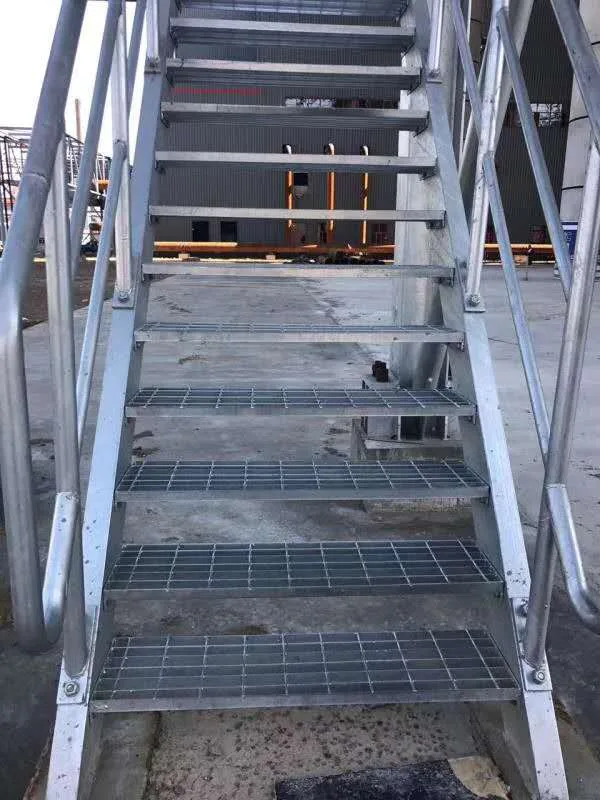
A high-density pedestrian steel grating walkway - stair treads - should have a uniformly distributed load capacity of not less than 7.5 kN/m2.
When the design load is applied, the deflection of the steel grating should not exceed 1/200 of the span, and the height difference between the loaded grating and the adjacent unloaded grating should not exceed 4mm.
Steel grating stair treads must, in addition to the above design requirements, fully consider the solidity of their installation and walking convenience. Design of steel grating walkways and trench covers:
For steel grating trench covers used on sidewalks, roadways, parking lots, docks or building floors of traffic roads, design and selection require special consideration, because loads and directions of travel differ.
When used as cross-channel covers on roads (direction of travel parallel to the bearing bars), wheel pressure and impact must be considered as well as the risk of the cover bouncing or shifting; the cover must be fixed to the support frame or support beam (by welding or bolting).
If your working conditions fall outside the above range, you can provide site photos and dimensions, and our technicians will help assess them.
The details most easily overlooked when reading a specification table are tolerances and end treatment. Galvanized steel grating usually keeps a machining allowance in the length direction; if the site uses embedded installation, edge sealing and corner-cutting requirements should be stated in advance. Galvanized grating is handled similarly in such details, so mark them clearly on the drawings as well.
Further notes: How to combine hot-dip galvanized steel grating and galvanized grating in use
In engineering, galvanized grating is often used together with the components mentioned in this article. The two differ in load carrying and installation practices; when combining them, pay special attention to the connection of support conditions and fixing methods, as junction treatment is often where problems arise. For unified drawings, submit dimensions of both types and our technicians will process them under the same layout logic.
- For all product specifications and theoretical weights by series, visit Steel Grating Product Center
- To estimate cost by size and quantity, use Instant Quote PageSubmit Requirements
- To see how similar projects were executed, refer to Project Cases field applications
FAQ
What is most often overlooked during installation and acceptance?
First, bearing bars installed in the wrong direction reduce load capacity; second, insufficient fixing points or missing zinc touch-up paint; third, support beam spacing inconsistent with the layout drawing. These three items are most often overlooked on site.
What maintenance is required during daily use?
Maintenance mainly involves periodically checking whether fasteners are loose, whether touch-up paint has peeled off, and whether the panel surface shows obvious deformation or rust. Issues found should be dealt with promptly; overall maintenance is minimal.
Where can I find specific specifications?
our websiteProductsCommon specifications and theoretical weights are organized by series, also available in Instant Quote PageEstimate by size, or contact us directly for sizing advice.
The above is for sizing and construction reference. To verify specific parameters or request a quotation, please visitInstant Quote Page, or contact our technical staff.
The above is general guidance. For a specific project, we still recommend submitting span, load class and service environment to our technicians for review. Steel grating is a load-bearing component; rework caused by wrong specification choices costs far more than the time spent on upfront calculation.