







This article introduces parking lot steel grating in the order of performance features, basic concepts and welding requirements. Each part gives actionable judgment methods; for quick conclusions read the key points at the start of each part. The same applies to hot-dip galvanized steel grating.
Performance features of parking lot steel grating
Its overall performance focuses on the following aspects; we suggest comparing item by item in actual selection:
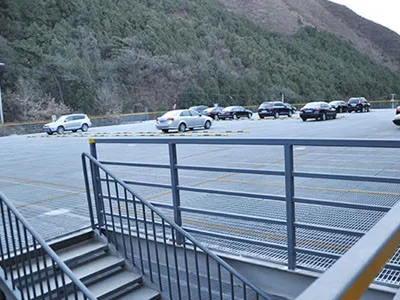
Car ownership in China's large and medium cities is rising sharply, and existing parking spaces fall far short of demand. In today's world where land is precious, developers cannot afford the cost or capacity of conventional parking lots, bringing excellent opportunities to the mechanical parking industry. Galvanized steel grating is widely used in mechanical parking for its high load capacity, low cost, environmental friendliness and long life. Mechanical parking better ensures the safety of people and vehicles and achieves complete pedestrian-vehicle separation. In underground garages, mechanical parking also removes the need for heating and ventilation equipment, offering convenient conditions for cities facing parking shortages.
Overall, selection should weigh span, load and service environment together.
Note that price is not the only consideration. Later maintenance costs, replacement difficulty and service life all affect total cost of parking lot steel grating; low-price options may not be economical in these respects. When budgeting, consider the full life-cycle cost of hot-dip galvanized steel grating.
Basic concepts of parking lot steel grating
Below we first briefly explain the relevant concepts and basic construction to make the following parameters and sizing content easier to understand.
Parking lot steel grating can also be called "platform steel grating". It is widely used for platforms in factories, workshops, mines and ports; attractive and easy to install, it is a new-generation building product. Toe plates (edge boards), checkered plate guards, connectors and other accessories can be welded around the perimeter. Edging can use flat bars of different specifications, or angle steel, channel steel or square tubes; handles and hinges can be installed on panels that are frequently moved or opened.
Once you grasp these basic concepts, the specifications and sizing recommendations that follow will be much easier to understand.
Actual parameters of the same model may vary slightly between manufacturers; acceptance should be based on measured values. Sample-check key dimensions of parking lot steel grating, especially for bulk deliveries. Check parameters of hot-dip galvanized steel grating the same way and communicate deviations promptly.
Welding requirements for parking lot steel grating
The standards and inspection items to check are as follows:
A. Before welding platform steel grating, thoroughly remove paint, rust, oil and water from the supporting steel beams and galvanized steel grating surfaces.
B. If segmented welding is used, weld length must be at least 25mm and weld leg height at least 5mm, welded on the bearing bar side of the grating; see the table below for weld counts. After welding, remove slag and spatter and hand-apply two coats of zinc-rich paint.
We recommend checking each clause above during acceptance and keeping the factory inspection records.
Material and surface treatment determine the field durability of parking lot steel grating. The same grating used in dry indoor conditions versus coastal or chemical environments needs very different treatment; make the service environment the primary condition in selection. The same applies to hot-dip galvanized steel grating.
Further reading: Sizing reference for hot-dip galvanized steel grating and hot-dip galvanized steel grating
In engineering, hot-dip galvanized steel grating is often used together with the components mentioned in this article. The two differ in load carrying and installation practices; when combining them, pay special attention to the connection of support conditions and fixing methods, as junction treatment is often where problems arise. For unified drawings, submit dimensions of both types and our technicians will process them under the same layout logic.
- For all product specifications and theoretical weights by series, visit Steel Grating Product Center
- To estimate cost by size and quantity, use Instant Quote PageSubmit Requirements
- To see how similar projects were executed, refer to Project Cases field applications
FAQ
What information is needed for custom sizes?
Usually you need to provide the panel dimensions (length x width), bearing bar specs and direction, center-to-center pitch of bearing bars and cross bars, surface treatment, and special requirements such as cutouts, corner notches and banding. Site photos or sketches are even better.
Why do different manufacturers quote different weights for the same specifications?
The main difference lies in the actual measured thickness and tolerance control of the bearing bars. When bars are supplied at the lower tolerance limit, weight per unit area falls below the theoretical value, and load capacity drops accordingly. We recommend specifying thickness tolerance clearly when purchasing.
Where can I find specific specifications?
our websiteProductsCommon specifications and theoretical weights are organized by series, also available in Instant Quote PageEstimate by size, or contact us directly for sizing advice.
The above is for sizing and construction reference. To verify specific parameters or request a quotation, please visitInstant Quote Page, or contact our technical staff.
Note that this article presents sizing approaches and general practice, and does not constitute a strength commitment for any specific project. For load-bearing safety-critical areas, the design drawings and on-site calculations shall prevail; contact our technical staff if in doubt.