
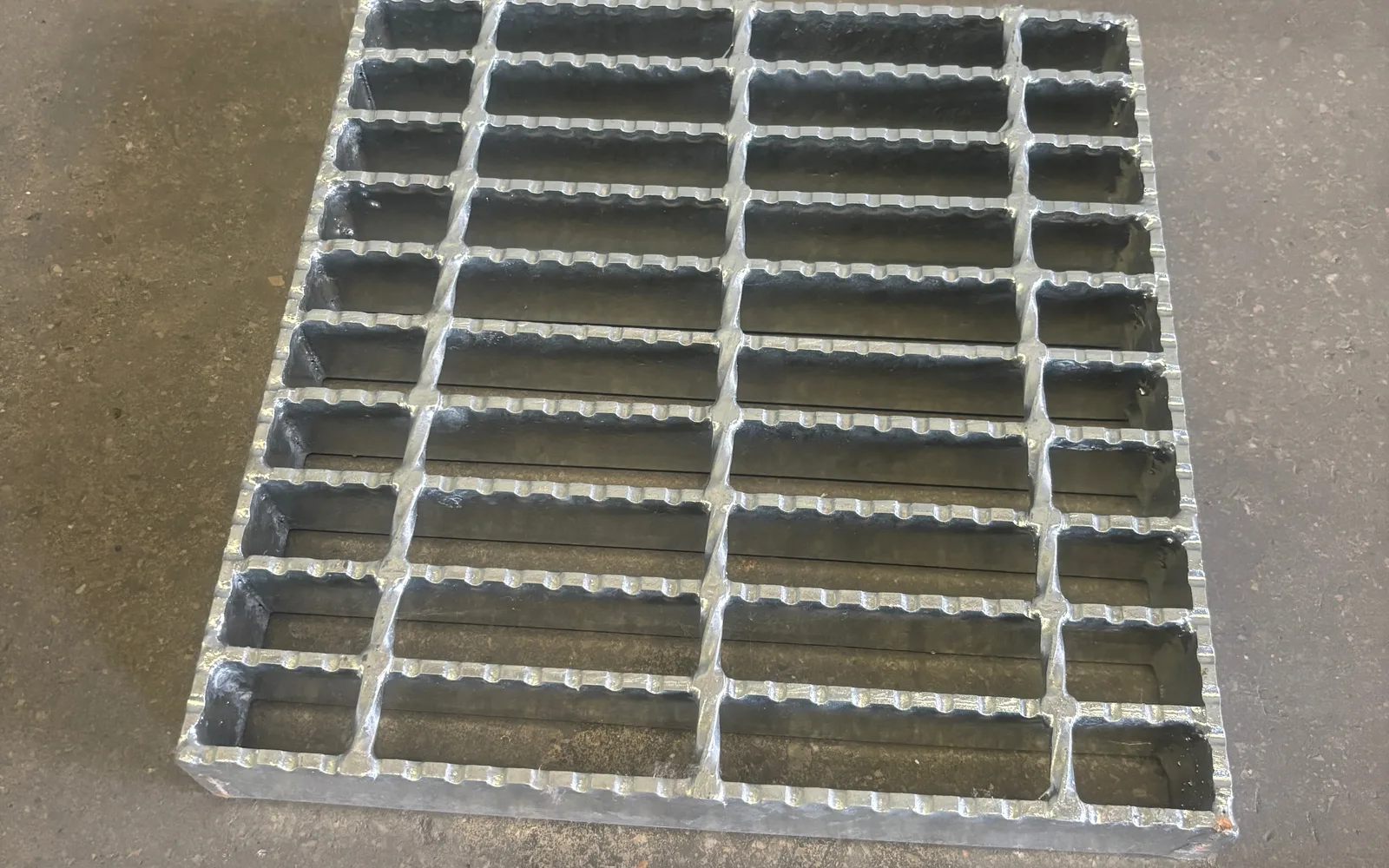
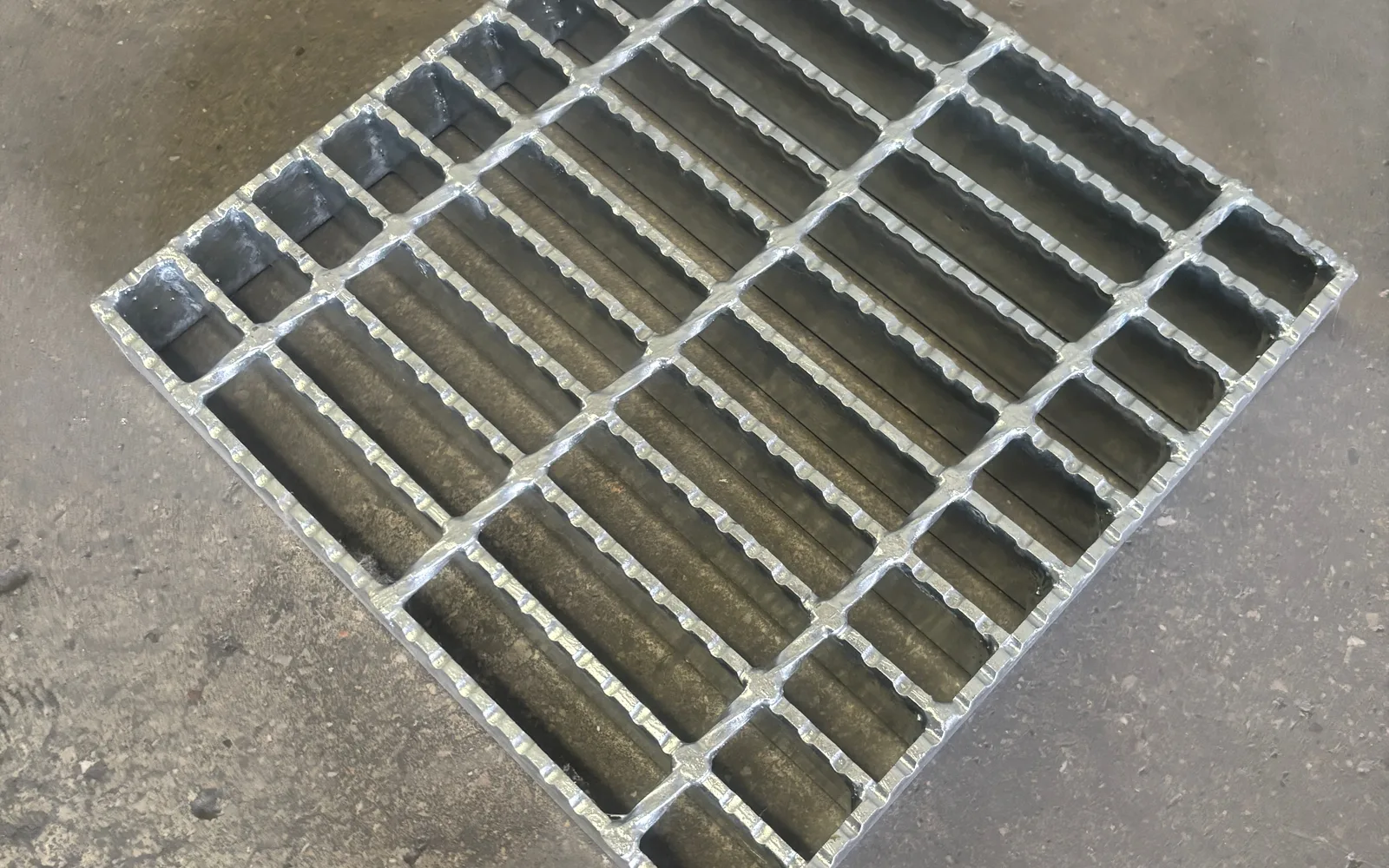
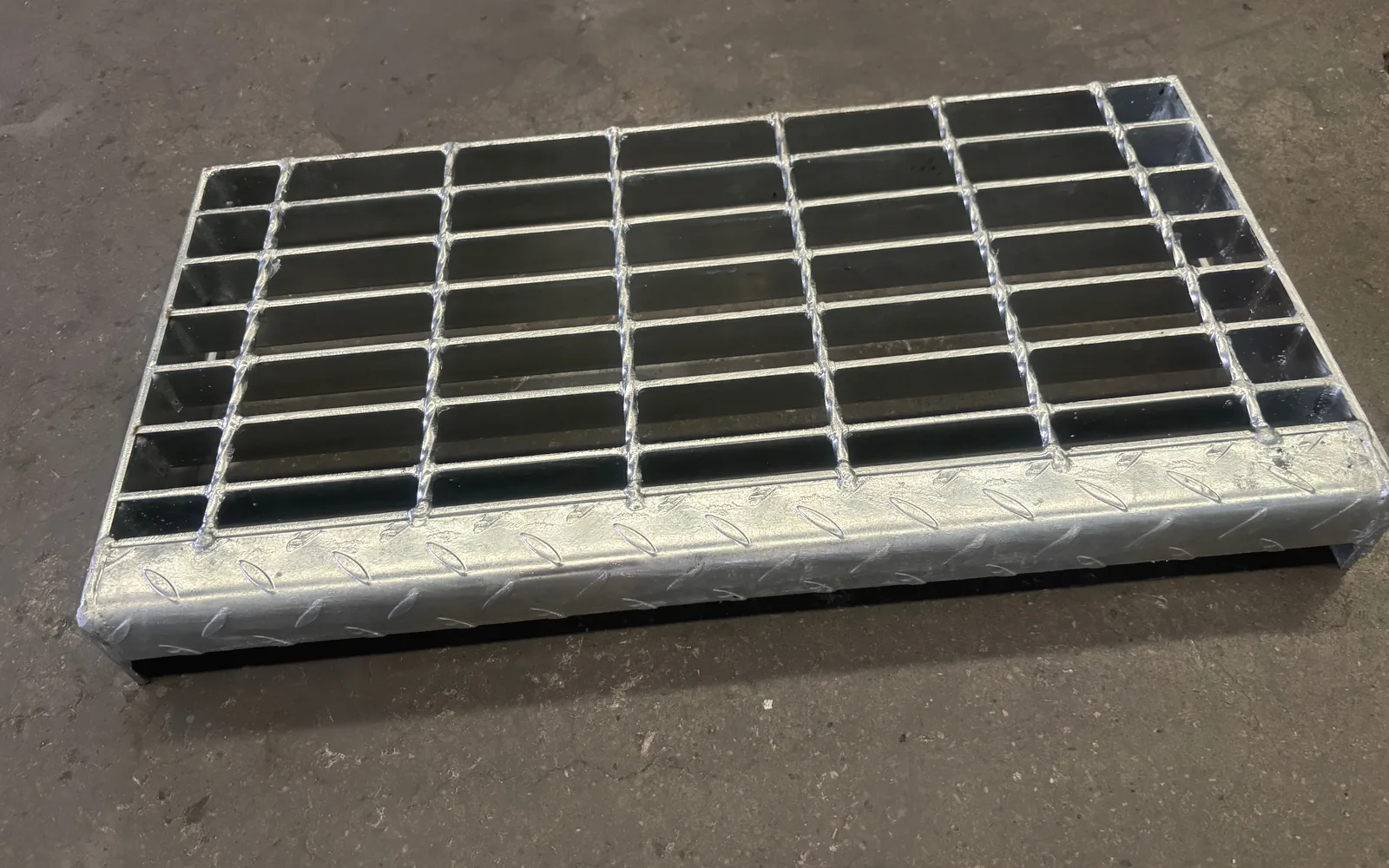




When purchasing steel grating, the biggest problems come not from price but from mismatch between specifications and site conditions, which causes rework. This page lists the conditions to confirm in advance, practices under common conditions, and installation and acceptance points, including notes on steel grating specifications and models, ready to be written into technical agreements or purchase lists.
Steel Grating Model Quick Reference
The table below summarizes the specification markings on this page and their meanings for quick reference; see the detailed explanation later. Actual orders are subject to drawing annotations and the layout drawing; specifications not included in the table can be custom-fabricated to drawings.
| Marking/Item | Meaning and Description |
|---|---|
| G325/30/50W | This is a steel grating specification with plain flat bearing bars |
| 32 | indicates the width of the bearing bar |
| 5 | indicates the thickness of the bearing bar |
| 30 | indicates the bearing bar pitch |
| 50 | indicates the cross bar pitch |
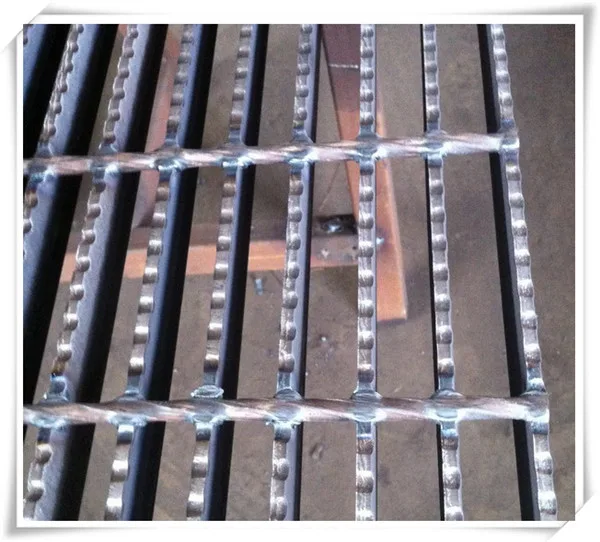
| W | indicates welded steel grating (i.e., cross bars are twisted square bars) |
| Marking of bearing bar shape | F means standard plain flat bar (may be omitted in the marking); I means I-shaped flat bar; S means serrated flat bar |
| Marking of surface treatment condition | G means hot-dip galvanizing (may be omitted in the marking); P means painted; U means surface untreated |
Specifications of Steel Grating Models
Different specifications correspond to different load capacities and theoretical weights. Common specifications are listed below; actual ordered dimensions and tolerances are subject to the confirmed layout drawing:
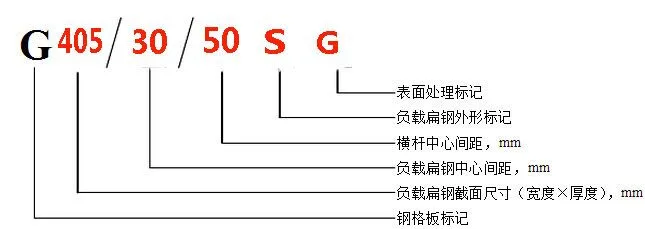
The string of numbers representing a steel grating model: each digit and letter has a specific meaning. Examples below explain exactly what the string means, helping you make the right purchase.
The above are common specifications; actual ordered dimensions and tolerance requirements shall be confirmed against the layout drawing.
Supplementary Notes on Steel Grating Model Annotation
Regarding steel grating model annotation, the following are the most frequently asked and most need confirming in advance during procurement and use:
For example, in factory drawings we see a string like G325/30/50W - what does it mean?
The above points can serve as a pre-purchase checklist; confirm each item before moving to the quotation stage.
What Is Steel Grating Model Annotation
G325/30/50W: this is a steel grating specification with plain flat bearing bars.
G: indicates the surface treatment is hot-dip galvanizing, abbreviated from the letters GAL
32: indicates the width of the bearing bar
5: indicates the thickness of the bearing bar
30: indicates the bearing bar pitch
50: indicates the cross bar pitch
W: indicates welded steel grating (i.e., cross bars are twisted square bars)
Other letters and symbols also appear in steel grating model specifications, each with its own meaning:
Marking of bearing bar shape: F means standard plain flat bar (may be omitted in the marking); I means I-shaped flat bar; S means serrated flat bar.
Marking of surface treatment: G means hot-dip galvanizing (may be omitted in the marking); P means painted; U means surface untreated.
For example:
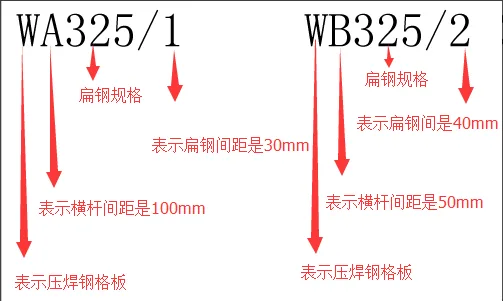
Steel grating can also be marked as: WA325/1 WB325/2
W means welded steel grating (i.e., cross bars are twisted square bars)
A means cross bar pitch of 100mm, B means cross bar pitch of 50mm;
1 means bearing bar pitch of 30mm, 2 means bearing bar pitch of 40mm;
325 means the bearing bar is 32 wide and 5 thick
Selection Points for Steel Grating Models
Confirm each item in the order below during selection to avoid most later rework. Record the conclusion of each step and submit it with your inquiry:
- Step 1 · Define Span and Support Conditions: First measure the clear span between support beams, then confirm the support surface width is sufficient; these two items determine the usable series range.
- Step 2 · Verify Service Load: Check separately for pedestrian, maintenance or vehicular traffic; maintenance and vehicular use differ greatly in bearing bar requirements.
- Step 3 · Determine Material and Surface Treatment: Ordinary carbon steel works for dry indoor environments; hot-dip galvanizing is recommended for outdoor or humid environments; chemical and coastal environments need separate confirmation.
- Step 4 · Confirm Shape and Fixing Method: Including whether cutouts, corner notches and banding are needed, and whether to use welded fixing or special clips.
Once the above conditions are confirmed, proceed to Instant Quote PageEstimate quantities by dimensions, or send the condition list to customer service for model recommendations from our technicians.
Application Conditions Comparison
The same specifications last very differently in different environments. The table below gives recommended practices by common service environment for your selection reference:
| Operating Environment | Recommended Practices | Note: |
|---|---|---|
| Indoor Dry Environments | Made of standard carbon steel with surface treatment as required | Focus on span and load; environmental impact is minimal |
| Humid or Water Treatment Environments | Use a higher corrosion protection grade with matching fasteners | Regularly inspect fixing points and surface corrosion |
| Chemical or Coastal Environments | Confirm material and anti-corrosion scheme per medium | Avoid galvanic corrosion from direct contact between different metals |
| High-Temperature or Large Temperature-Difference Environments | Select material and connection method by temperature | Watch for loosening caused by thermal expansion and contraction |
| Clean Rooms and Food & Pharmaceutical | Prioritize surface treatment and cleaning convenience | Avoid dust-collecting structures and cleaning dead corners |
| Temporary or Short-Term Use | Can be configured with the light-duty series | For short schedules, prioritize easy disassembly and turnover |
Custom Fabrication & Quotation
For custom fabrication, we recommend stating tolerance ranges, zinc coating requirements and packaging in the contract or technical agreement for easy item-by-item acceptance. For batch projects, a sample can be made to confirm appearance and dimensions before mass production. For more specifications, visitProductsto view; for a quotation, go to Instant Quote Page for an estimate.
FAQ
Can it be custom-made to site dimensions?
Yes. Bearing bar specs, pitch, panel dimensions and banding forms can all be custom-made to drawings; cutouts, corner notches and shaped cutting are also supported. For bulk orders, a layout drawing can be confirmed before production.
What Are the Common Specifications of Steel Grating Models?
Common specifications are determined by combinations of bearing bar width and thickness, bearing bar pitch, and cross bar pitch; different combinations correspond to different load capacities and theoretical weights. Our Products section lists common models by series; you can also send span and load requirements to customer service for sizing help.
How Is the Price of Steel Grating Calculated?
Usually calculated as the theoretical weight for the model times the material unit price, plus hot-dip galvanizing or other surface treatment costs, and fluctuating with steel and zinc prices. You canInstant Quote PageEnter specifications and dimensions for a quick estimate.
Quotation is available once the specifications and surface treatment are confirmed. For custom fabrication per drawings or load calculation, pleaseInstant Quote PageSubmit dimensions, or contact us directly for technical support.