







This article introduces stainless steel grating in the order of the causes of rusting, material and corrosion protection requirements, and basic concepts. Each section gives practical decision rules wherever possible; if you only need quick conclusions, start with the key points at the beginning of each section. The same approach applies to galvanized steel grating.
Material and Surface Treatment: Causes of Rust on Stainless Steel Grating
Material and surface treatment are key to service life. Common practices and suitable environments are as follows:
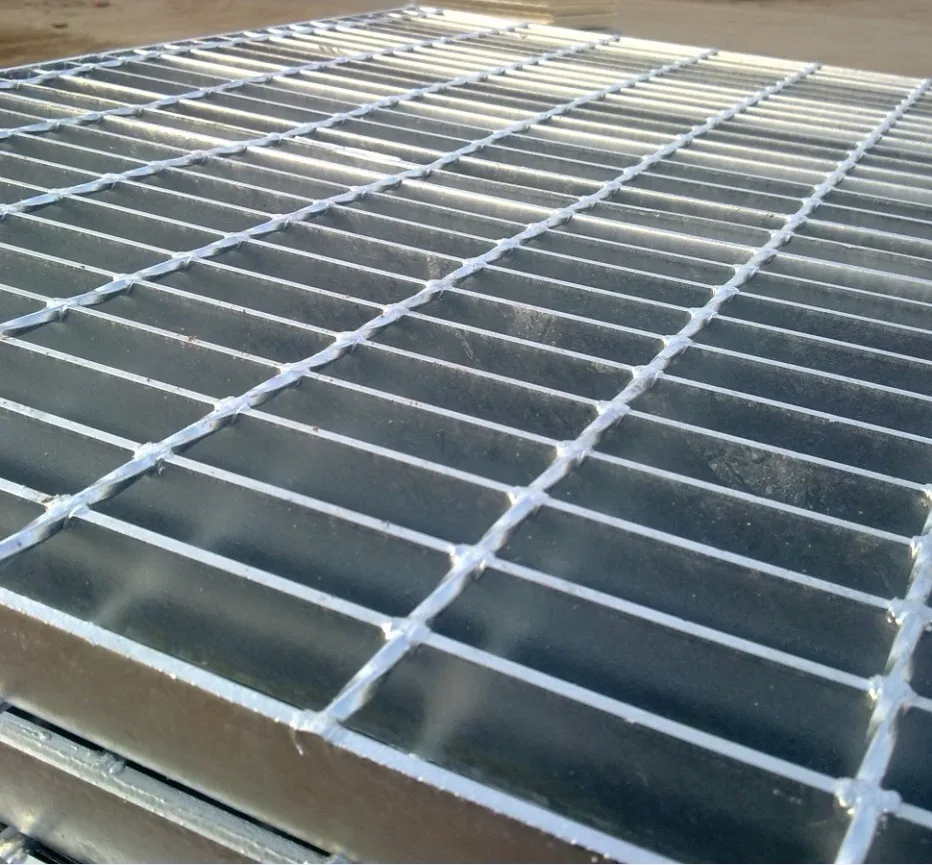
Stainless steel grating can rust under certain conditions. It resists atmospheric oxidation (stainlessness) and also resists corrosion in media containing acids, alkalis and salts (corrosion resistance). However, the corrosion resistance of stainless steel grating varies with its own chemical composition, processing state, service conditions and the type of environmental medium.
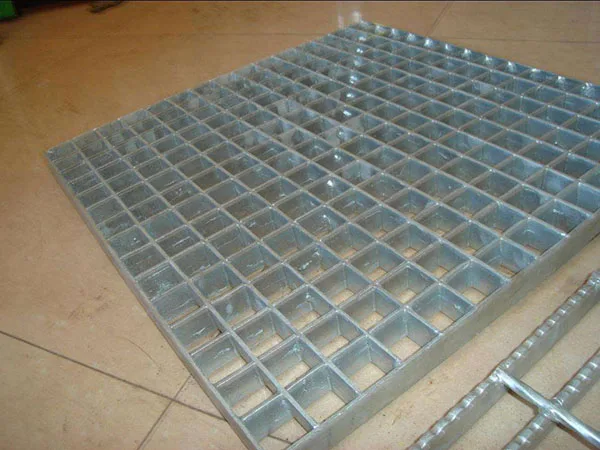
Conventional stainless steel usually contains not less than 12% chromium, and up to 18% in some grades. Adding chromium and other elements changes the properties of the steel, for example making its molecular structure more uniform and allowing a dense oxide protective film to form more easily on the surface, which greatly improves the corrosion resistance of stainless steel grating. Stainless steel grating can therefore resist corrosion from fire, water, acids, alkalis and various solutions without rusting.
Once material and surface treatment are decided, we recommend writing zinc coating thickness and appearance requirements into the technical agreement.
Choosing a surface treatment is essentially a trade-off between initial cost and later maintenance. Requirements can be relaxed for stainless steel grating used in dry indoor environments, but should be raised for outdoor or humid environments. Galvanized steel grating can be selected on the same basis.
Material and Anti-Corrosion Requirements
Material and surface treatment are key to service life. Common practices and suitable environments are as follows:
Take 304 stainless steel: in a dry, clean atmosphere it has excellent rust resistance, but if the stainless steel grating is moved to a coastal area with salt-laden sea mist it will rust quickly, while 316 steel performs well. Therefore, no single stainless steel grating is corrosion-proof and rust-free in every environment.
Once material and surface treatment are decided, we recommend writing zinc coating thickness and appearance requirements into the technical agreement.
Material and surface treatment determine the on-site durability of stainless steel grating. For the same steel grating, the treatment differs greatly between dry indoor use and coastal or chemical environments; service environment should be raised as the primary condition in selection. The same applies to galvanized grating.
Further notes: How to combine galvanized grating and hot-dip galvanized steel grating in use
If a project uses both galvanized grating and hot-dip galvanized steel grating, we recommend planning them on the same layout drawing. This way edge closing, fixing and cutouts at junctions can be handled uniformly, avoiding dimension conflicts during installation and making later maintenance easier.
- For all product specifications and theoretical weights by series, visit Steel Grating Product Center
- To estimate cost by size and quantity, use Instant Quote PageSubmit Requirements
- To see how similar projects were executed, refer to Project Cases field applications
FAQ
Can the values in the article be applied directly?
Values in this article come from relevant standard clauses or common industry practice. For actual selection, recalculate based on site span, load class and service environment; direct copying is not recommended.
How to choose between hot-dip galvanizing and cold galvanizing?
The two anti-corrosion mechanisms differ: hot-dip galvanizing immerses steel in molten zinc to form a metallurgically bonded coating, thick and long-lasting, suitable for outdoor and humid environments; cold galvanizing is electrochemical deposition with a thinner, more uniform appearance, suitable for dry indoor environments or applications requiring high dimensional precision.
What information is needed for custom sizes?
Usually you need to provide the panel dimensions (length x width), bearing bar specs and direction, center-to-center pitch of bearing bars and cross bars, surface treatment, and special requirements such as cutouts, corner notches and banding. Site photos or sketches are even better.
The above is for sizing and construction reference. To verify specific parameters or request a quotation, please visitInstant Quote Page, or contact our technical staff.
The above is general guidance. For a specific project, we still recommend submitting span, load class and service environment to our technicians for review. Steel grating is a load-bearing component; rework caused by wrong specification choices costs far more than the time spent on upfront calculation.