







This article introduces the removal and installation of drainage trench covers in the order of application scenarios, fixing methods and basic concepts, giving actionable judgment methods in each part; if you only need quick conclusions, read the key points at the start of each part. The same approach applies to hot-dip galvanized trench covers.
Application Scenarios of Drainage Trench Cover Removal and Installation
Main applications are as follows:
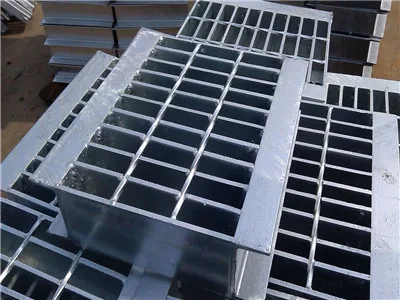
Slight carelessness during the installation of drainage trench covers can cause safety accidents and leave hidden dangers for the whole project. To ensure smooth installation and prevent sudden accidents, what should contractors and installation workers pay attention to?
When removing drainage trench covers, workers should stand in a safe position and be 100% harnessed; simultaneous removal at multiple points or by multiple work groups in the same area is forbidden. Removed trench covers should be placed in a safe location with temporary fixing; placing them near edges is forbidden; holes left after removal must be protected promptly.
If your working conditions fall outside the above range, you can provide site photos and dimensions, and our technicians will help assess them.
The installation quality of drainage trench covers largely depends on preparation: whether the bearing surfaces are flat, whether beam spacing matches the layout, and whether fasteners are prepared in advance. With these in place, installation itself is not complicated. If cutting is needed on site, the cut-edge treatment requirements of steel grating trench covers should also be clearly stated.
Installation and Fixing Method
On-site construction generally follows the steps and technical requirements below; complete the technical disclosure before starting work:
Workers installing drainage trench covers must wear safety helmets and harnesses; safety nets should be set below the work area; railings should be installed at edges and openings; large components must be fixed promptly after hoisting; tools and items should be kept in tool bags and passed up and down with guide ropes; scaffolding for trench cover installation must be built with qualified materials, inspected and accepted to standards, and handed over before use.
After installation, check each panel's fixing points and flatness; put into use only after confirming no warping or looseness.
Installation most affects later service experience. Drainage trench covers must not be laid in the wrong direction; the bearing bars should align with the main load direction - the point most easily overlooked on site. The number of fasteners should also match the layout drawing; missing even one can cause local loosening. The same applies to hot-dip galvanized trench covers.
Scope of Application & Engineering Fields
Trench covers to be hoisted should be secured and checked; loose parts should be bagged or boxed; use qualified lifting gear and check it carefully before hoisting; isolate the hoisting area and assign a dedicated signaler.
To judge whether a site suits this type of drainage trench cover, check three things: whether there are corrosive media, whether the traffic is pedestrians or vehicles, and the approximate span range. With these three clear, the required specification and surface treatment of steel grating trench covers can be determined.
Further notes: Common combinations of hot-dip galvanized trench covers and steel grating trench covers
In engineering, steel grating trench covers are often used together with the components mentioned in this article. The two differ in load carrying and installation practices; when combining them, pay special attention to the connection of support conditions and fixing methods, as junction treatment is often where problems arise. For unified drawings, submit dimensions of both types and our technicians will process them under the same layout logic.
- For all product specifications and theoretical weights by series, visit Steel Grating Product Center
- To estimate cost by size and quantity, use Instant Quote PageSubmit Requirements
- To see how similar projects were executed, refer to Project Cases field applications
FAQ
What is most often overlooked during installation and acceptance?
First, bearing bars installed in the wrong direction reduce load capacity; second, insufficient fixing points or missing zinc touch-up paint; third, support beam spacing inconsistent with the layout drawing. These three items are most often overlooked on site.
Where can I find specific specifications?
our websiteProductsCommon specifications and theoretical weights are organized by series, also available in Instant Quote PageEstimate by size, or contact us directly for sizing advice.
What maintenance is required during daily use?
Maintenance mainly involves periodically checking whether fasteners are loose, whether touch-up paint has peeled off, and whether the panel surface shows obvious deformation or rust. Issues found should be dealt with promptly; overall maintenance is minimal.
The above is for sizing and construction reference. To verify specific parameters or request a quotation, please visitInstant Quote Page, or contact our technical staff.
The above is general guidance. For a specific project, we still recommend submitting span, load class and service environment to our technicians for review. Steel grating is a load-bearing component; rework caused by wrong specification choices costs far more than the time spent on upfront calculation.