







Regarding how to choose suitable steel grating, this article explains item by item in the order of specifications and parameters, basic concepts, and common models and dimensions, providing actionable judgment methods rather than just theory. If you have drawings or on-site dimensions at hand, check against the key points one by one; galvanized steel gratings can follow the same sequence.
Specifications and Parameters for Choosing Suitable Steel Grating
Main specification comparison is as follows:
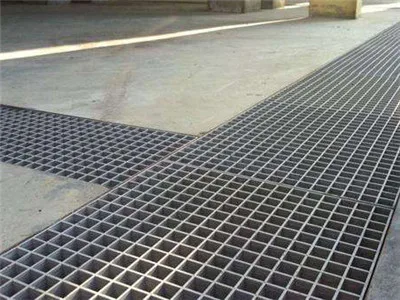
When purchasing steel gratings, since there are many models and complex specifications, users unfamiliar with steel gratings often do not know where to start with procurement,
The above are common specifications; actual ordered dimensions and tolerance requirements shall be confirmed against the layout drawing.
Bigger specifications are not always better. The selection of steel grating should be as economical as possible while meeting load requirements; over-thickening increases self-weight and cost and complicates installation. The product pages provide more complete comparisons of galvanized steel gratings for reference before deciding.
Basic Concepts of Choosing Suitable Steel Grating
Below we first briefly explain the relevant concepts and basic construction to make the following parameters and sizing content easier to understand.
1. Load capacity: the main function of steel grating is to bear loads. The main factor affecting load capacity is the bearing bar specification; the larger the bearing bar, the stronger the load capacity. Correspondingly, larger bearing bars make each square meter of steel grating heavier and more expensive.
Once you grasp these basic concepts, the specifications and sizing recommendations that follow will be much easier to understand.
What is most easily overlooked when reading specification tables is tolerances and end treatment. The length direction of steel grating usually has machining allowance; if embedded installation is used on site, trimming and corner-cutting requirements need to be stated in advance. Galvanized steel gratings are handled similarly in such details; it is recommended to mark them clearly on the drawings as well.
Common Models and Dimensions for Choosing Suitable Steel Grating
Main specification comparison is as follows:
2. Mesh opening: commonly used mesh openings include 20*50, 20*100, 30*50, 30*100, 40*50, 40*100, 50*50, 50*100 and other specifications; with the same bearing bar specification, the smaller the mesh opening, the lower the load capacity. Custom sizes are also available.
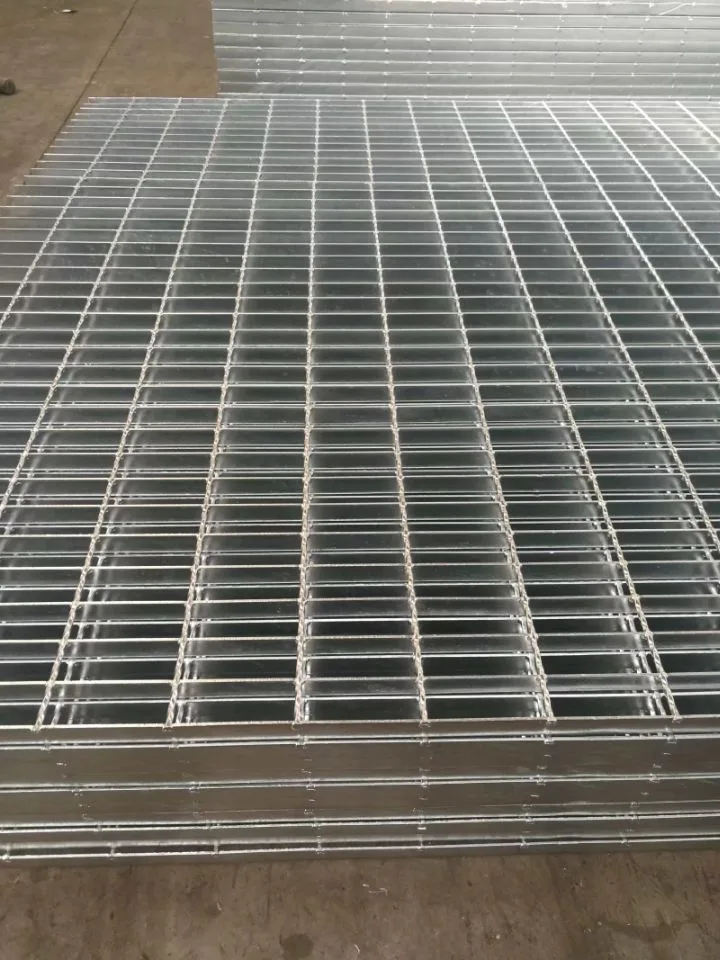
| Item | Parameter Description |
|---|---|
| Material | Steel gratings can be made of carbon steel (Q235), stainless steel, aluminum plate and other materials; choose the suitable material according to the service environment. |
| Surface anti-corrosion treatment | Steel gratings have different surface treatments depending on material: carbon steel gratings generally use hot-dip galvanizing, cold galvanizing (electro-galvanizing), spray painting and other treatments; stainless steel gratings are generally polished; aluminum gratings generally use anodizing. |
| Selection by service environment | Bearing bars used for steel gratings are of two types: plain flat bars and serrated flat bars. Generally plain flat bars suffice; in damp and slippery places with much rain, or on platforms with certain slopes, serrated steel gratings made of serrated flat bars are mostly used; this type has good anti-slip performance. In extremely corrosive environments, 304, 316 or higher-grade stainless steel flat bars can be used for production. |
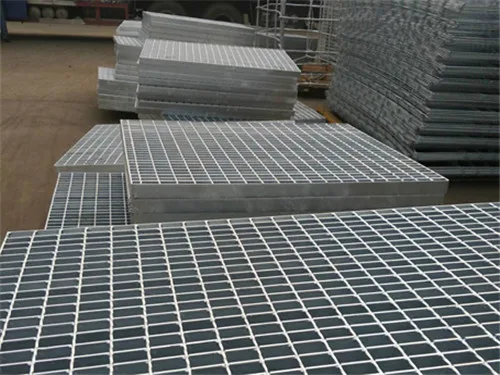
The above are common specifications; actual ordered dimensions and tolerance requirements shall be confirmed against the layout drawing.
A practical tip for specification confirmation: write all four items - bearing bar specification, bearing bar center pitch, cross bar pitch and overall dimensions - into the purchase list at the same time; writing only one or two easily leads to delivery mismatches. The specification notation is fully compared on the product pages; before ordering, number and check each panel against the layout drawing; the same applies to galvanized steel gratings.
Installation and Fixing Method
Key points for construction and fixing are as follows:
6. Welding method: twisted-bar type steel gratings are welded either manually or by pressure welding machines; gratings produced by both methods conform to the steel grating standard YB/T4001.1-2007, but press-welded steel gratings cost somewhat more to produce than manually welded ones.
After installation, check each panel's fixing points and flatness; put into use only after confirming no warping or looseness.
For installation sequence, it is recommended to lay out first and then fix; avoid changing while laying. Once the layout drawing of the steel grating is confirmed, avoid random cutting on site; if adjustment is truly needed, the fixing and edge-trimming practices of hot-dip galvanized steel grating should be adjusted accordingly to avoid leaving hidden looseness risks.
Specifications and Parameters for Choosing Suitable Steel Grating (Continued)
7. Load direction: twisted-bar type steel gratings differ from press-locked gratings. Press-locked gratings use bearing bars in both transverse and longitudinal directions without distinguishing load direction, while twisted-bar gratings bear loads only in the bearing bar direction; the twisted bars do not bear loads. Therefore, when choosing twisted-bar type gratings, the load direction must be determined.
Actual parameters of the same model may vary slightly between manufacturers; acceptance should be based on measured values. Key dimensions should be spot-checked, especially for bulk deliveries. Corresponding parameters of galvanized steel gratings can be verified in the same way; communicate promptly if deviations are found.
Further notes: Common combinations of galvanized grating and hot-dip galvanized steel grating
Galvanized grating and hot-dip galvanized steel grating are different specification forms within the same product system. The selection logic is the same as described in this article: first the usage type, then span and load to determine specifications, and finally the environment to determine surface treatment. Their corrosion protection and anti-slip requirements may differ; state them separately when ordering rather than writing one general technical requirement.
- For all product specifications and theoretical weights by series, visit Steel Grating Product Center
- To estimate cost by size and quantity, use Instant Quote PageSubmit Requirements
- To see how similar projects were executed, refer to Project Cases field applications
FAQ
How to choose between hot-dip galvanizing and cold galvanizing?
The two anti-corrosion mechanisms differ: hot-dip galvanizing immerses steel in molten zinc to form a metallurgically bonded coating, thick and long-lasting, suitable for outdoor and humid environments; cold galvanizing is electrochemical deposition with a thinner, more uniform appearance, suitable for dry indoor environments or applications requiring high dimensional precision.
Where can I find specific specifications?
our websiteProductsCommon specifications and theoretical weights are organized by series, also available in Instant Quote PageEstimate by size, or contact us directly for sizing advice.
What maintenance is required during daily use?
Maintenance mainly involves periodically checking whether fasteners are loose, whether touch-up paint has peeled off, and whether the panel surface shows obvious deformation or rust. Issues found should be dealt with promptly; overall maintenance is minimal.
The above is for sizing and construction reference. To verify specific parameters or request a quotation, please visitInstant Quote Page, or contact our technical staff.
If you already have drawings or site dimensions, submit them directly and we will help verify specifications and layout, avoiding on-site cutting and rework caused by mismatched models. Without drawings, site photos and approximate dimensions are enough for an estimate.