







This article focuses on steel grating, covering the performance characteristics, basic concepts, and specifications of grating for pigeon cages and chicken farms, with practical suggestions after each section. If you are comparing options or preparing a purchase, check each item in the order given; items involving hot-dip galvanized steel grating can be checked against this article, adjusting for actual site conditions.
Performance characteristics of grating for pigeon cages and chicken farms
Main features can be summarized as follows:
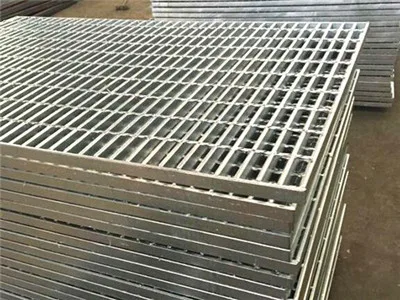
Steel grating is used in more and more places. In recent years, pigeon farms and chicken farms mostly use steel grating, which is ventilated, breathable, and easy to clean.
Overall, selection should weigh span, load and service environment together.
Different applications have different priorities for steel grating: pedestrian walkways value anti-slip and comfort, vehicle areas value panel stiffness and fixing reliability, and drainage trench covers value open area and theft resistance. Clarify the usage type before looking at specifications to save detours; the same applies to galvanized grating.
Basic concepts of grating for pigeon cages and chicken farms
Below we first briefly explain the relevant concepts and basic construction to make the following parameters and sizing content easier to understand.
Steel grating, also called steel grate or grating panel, is welded from flat bearing bars and twisted square bars. Hot-dip galvanized steel grating is durable and more affordable than other products. Its main uses include power plant platforms, parking platforms, maintenance platforms, trench covers, and stair treads. It is also used in environmental protection equipment and sewage treatment. Hot-dip galvanized steel grating is widely used for platforms, walkways, trestles, trench covers, manhole covers, ladders, and fences in petrochemicals, power, water supply, sewage treatment, ports and docks, architectural decoration, shipbuilding, multi-story parking structures, municipal engineering, and sanitation engineering.
Once you grasp these basic concepts, the specifications and sizing recommendations that follow will be much easier to understand.
Actual parameters of the same model may vary slightly between manufacturers; acceptance shall be based on measured values. We recommend sampling key steel grating dimensions, especially for bulk deliveries. Corresponding parameters of hot-dip galvanized steel grating can be checked the same way; communicate promptly if deviations are found.
Specifications and parameters of grating for pigeon cages and chicken farms
Main specification comparison is as follows:
Steel grating production generally falls into machine press-welding and hand fabrication. Machine press-welding uses a high-pressure resistance welding machine, where a robotic arm automatically places cross bars onto evenly arranged bearing bars and presses them in with strong welding power and hydraulic force, yielding high-quality grating with firm weld points and very high stability and strength. Hand-made grating involves punching holes in the bearing bars and spot-welding the cross bars into them; gaps exist between cross bars and bearing bars, and not every contact point can be welded, so the welding is less secure and strength is reduced.
The above are common specifications; actual ordered dimensions and tolerance requirements shall be confirmed against the layout drawing.
Bigger is not always better. Steel grating selection should be as economical as possible while meeting load requirements; over-thickening increases self-weight and cost and complicates installation. The product page offers a fuller comparison for galvanized grating; refer to it before deciding.
Steel grating has the following main features
1: High strength, lightweight structure
Once you understand the structure of steel grating, reading spec sheets and quotations becomes much easier. Remember it as three parts: bearing bars + cross bars + surface treatment; a change in any one affects product performance. The same breakdown applies when selecting galvanized grating.
2: Strong corrosion resistance, durable
3: Attractive appearance, bright surface
For material selection, we do not recommend simply chasing high grades. The material of steel grating should match load requirements and service environment; over-specifying causes unnecessary cost increases. For the corresponding treatment of hot-dip galvanized steel grating, refer to the product page and choose according to actual working conditions.
4: No dirt accumulation, no rain or snow buildup, no water pooling; self-cleaning and easy to maintain
5: Good ventilation, lighting, heat dissipation, anti-slip and explosion-proof performance
6: Easy to install and dismantle.
After installation, a full inspection is recommended: whether panels are warped, fasteners are complete, and height differences between adjacent panels are noticeable. Such issues are cheapest to fix at the acceptance stage; rework after commissioning is troublesome. Acceptance criteria for hot-dip galvanized steel grating can follow the same standard.
Applications of steel grating
Steel grating is widely used for platforms, walkways, trestles, trench covers, manhole covers, ladders, and fences in petrochemicals, power, water supply, sewage treatment, ports and docks, architectural decoration, shipbuilding, multi-story parking structures, municipal engineering, and sanitation engineering.
Different parts of the same site often have different requirements. For example, with steel grating, main walkways and corner areas, or heavily used areas and occasional maintenance areas, can have different specifications; paired use of hot-dip galvanized steel grating should also be planned by zone, balancing safety and cost.
Further notes: Common combinations of hot-dip galvanized steel grating and galvanized grating
In engineering, galvanized grating is often used together with the components mentioned in this article. The two differ in load carrying and installation practices; when combining them, pay special attention to the connection of support conditions and fixing methods, as junction treatment is often where problems arise. For unified drawings, submit dimensions of both types and our technicians will process them under the same layout logic.
- For all product specifications and theoretical weights by series, visit Steel Grating Product Center
- To estimate cost by size and quantity, use Instant Quote PageSubmit Requirements
- To see how similar projects were executed, refer to Project Cases field applications
FAQ
What information is needed for custom sizes?
Usually you need to provide the panel dimensions (length x width), bearing bar specs and direction, center-to-center pitch of bearing bars and cross bars, surface treatment, and special requirements such as cutouts, corner notches and banding. Site photos or sketches are even better.
Why do different manufacturers quote different weights for the same specifications?
The main difference lies in the actual measured thickness and tolerance control of the bearing bars. When bars are supplied at the lower tolerance limit, weight per unit area falls below the theoretical value, and load capacity drops accordingly. We recommend specifying thickness tolerance clearly when purchasing.
What is most often overlooked during installation and acceptance?
First, bearing bars installed in the wrong direction reduce load capacity; second, insufficient fixing points or missing zinc touch-up paint; third, support beam spacing inconsistent with the layout drawing. These three items are most often overlooked on site.
The above is for sizing and construction reference. To verify specific parameters or request a quotation, please visitInstant Quote Page, or contact our technical staff.
The above is general guidance. For a specific project, we still recommend submitting span, load class and service environment to our technicians for review. Steel grating is a load-bearing component; rework caused by wrong specification choices costs far more than the time spent on upfront calculation.