







This article introduces steel grating in the order of design loads for steel grating platforms and walkways, basic concepts and specification parameters. Each part gives actionable judgment methods as far as possible; if you only need a quick conclusion, start with the key points at the beginning of each part. The same method applies to hot-dip galvanized steel grating.
Application Scenarios of Design Loads for Steel Grating Platforms and Walkways
Typical applications mainly include the following categories, which can help you judge suitability for your project:
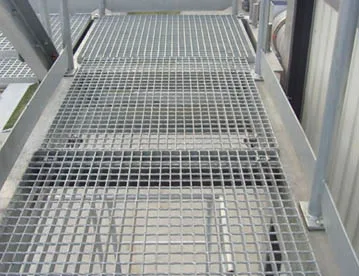
1 The design load of steel grating working platforms shall comply with GB 50009.
2. Steel grating working platforms are normally designed for a uniformly distributed load of 2kN/m2. At the most unfavorable position, a 20mX20mm area shall be able to bear a concentrated load of 1.5kN.
3 Maintenance platforms are generally designed for a uniformly distributed load of 4kN/m2.
If your working conditions fall outside the above range, you can provide site photos and dimensions, and our technicians will help assess them.
Within the same scenario, requirements often differ by location. Taking steel grating as an example, main walkways and corner areas, or frequently used areas and occasional maintenance areas, can be specified separately, and combinations of steel grating specifications and models should also be considered by zone to balance safety and cost.
Supplementary Notes on Design Loads for Steel Grating Platforms and Walkways
Additional key points are as follows:
4 A steel grating walkway for single-person traffic shall have a uniformly distributed load capacity of not less than 3.0kN/m2.
5 A steel grating walkway for two-way traffic shall have a uniformly distributed load capacity of not less than 5.0kN/m2.
6 A steel grating walkway for high-density pedestrian traffic shall have a uniformly distributed load capacity of not less than 7.5kN/m2.
7 When the design load is applied, grating deflection shall not exceed 1/200 of the span, and the maximum shall not exceed 4mm.
8 Where steel grating has cutouts, the remaining area shall still meet the design load requirement. h. The actual deflection under the design concentrated load value shall not exceed the allowable maximum deflection. The grating shall show no weld loss or coating loss under a 4t load.
The above points can serve as a pre-purchase checklist; confirm each item before moving to the quotation stage.
This section describes the common practice for steel grating in most projects. If your site conditions are special - for example corrosive media, large temperature differences, or frequent disassembly - the treatment should be adjusted accordingly. Hot-dip galvanized steel grating also needs separate confirmation under such conditions; consult with site photos before deciding.
Standards and Acceptance Requirements for Design Loads of Steel Grating Platforms and Walkways
9 The relationship between applied load and deflection of steel grating is calculated according to the principles of GB 5017
After installation, a full inspection is recommended: panel warping, completeness of fasteners, obvious level differences between adjacent panels. Such issues with steel grating are cheapest to fix at acceptance; rework after commissioning is troublesome. Acceptance of hot-dip galvanized steel grating can follow the same standard.
Further Reading: Common Pairings of Hot-Dip Galvanized Steel Grating and Steel Grating Specifications and Models
If a project uses both hot-dip galvanized steel grating and different steel grating specifications and models, plan them together on the same layout drawing. The benefit is that edging, fixing and cutouts at the interfaces can be handled uniformly, so there are no size conflicts during site installation and later maintenance is easier.
- For all product specifications and theoretical weights by series, visit Steel Grating Product Center
- To estimate cost by size and quantity, use Instant Quote PageSubmit Requirements
- To see how similar projects were executed, refer to Project Cases field applications
FAQ
Why do different manufacturers quote different weights for the same specifications?
The main difference lies in the actual measured thickness and tolerance control of the bearing bars. When bars are supplied at the lower tolerance limit, weight per unit area falls below the theoretical value, and load capacity drops accordingly. We recommend specifying thickness tolerance clearly when purchasing.
Where can I find specific specifications?
our websiteProductsCommon specifications and theoretical weights are organized by series, also available in Instant Quote PageEstimate by size, or contact us directly for sizing advice.
What is most often overlooked during installation and acceptance?
First, bearing bars installed in the wrong direction reduce load capacity; second, insufficient fixing points or missing zinc touch-up paint; third, support beam spacing inconsistent with the layout drawing. These three items are most often overlooked on site.
The above is for sizing and construction reference. To verify specific parameters or request a quotation, please visitInstant Quote Page, or contact our technical staff.
If you already have drawings or site dimensions, submit them directly and we will help verify specifications and layout, avoiding on-site cutting and rework caused by mismatched models. Without drawings, site photos and approximate dimensions are enough for an estimate.