







This article introduces press-locked steel grating in the order of classification and application scope, basic concepts, and specification parameters, giving actionable judgment methods in each part; if you only need a quick conclusion, read the key points at the start of each section. The same approach applies to hot-dip galvanized steel gratings.
Specification Parameters of Press-Locked Steel Grating
Main specification comparison is as follows:
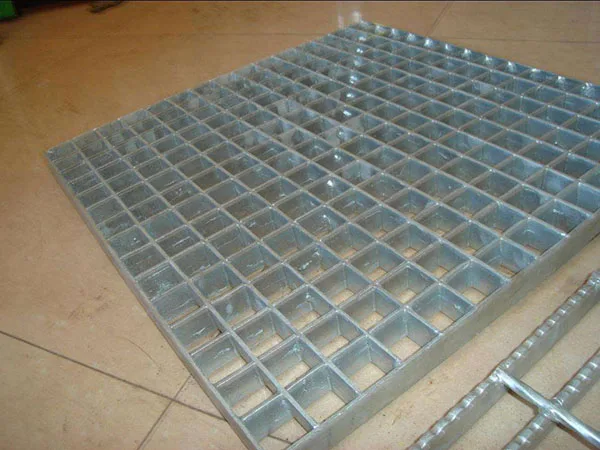
Press-locked steel grating is divided into press-fitted, heavy-duty, integral and sun-shade types. For the press-fitted type, after the bearing flat bars are notched, the cross bar flat bars are press-locked into shape. Generally, the maximum processing height for ordinary steel grating is 100mm and grating length is usually less. Heavy-duty press-locked steel grating is a product in which high flat bars and cross bar flat bars interlock and are pressed tight under a pressure of 1200 tons.
The above are common specifications; actual ordered dimensions and tolerance requirements shall be confirmed against the layout drawing.
Specifications are not the bigger the better. Press-locked steel grating should be as economical as possible while meeting load requirements; excessive thickening increases weight and cost and makes installation difficult. Product pages give a fuller comparison for hot-dip galvanized steel gratings; refer to them before deciding.
Basic Concepts of Press-Locked Steel Grating
Below we first briefly explain the relevant concepts and basic construction to make the following parameters and sizing content easier to understand.
It is suitable for high-span, heavy-load applications. For the integral type, the bearing flat bars and cross bar flat bars have the same height and the notch depth is 1/2 of the bearing flat bar; grating height does not exceed 100mm and length is usually less. Press-locked steel grating, also called interlocked steel grating, is made from standard low-carbon flat bars, stainless steel, brass plates or aluminum plates through slotting (punching), insertion, welding and finishing.
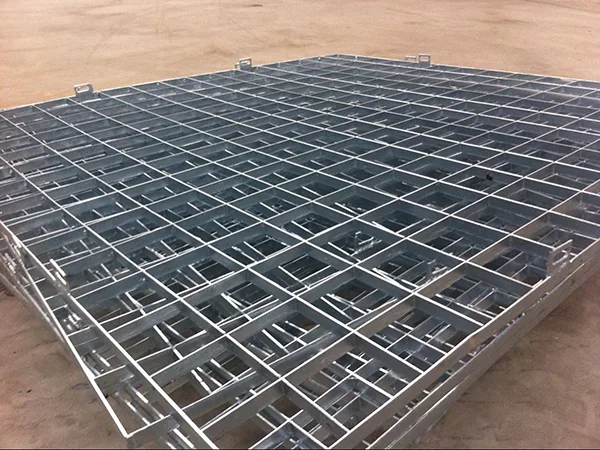
Once you grasp these basic concepts, the specifications and sizing recommendations that follow will be much easier to understand.
Actual parameters of the same model may differ slightly between manufacturers; accept on the basis of measured values. Spot-check key dimensions of press-locked steel grating, especially for bulk deliveries. Check galvanized grating parameters the same way and communicate promptly if deviations are found.
Maintenance and Care of Press-Locked Steel Grating
Key inspection and maintenance points during use are as follows:
The product has strong weld points, uniform hole pitch and an attractive design - convenient and practical. Press-locked steel grating has all the features of ordinary steel grating - high strength, corrosion resistance and maintenance-free - plus uniform composition, light structure, natural harmony and elegant style. It is both a practical product and a work of art, and has been widely applied.
Regular inspection and maintenance as required effectively extends service life and reduces replacement costs.
Material and surface treatment determine the field durability of press-locked steel grating. For the same steel grating, treatments differ greatly between dry indoor use and coastal or chemical environments; make the service environment the primary condition in selection. The same judgment applies to hot-dip galvanized steel gratings.
Common Models and Sizes of Press-Locked Steel Grating
In the existing technology, anti-slip steel grating generally uses serrated flat bars with an uneven tooth pattern on one side, which effectively improves slip resistance. Serrated steel grating, also called anti-slip steel grating, offers excellent anti-slip performance; welded from serrated flat bars and twisted square cross bars, it is both anti-slip and attractive. With a hot-dip galvanized silver-white surface, it enhances a modern look and suits many locations. Serrated flat bars share the same types as ordinary flat bars; the difference is the uneven tooth pattern on one side, mainly for slip resistance.
The most easily overlooked items in a specification table are tolerance and end treatment. Press-locked steel grating usually has machining allowance in length; if the site uses recessed installation, state the trimming and corner-cutting requirements in advance. Hot-dip galvanized steel gratings are handled similarly; mark these details clearly on drawings.
Further notes: How to combine hot-dip galvanized steel grating and galvanized grating in use
In engineering, galvanized grating is often used together with the components mentioned in this article. The two differ in load carrying and installation practices; when combining them, pay special attention to the connection of support conditions and fixing methods, as junction treatment is often where problems arise. For unified drawings, submit dimensions of both types and our technicians will process them under the same layout logic.
- For all product specifications and theoretical weights by series, visit Steel Grating Product Center
- To estimate cost by size and quantity, use Instant Quote PageSubmit Requirements
- To see how similar projects were executed, refer to Project Cases field applications
FAQ
Why do different manufacturers quote different weights for the same specifications?
The main difference lies in the actual measured thickness and tolerance control of the bearing bars. When bars are supplied at the lower tolerance limit, weight per unit area falls below the theoretical value, and load capacity drops accordingly. We recommend specifying thickness tolerance clearly when purchasing.
What information is needed for custom sizes?
Usually you need to provide the panel dimensions (length x width), bearing bar specs and direction, center-to-center pitch of bearing bars and cross bars, surface treatment, and special requirements such as cutouts, corner notches and banding. Site photos or sketches are even better.
What maintenance is required during daily use?
Maintenance mainly involves periodically checking whether fasteners are loose, whether touch-up paint has peeled off, and whether the panel surface shows obvious deformation or rust. Issues found should be dealt with promptly; overall maintenance is minimal.
The above is for sizing and construction reference. To verify specific parameters or request a quotation, please visitInstant Quote Page, or contact our technical staff.
The above is general guidance. For a specific project, we still recommend submitting span, load class and service environment to our technicians for review. Steel grating is a load-bearing component; rework caused by wrong specification choices costs far more than the time spent on upfront calculation.